
HVAC & refrigeration · Brazed plate heat exchanger
CO₂ Cascade Heat Pump
Compact brazed plate exchanger integration between cascade refrigeration stages.
Project summary
Challenge
Transfer heat reliably between two refrigerant stages while controlling charge, pressure drop and close temperature approach.
Engineering response
A compact plate exchanger was selected as the cascade interface using the actual refrigerant conditions on both circuits.
Outcome
The selected arrangement supports a compact system layout and efficient inter-stage heat transfer.
- Cascade refrigeration
- Two refrigerant circuits
- Close temperature approach
- Compact refrigerant charge
Original project record
CO₂ Cascade Heat Pump Case: Brazed Plate Heat Exchanger as the Cascade Heat Exchanger
This CO₂ cascade heat pump case explains how a brazed plate heat exchanger works as the heat transfer bridge between the low-stage CO₂ circuit and the high-stage refrigerant circuit. With compact construction, high thermal efficiency, and excellent suitability for refrigerant phase change, BPHEs are widely used in cascade refrigeration and low-temperature heat pump systems.
Project Overview
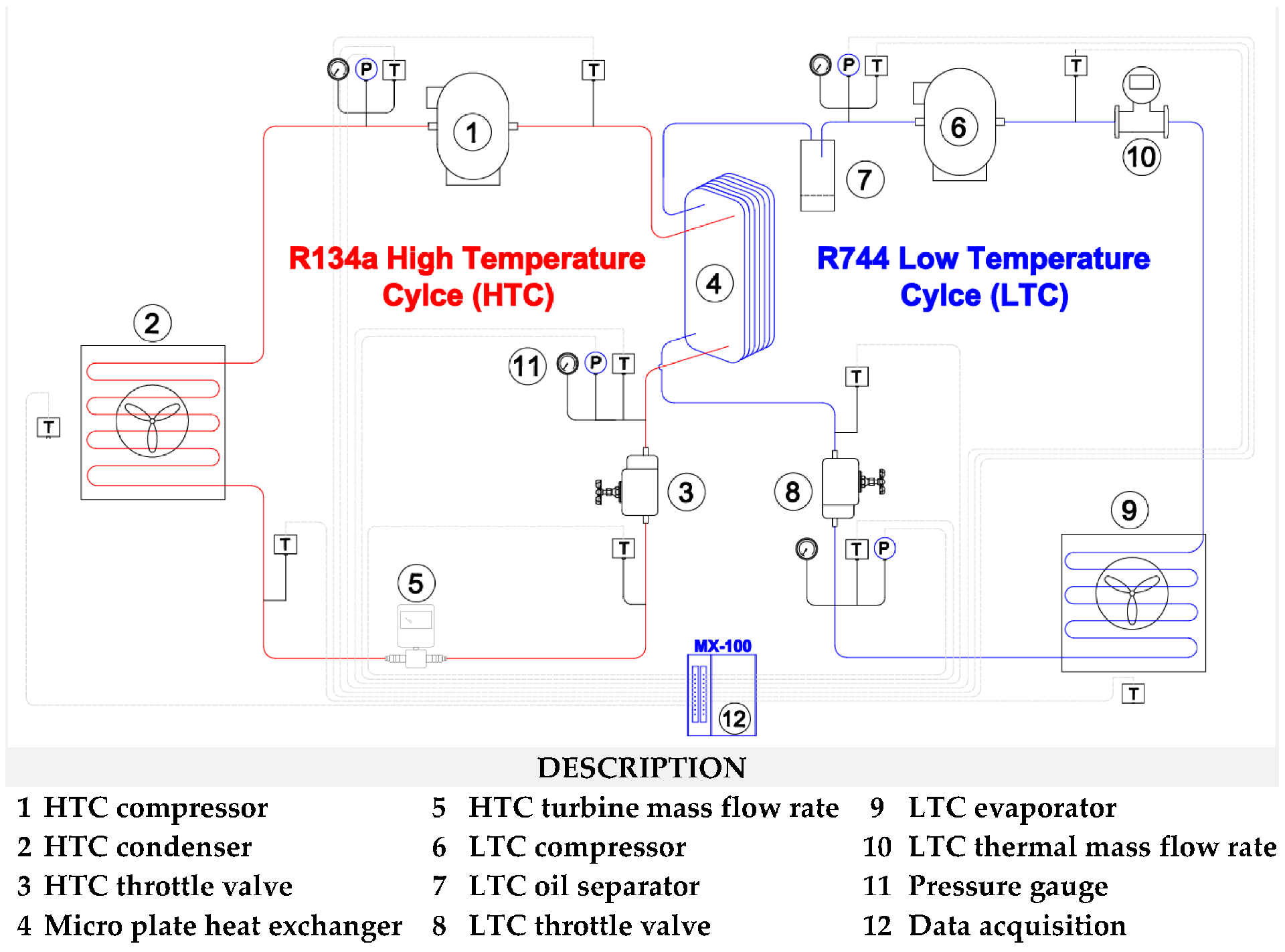
In a cascade heat pump system, the intermediate heat exchanger is one of the most critical components. It transfers heat from the low-stage refrigerant loop to the high-stage refrigerant loop while keeping the two circuits completely separated. In this case, a brazed plate heat exchanger is used as the cascade heat exchanger between the CO₂ low stage and the upper refrigerant stage, providing a compact and efficient solution for low-temperature duty.
Compared with larger shell-and-tube arrangements, a properly selected brazed plate heat exchanger offers a smaller footprint, lower refrigerant charge, fast thermal response, and strong heat transfer performance. These characteristics make BPHEs especially attractive for packaged cascade units, industrial refrigeration skids, compact heat pumps, and custom low-temperature systems.
System Diagram
Replace the image URL above with your final uploaded media path. The current filename is only a placeholder for layout integration.
Extracted Operating Data
These values are organized from the provided selection screenshot and are presented here as an engineering application case summary.
How the Cascade Heat Exchanger Works
The brazed plate heat exchanger acts as the thermal interface between two different refrigerant circuits. On the low-stage side, hot CO₂ gas enters the heat exchanger and rejects heat as it condenses. On the high-stage side, the upper-stage refrigerant absorbs that heat and evaporates. The two refrigerants never mix, but thermal energy passes efficiently through the corrugated stainless steel plates.
This arrangement allows the system to combine the low-temperature capability of CO₂ with the practical operating range of a higher-stage refrigerant loop. In low-temperature applications, this architecture helps improve system compactness while maintaining stable refrigeration performance.
Why a Brazed Plate Heat Exchanger Is Suitable for This Case
The plate pattern creates turbulence and improves thermal performance, which is especially important when both sides involve refrigerant phase change.
BPHEs deliver high duty in a small installation space, which is valuable for packaged cascade units and skid-mounted systems.
The internal volume is low, refrigerant charge is reduced, and the unit can respond quickly to changing operating conditions.
A brazed plate heat exchanger is naturally suited to serving as a cascade condenser / evaporator because both sides can handle phase change efficiently.
Engineering Considerations
This is not just a standard condenser or evaporator application. It is a cascade heat exchanger case where thermal performance, pressure rating, refrigerant distribution, and control stability all influence the final system result.
- Pressure resistance matters on the CO₂ side. Even if the displayed operating pressure is moderate in this example, the actual heat exchanger pressure class must be selected according to the real design condition of the refrigerant circuit.
- Pressure drop must be balanced with efficiency. A better thermal approach is useful, but excessive pressure drop can reduce overall system performance.
- Plate geometry affects phase-change stability. Channel arrangement and refrigerant distribution are important when using a BPHE as a cascade heat exchanger.
- Control strategy influences reliability. Superheat control, stable condensation, and load response all matter in low-temperature cascade systems.
Typical Applications
Similar brazed plate heat exchangers are commonly used in cascade refrigeration systems for food processing, industrial freezing, laboratory cooling, cold storage, and compact low-temperature heat pump packages.
FAQ
Because it offers high heat transfer efficiency, compact size, low internal volume, and excellent suitability for refrigerant phase-change duty on both sides of the plate pack.
Yes, but the pressure rating must be selected correctly. The actual design pressure of the system is more important than only the operating point shown in a software screenshot.
It transfers heat from the low-stage refrigerant circuit to the high-stage refrigerant circuit without mixing the two refrigerants, allowing each loop to operate in its own suitable temperature range.
Capacity, refrigerant types, condensing and evaporating temperatures, allowable pressure drop, mass flow, pressure class, and the expected operating range are all important during selection.
Not always. BPHEs are often preferred when compactness, efficiency, and fast response are required. Other exchanger types may still be selected in special cases involving different fouling, pressure, serviceability, or code requirements.
Conclusion
This case shows why brazed plate heat exchangers are widely used in CO₂ cascade heat pump and refrigeration systems. As the cascade heat exchanger between two refrigerant loops, the BPHE offers strong thermal performance, compact system integration, and reliable refrigerant separation. For equipment manufacturers and system integrators building low-temperature refrigeration packages, a properly designed BPHE can be a highly effective solution.
Related Products
- CO₂ High Pressure Brazed PHE
- Copper Brazed Plate Heat Exchanger
- Gasket Plate Heat Exchanger
Downloads
- CO₂ High Pressure Brazed PHE PDF
Related Pages
- Heat Exchanger Knowledge Center
- CO₂ Refrigeration Solution
Need Help With Cascade Heat Exchanger Selection?
HEXNOVAS can support BPHE selection for cascade refrigeration and low-temperature heat pump systems based on refrigerant type, pressure class, duty, temperature approach, and allowable pressure drop.
| Item | CO₂ Side (Low Stage) | R134a Side (High Stage) |
| Function | Condensing side | Evaporating side |
| Refrigerant | Carbon dioxide (R744) | R134a |
| Inlet temperature | 35.0°C | -10.0°C evaporation reference |
| Condensing / outlet temperature | -6.0°C condensing / -6.0°C outlet | -10.0°C evaporation temperature |
| Superheat | — | 5.0 K |
| Pressure | 29.68 bara | 1.991 bara |
| Mass flow | 0.1026 kg/s | 0.2273 kg/s |
| Maximum pressure drop | 50.0 kPa | 200.0 kPa |
| Capacity | 30.87 kW | |
| Selection margin | 15% |