
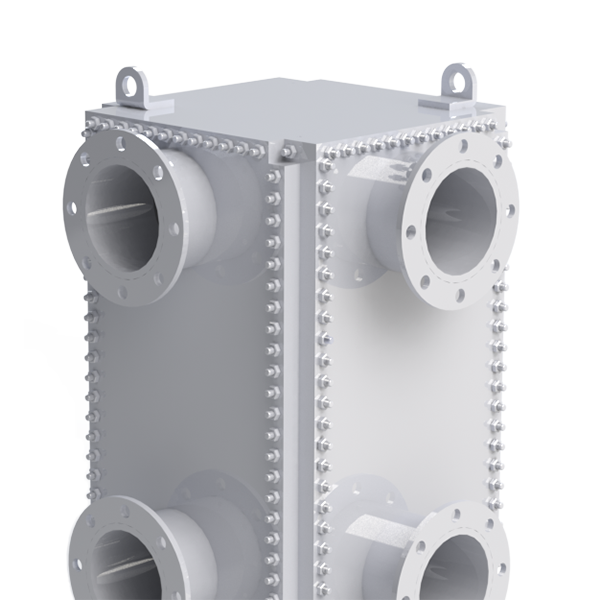
Industry application

Industrial & Manufacturing Heat Exchangers

Industrial heat exchangers for chemical processing, oil and gas, steel, metallurgy, machinery cooling, pharmaceuticals and manufacturing heat recovery.

Prepare Your Selection Request
Industrial & Manufacturing Heat Exchangers heat exchanger engineering application

Application engineering

Process Role

Industrial exchangers may heat a reaction stream, condense vapor, cool a tank circuit or separate a process from a plant utility. Chemical, oil-and-gas, polymer/resin, metallurgy and mining duties need the actual composition and operating issue defined before a technology is selected.

A cooling retrofit should distinguish exchanger duty from storage, mixing and control behavior. For process heat recovery, identify a useful sink and its operating schedule; a change in equipment alone does not establish a measured plant energy benefit.

Thermal interfaces

Typical Thermal Duties

Chemical processing and tank cooling

Rate process and jacket-loop duties separately where their fluids differ. Viscosity, reaction conditions, compatibility and mixing can limit the useful cooling rate even when utility capacity is available.

Metallurgy, mining and fouling streams

Salt solutions, suspended solids and deposits affect both heat transfer and cleanability. Equipment-water and oil circuits require their own fouling and pressure-drop assessment rather than the same assumptions as a process stream.

Rating basis

Key Engineering Inputs

  • Full fluid composition, concentration range, contaminants, solids, viscosity and fouling mechanism.
  • Flow and inlet/outlet temperatures for each duty; operating/design pressures, ΔP and cyclic conditions.
  • Material history, corrosion observations, joining/seal constraints, cleaning method and installation access.

Design review

Application-Specific Design Challenges

Chemistry and service-data accuracy

The internal-leakage case illustrates why declared service data must match the real fluid. Treat it as a verification lesson rather than assigning fault without evidence. The separate pitting case shows that welded-cassette construction does not establish corrosion resistance.

Fouling and maintainability

Choose passages and cleaning access for the expected deposits and solids. A spiral path or welded construction does not make an exchanger self-cleaning or maintenance-free.

Relevant HEXNOVAS Case Evidence

HEXNOVAS case evidence

Separate ISO and polyol cooling duties

The published retrofit replaces an indirect chilled-water tank interface with dedicated fully welded plate & block exchangers. The thermal design lists two different duties; they are not interchangeable ratings.

Published thermal design data

  • ISO: 8.0 m³/h, 50°C → 30°C, 82.55 kW.
  • Polyol: 8.0 m³/h, 50°C → 30°C, 119.3 kW.
  • Cooling water: 7°C → 12°C.

The values are design inputs/results from the case, not separately reported measured savings or validated performance for another fluid.

View case study: Separate ISO and polyol cooling duties

HEXNOVAS case evidence

Zinc sulphate solution heating

The published case discusses steam heating and spiral-channel selection for a salt solution with fouling and corrosion concerns. It supports the selection logic, not a numerical capacity claim.

Published qualitative application description

  • Selection considerations: solution chemistry, deposits, steam condensation and cleaning access.

A verified flow, duty and measured improvement are not published in the reviewed case; none is added here.

View case study: Zinc sulphate solution heating

Technology fit

Common Heat Exchanger Technologies

Plate & block / Compabloc

Compare welded process interfaces against fluid compatibility, operating cycles and access requirements.

Spiral and gasketed plate

Evaluate spiral passages for the actual fouling stream; openable gasketed units may suit compatible liquids requiring inspection.

Graphite and shell & tube

Consider graphite only after chemical and mechanical compatibility review. Tubular geometry offers other passage and service arrangements, not a universal solution to fouling.

Prepare your enquiry

What HEXNOVAS Needs for Selection

  • Send representative fluid analyses, variability, solids/viscosity information and the current process problem.
  • List each duty separately with flow, temperature, pressure and ΔP; include utility conditions and the existing schematic.
  • Provide corrosion/fouling history, cleaning requirements, materials constraints and layout or retrofit interfaces.
Send Your Operating Conditions

Engineering support

Send the operating conditions. We will evaluate the technology.

Request Selection
Contact HEXNOVAS