
HEXNOVAS CASE
R717 Falling-Film Chiller for Dairy Process Water
Published dairy water-chilling duty: 1,100 kW, 75 m³/h and water cooling from 13°C to 0.5°C using R717 and falling-film pillow plates.
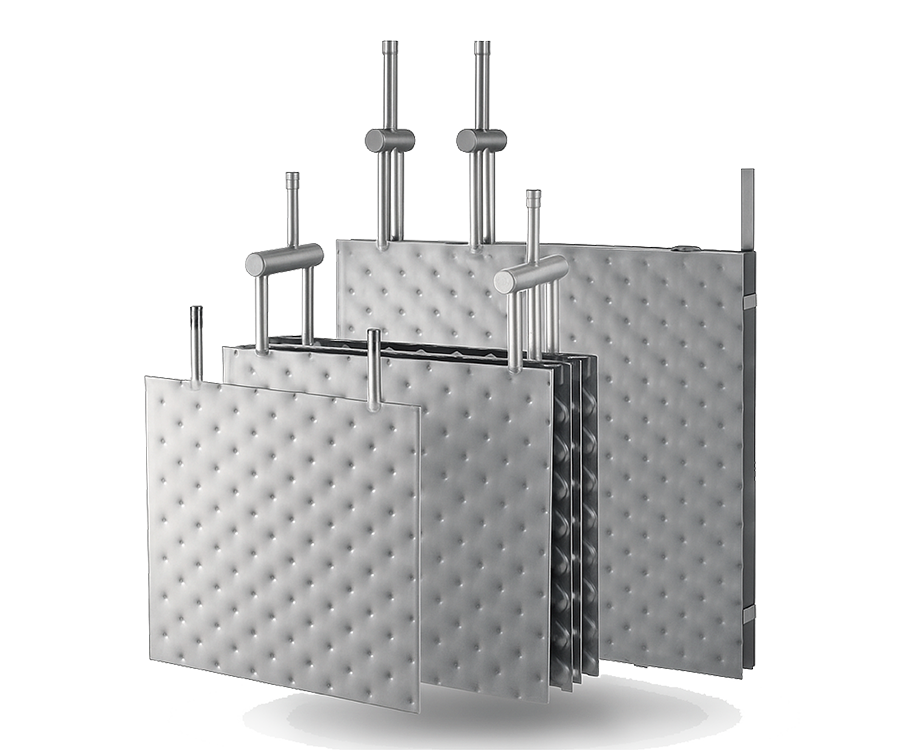
Project snapshot
Published project data
- Application: dairy process-water chilling
- Technology: pillow-plate falling-film chiller
- Published cooling duty: 1,100 kW
- Water: 75 m³/h, 13°C → 0.5°C
- Refrigerant: R717 ammonia
Project Duty
The published HEXNOVAS record describes a falling-film chiller for a dairy process-water supply. Its stated duty is to cool a high water flow to a temperature close to freezing. This is a utility-water application: the record does not describe cream or milk flowing over the plates, nor establish a product pasteurization process.
The engineering objective was near-freezing process water with stable ammonia evaporation. The selected arrangement is described as skid-mounted, with water distributed over pillow-plate heat-transfer surfaces and R717 evaporating inside the plates. The published figures define the reported operating requirement; they are not presented here as a commissioning test.
Operating Conditions
The water temperature program, water flow and refrigerant identity should be read together. Specifying only the cooling capacity would leave the required water outlet condition and the utility interface undefined. The available record does not give the ammonia operating conditions needed to reproduce a complete refrigerant-side selection.
| Parameter | Published project value |
|---|---|
| Cooling duty | 1,100 kW |
| Water flow | 75 m³/h |
| Water inlet | 13°C |
| Water outlet | 0.5°C |
| Refrigerant | R717 ammonia |
Why a Falling-Film Pillow Plate Chiller Fits This Duty
The documented arrangement places flowing water on the outside of the pillow plates while refrigerant evaporation absorbs heat inside them. It therefore connects the water-distribution task to a phase-change cooling surface. The architecture is relevant to the reported high-flow dairy water duty without requiring the dairy product itself to pass through the chiller.
Selection still depends on the actual water distribution and refrigerant operating envelope. A technology description does not establish the installed plate area, plate count or ammonia inventory. Those details cannot be derived from the generic pillow-plate illustration shown above.
Engineering Considerations
For a comparable duty, the review should start with the required water outlet temperature and the range of entering water conditions. A near-freezing target makes water distribution, interruption of flow and operating control relevant design questions. The source does not publish the control sequence, so no particular protection arrangement is attributed to this installation.
The ammonia circuit must be specified separately, including its evaporating condition, allowable pressure drop and mechanical design requirements. These are selection inputs to request, not values supplied by this case. Refrigerant-side details cannot be inferred from the water outlet temperature alone.
Water quality and cleaning arrangements also need review for the intended dairy utility. Requirements for food-contact equipment should not automatically be assigned to a water chiller merely because it serves a dairy. The circuit role, contact conditions and cleaning regime determine the applicable review.
Published Project Data and Evidence Status
The figures above are reproduced from the existing HEXNOVAS project summary. That summary reports the cooling duty, water flow, water temperatures and R717 service. It does not provide a separate series of commissioning measurements or an independently verified test report.
Accordingly, the case supports an application example and a reported duty, rather than a measured energy-efficiency claim.
What the Published Record Does Not Establish
Compressor power, COP, ammonia charge, evaporating temperature, plate material, design pressure and allowable pressure drop are not published in the available project record. The page therefore cannot establish these values for this installation or guarantee them for another chiller.
For a comparable selection, send the water flow and temperature program, available refrigeration conditions, water quality, installation limits and required cleaning approach. HEXNOVAS can then identify what further thermal and mechanical information is needed.
Related Technology and Applications
Use the dairy application page to place this chilled-water duty alongside product heating, regeneration and cooling. These are related process needs but require separate ratings and hygienic assessments.