
HEXNOVAS CASE
Rice Bran Oil Heating and Heat Recovery
Fully welded heat exchangers for high-temperature oil heating, recovery and cooling duties.
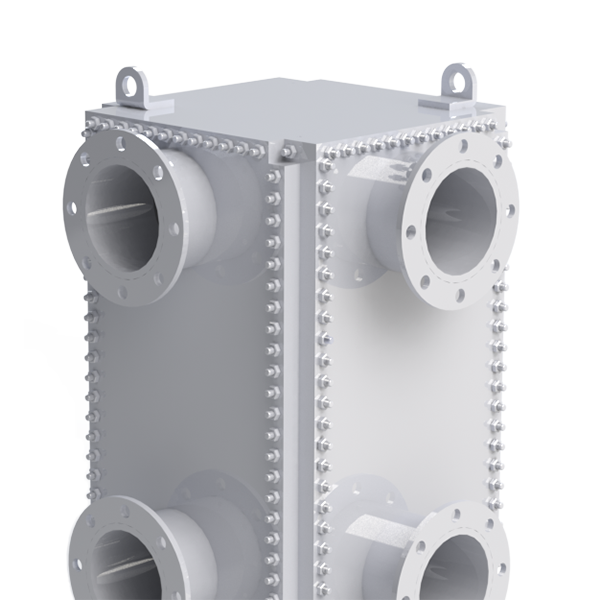
Project snapshot
Published application description
- Application: rice bran oil heating, recovery and cooling
- Published technology: fully welded plate-and-block exchanger
- Context: high-temperature oil economizer duty above 200°C
- Quantified flow and duty: not published
Project Context
The available HEXNOVAS record describes rice bran oil processing involving heating, heat recovery and cooling. The project summary identifies fully welded plate-and-block exchangers for high-temperature oil stages, including economizer duty above 200°C.
This is a short application record rather than a complete thermal selection. The temperature reference describes the reported high-temperature context; it is not a published inlet/outlet program, universal equipment rating or measured operating series.
Thermal Duties in the Published Description
Heating, recovery and cooling are different thermal tasks. A recovery duty transfers available process heat to another stream, while heating and final cooling depend on the required process temperatures and available utilities. The source names these roles without defining the individual stream connections.
No process flow diagram, flow rates or paired inlet/outlet temperatures are published. It would therefore be misleading to assign a capacity to each stage, calculate recovered energy or describe a verified reduction in utility consumption.
Why Fully Welded Plate-and-Block Construction Was Considered
The project summary identifies fully welded containment and states that oil properties, fouling and thermal expansion were reviewed for the high-temperature stages. Those are the documented selection considerations; they do not establish a universal preference for welded equipment in every edible-oil process.
The exchanger type recorded here is plate-and-block. A spiral or other exchanger could be evaluated for a different duty, but it is not presented as installed equipment in this case. No model, plate area or material grade is supplied by the available record.
Evidence Available and Evidence Not Published
The published evidence supports the application, named technology and high-temperature economizer context. The existing product image illustrates that technology and is explicitly not labelled as a customer installation.
Flow, thermal duty, pressure, material specification, measured savings and commissioning results are not published in the available project record. No numerical performance result has been added beyond the existing temperature reference.
Engineering Inputs for a Comparable Oil Duty
A comparable selection needs each oil stream and utility identified, with composition, temperature-dependent properties, flow, temperature targets, pressure limits and allowable pressure drop. Fouling and cleaning requirements should be supplied along with the operating sequence.
For heat recovery, identify both the available hot stream and the receiving stream. Without those boundaries, the application name alone cannot establish useful recoverable heat. Materials and thermal expansion require equipment-specific review at the intended operating conditions.
Related Food-Processing Applications
The food and beverage application guide provides the wider selection context. The rice bran oil example remains deliberately limited to its published evidence rather than presenting an invented detailed project history.