
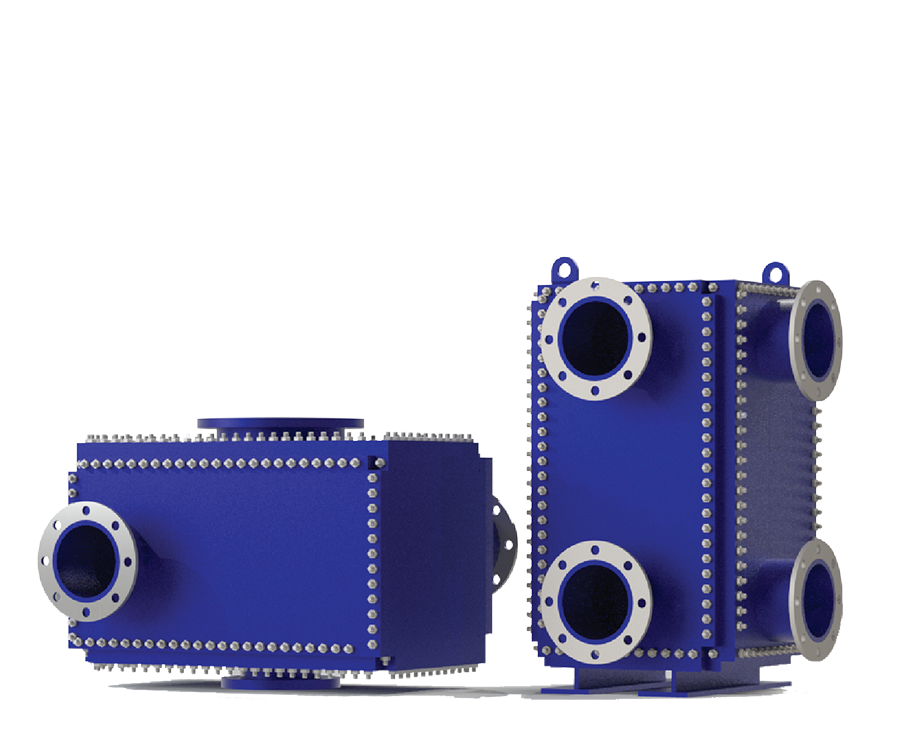
What is an Alternative to Alfa Laval Compabloc?
An alternative to Alfa Laval Compabloc is a candidate welded plate heat exchanger that must be engineered for the required duty. Similar construction does not establish performance equivalence, dimensional interchangeability or drop-in replacement.
Many industrial operators look for Compabloc alternatives due to:
- Equipment replacement or upgrade projects
- Cost optimization
- Faster delivery requirements
- Custom engineering needs
- Spare parts availability
- Process performance improvement
Compare candidate welded plate heat exchangers on the same thermal duty, allowable pressure drop, fouling factor, materials and phase-change basis, including maintenance access and nozzle/layout constraints.
Why Consider a Compabloc Alternative?
Lower Capital Cost
Compare quoted capital cost and rated performance for the same scope; neither a cost advantage nor equivalent performance is automatic.
Custom Engineering Flexibility
Custom design allows optimization for:
- Specific process conditions
- Pressure and temperature requirements
- Corrosive media
- Plant layout constraints
Shorter Lead Time
Independent manufacturers may offer faster manufacturing and delivery.
Spare Parts and Maintenance Support
Check the actual spare-parts compatibility, service arrangements and availability before planning downtime.
Performance Comparison: Compabloc vs Alternative Welded Heat Exchangers
Both may offer compact welded construction, but performance, cost and flexibility must be established from project-specific ratings and quotations.
Industrial Applications
Candidate welded heat exchangers may be considered for these duties after application-specific review:
Chemical Processing
- Acid cooling
- Solvent recovery
- Reactor temperature control
Petrochemical and Oil & Gas
- Hydrocarbon cooling
- Amine treatment systems
- Process heat recovery
Refinery and Energy Systems
- Heat recovery units
- Condensers
- Interchangers
Marine and Offshore Systems
- Seawater cooling
- Process temperature control
Key Benefits of Welded Plate Heat Exchanger Alternatives
- A welded core removes inter-plate gasket constraints; other seals and joints still need review.
- Chemical compatibility depends on the selected materials and actual fluid.
- Installed footprint depends on piping, nozzle layout and maintenance access.
- Heat-transfer performance requires duty-specific rating.
- Severe-service operation must remain within the approved design conditions.
- Service life depends on materials, operating cycles, fouling and maintenance.
These features make welded plate designs candidates for replacement studies, not automatically interchangeable substitutes.
Replacement of Existing Compabloc Heat Exchangers
When replacing an existing Compabloc heat exchanger, key engineering considerations include:
- Heat transfer duty and thermal performance
- Operating pressure and temperature
- Flow arrangement and process connection
- Material compatibility
- Installation dimensions
Replacement requires project-specific thermal, hydraulic and mechanical review, including pressure drop, fouling, phase-change duty, access and nozzle/layout constraints. Do not assume a seamless or performance-improving replacement.
When to Choose a Compabloc Alternative
An alternative welded heat exchanger is recommended when:
- Replacement of existing equipment is required
- Process conditions exceed gasket limitations
- Cost optimization is important
- Faster delivery is needed
- Custom engineering solutions are required
Learn More
- What is a Compabloc Heat Exchanger
- Comparasion bewteen Shell tube heat exchanger and Compbloc welded heat exchange r
| Review item | Alfa Laval Compabloc | Candidate welded plate alternative |
| Thermal performance | Obtain the rating for the specified duty | Obtain a rating on the same duty and assumptions |
| Sealing arrangement | Check core, covers and other interfaces | Check core, covers and other interfaces |
| Pressure and temperature | Verify the specific equipment rating | Verify the specific equipment rating |
| Chemical compatibility | Review actual materials and fluid chemistry | Review actual materials and fluid chemistry |
| Layout and maintenance | Confirm installed dimensions, nozzles and access | Confirm fit and access; interchangeability is not assumed |
| Cost, lead time and support | Use the current project quotation and service scope | Use the current project quotation and service scope |