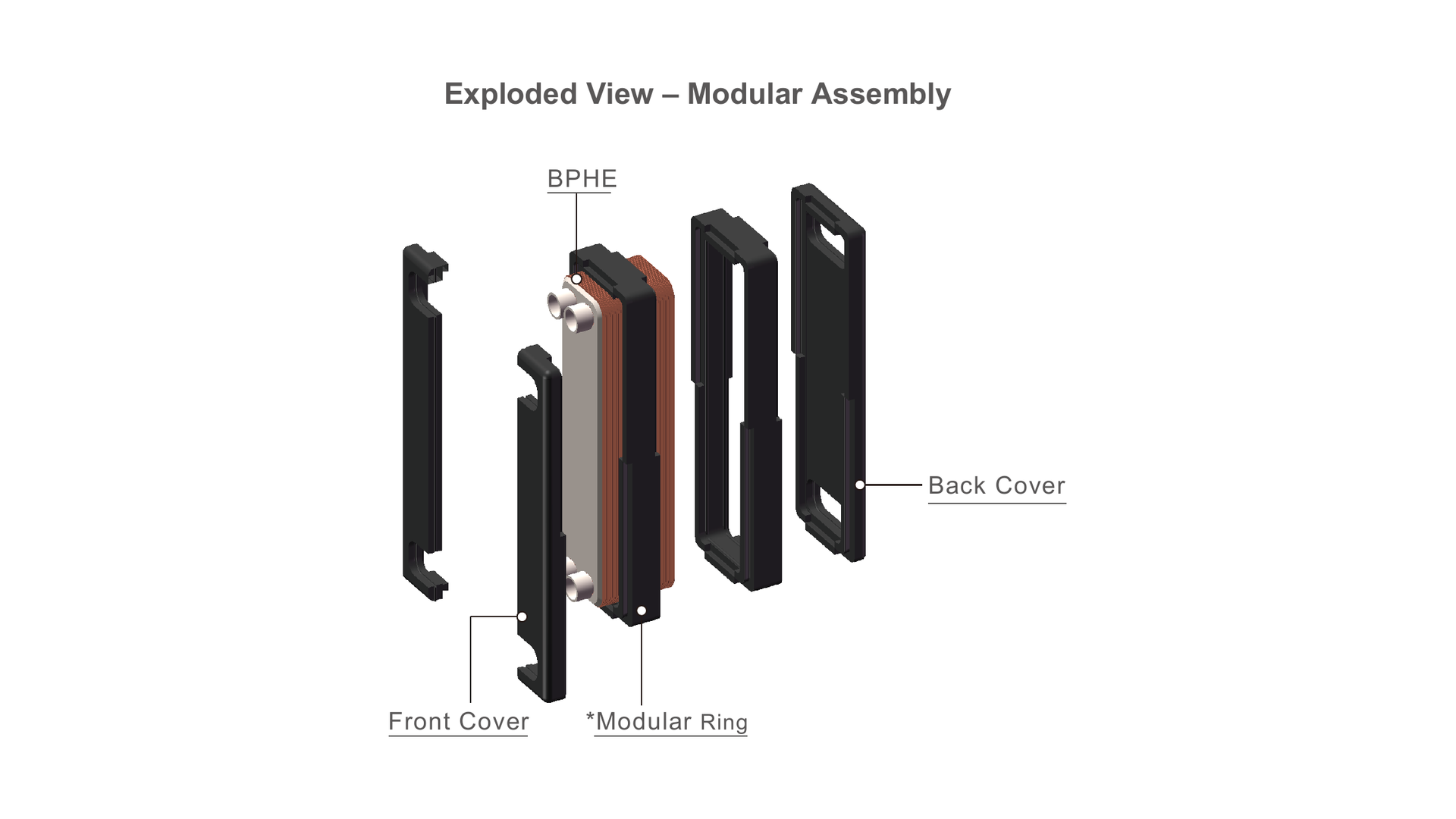
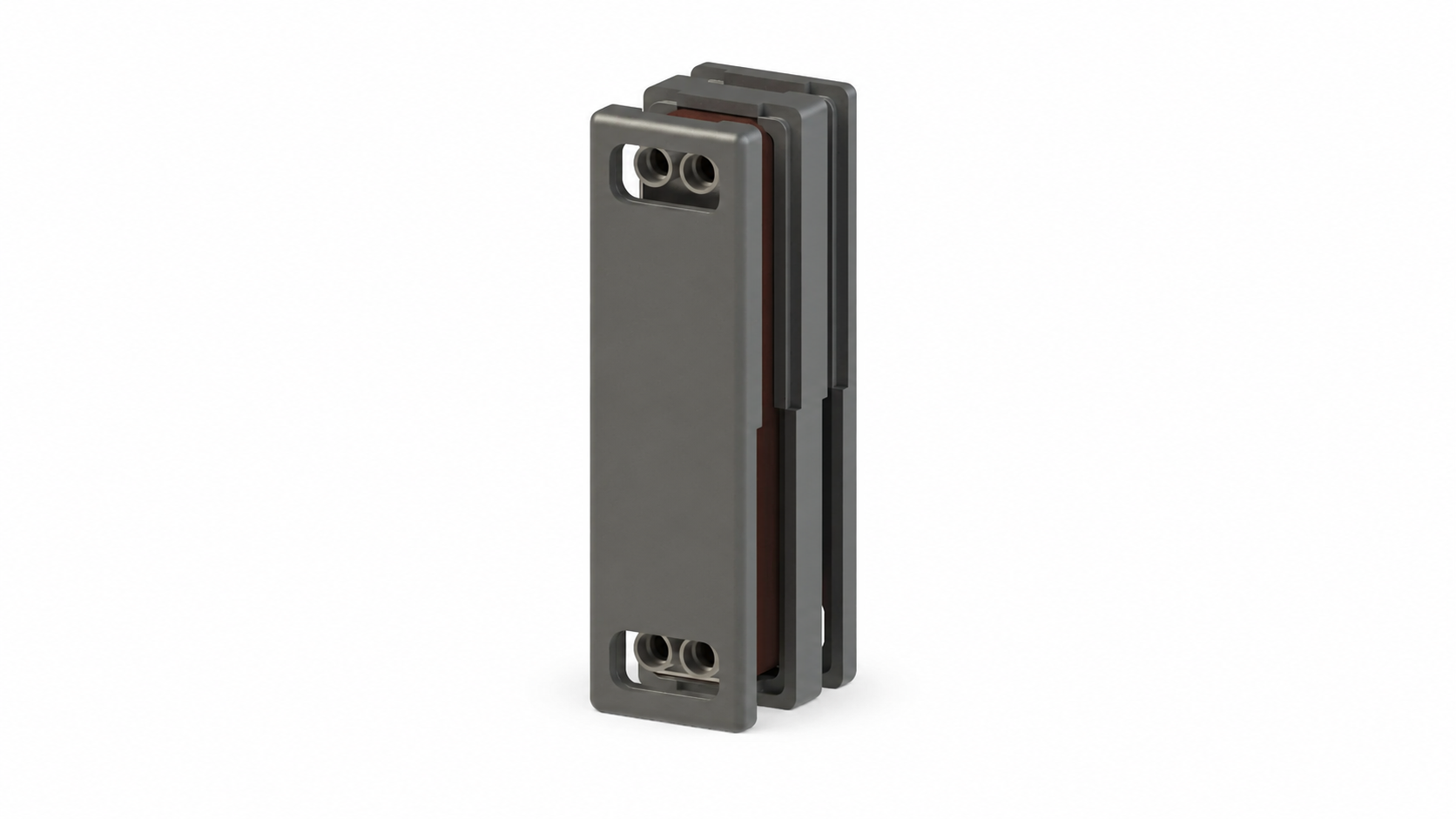
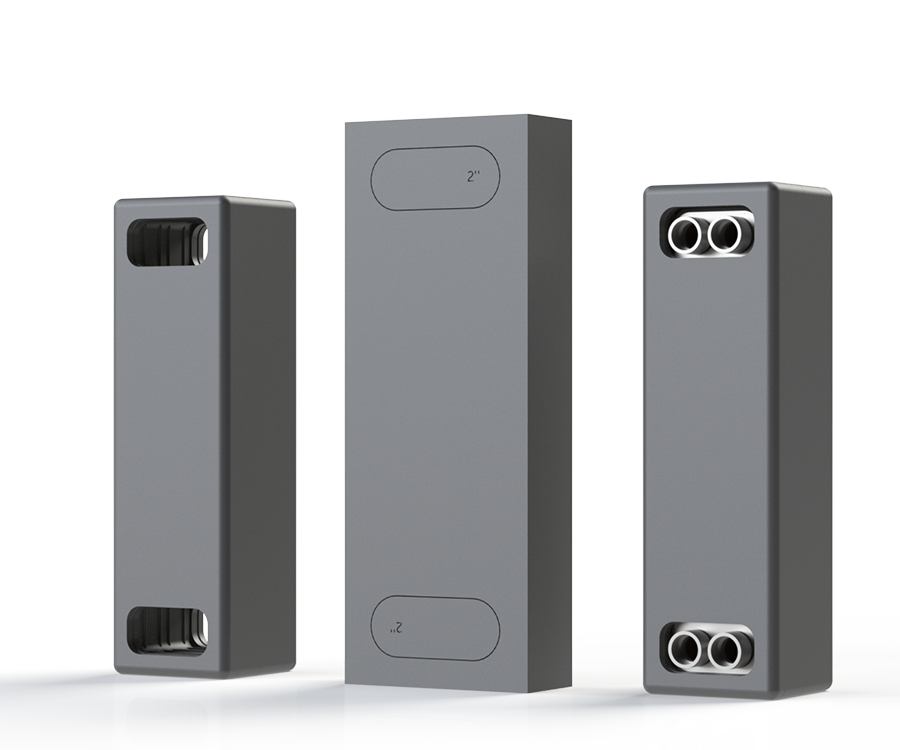
Molded front and rear EPP shells enclose the heat exchanger while removable center rings increase the insulation depth to match the plate pack. Port openings retain piping access, and the shell can be removed for service.
Thermal conductivity
0.035 W/m·K
Maximum temperature
80°C
Nominal wall thickness
20 mm
Density
45–60 kg/m³
Engineering explained
See what is happening inside the exchanger.
Product imagery is paired with technical context so buyers and engineers can understand construction, flow path and configuration—not just the exterior.
01
Modular depth for different plate counts
Front and rear shells combine with removable center rings, allowing one insulation platform to cover a practical range of BPHE thicknesses.
02
Complete modular insulation assembly
Front and rear shells fit around the brazed plate heat exchanger, while removable center rings extend the enclosure to match the plate-pack depth.
Models & technical data
Compare models and published specifications.
Compare circuit arrangement and overall dimensions at a glance, then open a product size for its product view, dimension drawing and technical summary.
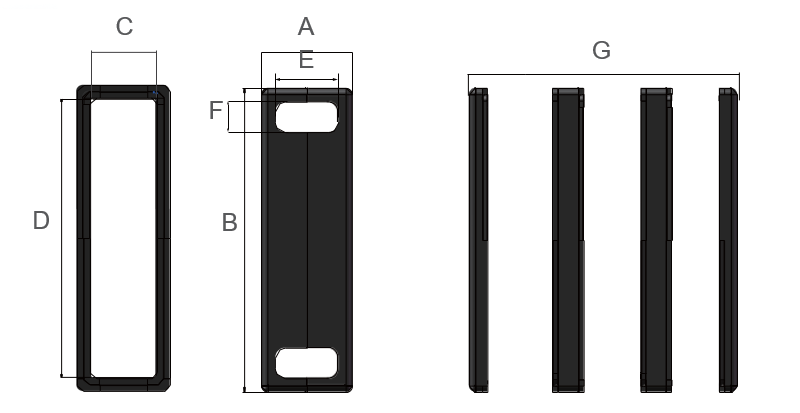
Published HEXNOVAS insulation dimensions. N = number of modular center rings. Compatibility with the exact BPHE model, port arrangement and surface temperature must be confirmed before order.
Dimensions are for reference only. Final dimensions are subject to the approved order drawing. HEXNOVAS reserves the right of final interpretation.
Model details
B26
HEXNOVAS BPHE Thermal Insulation
Product configurationDimension drawing
A (mm)
175
B (mm)
358
C (mm)
127
D (mm)
310
E (mm)
125
F (mm)
58
Overall depth G (mm)
30 + 38 × N
Material
Expanded polypropylene (EPP)
Fire protection class
DIN 4102
Density
45–60 kg/m³
Thermal conductivity
0.035 W/m·K
Nominal thickness
20 mm
Maximum temperature
80°C
N in dimension G
Number of modular center rings
Dimensions are for reference only. Final dimensions are subject to the approved order drawing. HEXNOVAS reserves the right of final interpretation.
Designed around performance, integrity and serviceability.
Modular center rings accommodate different plate counts
Snap-on assembly requires no special installation tools
Low thermal conductivity reduces heat loss and surface exposure
Lightweight reusable construction simplifies maintenance access
Product configuration
Structure and material options.
Available configurations
B26, B50, B95 and B120 insulation platforms
Add/remove modular center-ring sections
20 mm nominal insulation thickness
Model-specific port cutouts
Material options
Expanded polypropylene (EPP)
Density 45–60 kg/m³
DIN 4102 fire-protection classification
Typical applications
Where this exchanger fits.
01
Heating and domestic hot-water BPHEs
02
Heat-pump and HVAC packages
03
Mechanical-room surface protection
04
Retrofit insulation for compatible BPHE sizes
Selection information
What our engineers need from you.
Confirm BPHE model, external width and height, plate-pack thickness, port positions, operating surface temperature and required fire classification before ordering.
Frequently asked questions
Key questions before product selection.
How does BPHE Thermal Insulation work?
Molded front and rear EPP shells enclose the heat exchanger while removable center rings increase the insulation depth to match the plate pack. Port openings retain piping access, and the shell can be removed for service.
What information is required to select the right product?
Confirm BPHE model, external width and height, plate-pack thickness, port positions, operating surface temperature and required fire classification before ordering.
Which materials and configurations are available?
Expanded polypropylene (EPP); Density 45–60 kg/m³; DIN 4102 fire-protection classification
How is the final product size confirmed?
The final size is confirmed by thermal calculation using flow rates, inlet and outlet temperatures, allowable pressure drop, design pressure and fluid properties.
Product documentation
Catalogue and technical downloads.
Use the published catalogue for product-range reference. Final dimensions, ratings and materials are confirmed for the selected model and operating duty.