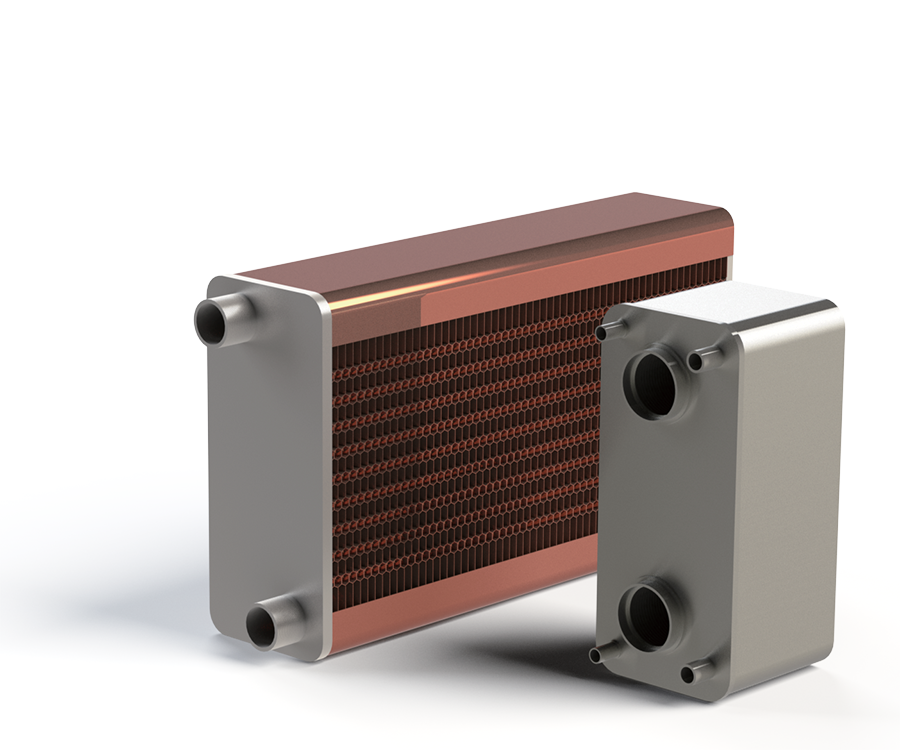
Compact brazed plate heat exchangers engineered to recover thermal energy from high-temperature flue gas into a liquid circuit for industrial and commercial heating systems.
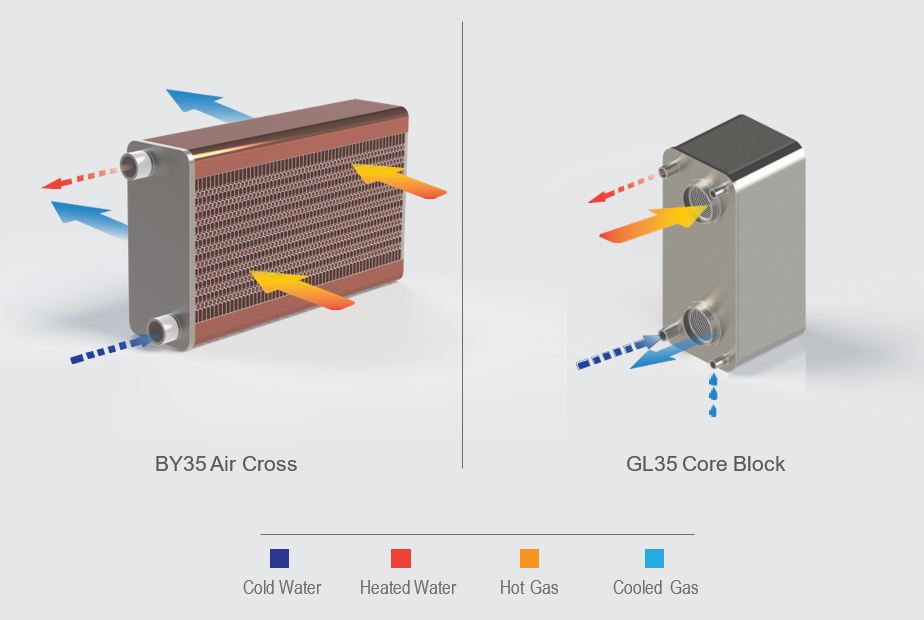
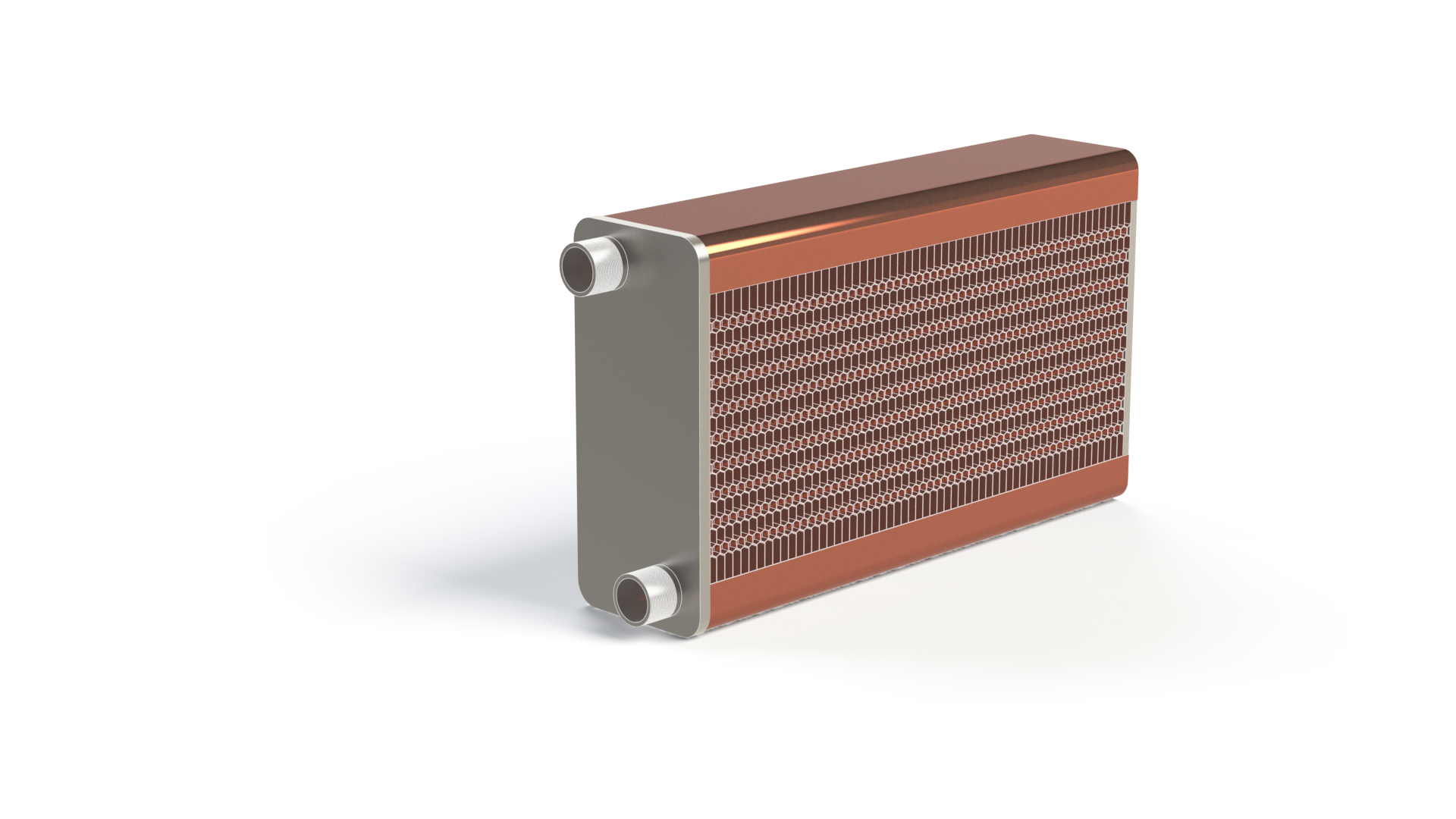
Hot gas and cold water travel through separate passages in counter-flow. The asymmetric gas channel handles the larger gas volume with low pressure loss, while corrugated stainless-steel plates transfer recovered heat into the liquid circuit. The outgoing gas is cooled and the water leaves at a higher temperature.
Published platforms
GL35 / BY35
Maximum design pressure
GL35: 20 bar; BY35: 15 bar
Temperature classes
250°C / 400°C / up to 750°C with selected materials
GL35 thickness E
4 + 4.0 × N mm
BY35 thickness E
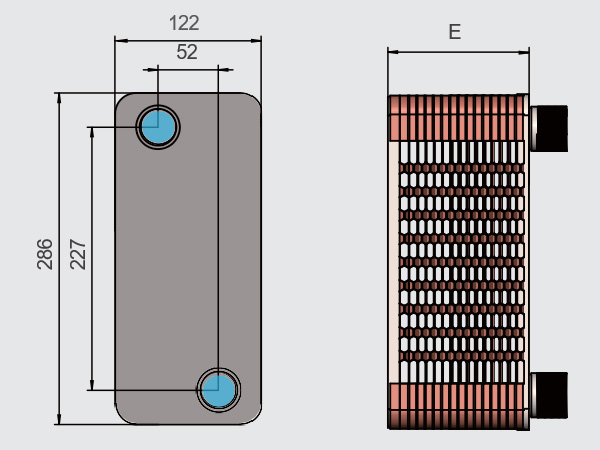
6 + 3.2 × N mm
Primary design focus
Waste-heat recovery with low gas-side pressure drop
Engineering explained
See what is happening inside the exchanger.
Product imagery is paired with technical context so buyers and engineers can understand construction, flow path and configuration—not just the exterior.
01
Asymmetric gas and liquid flow paths
Large gas passages manage volume and pressure drop, while the liquid circuit uses compact corrugated channels to absorb recovered heat.
02
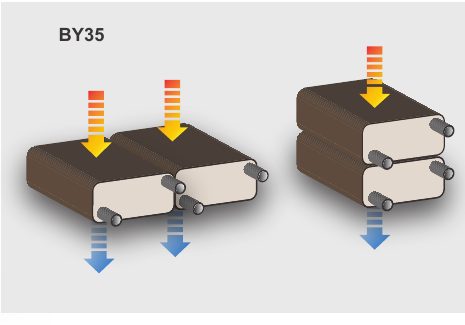
BY35 modular design
BY35 units can be combined horizontally or stacked vertically. Module quantity and arrangement are selected for gas flow, installation space and thermal-performance requirements.
03
GL35 flexible inlet and outlet configuration
GL35 gas connections can be located on the same side for a compact installation or on opposite sides for counter-flow and project-specific piping layouts.
Models & technical data
Compare models and published specifications.
Compare circuit arrangement and overall dimensions at a glance, then open a product size for its product view, dimension drawing and technical summary.
Published HEXNOVAS family limits. N = plate count. The 750°C class requires selected material and project verification. Actual allowable pressure, temperature, corrosion resistance and gas-side fouling performance depend on final construction and duty.
Dimensions are for reference only. Final dimensions are subject to the approved order drawing. HEXNOVAS reserves the right of final interpretation.
Model details
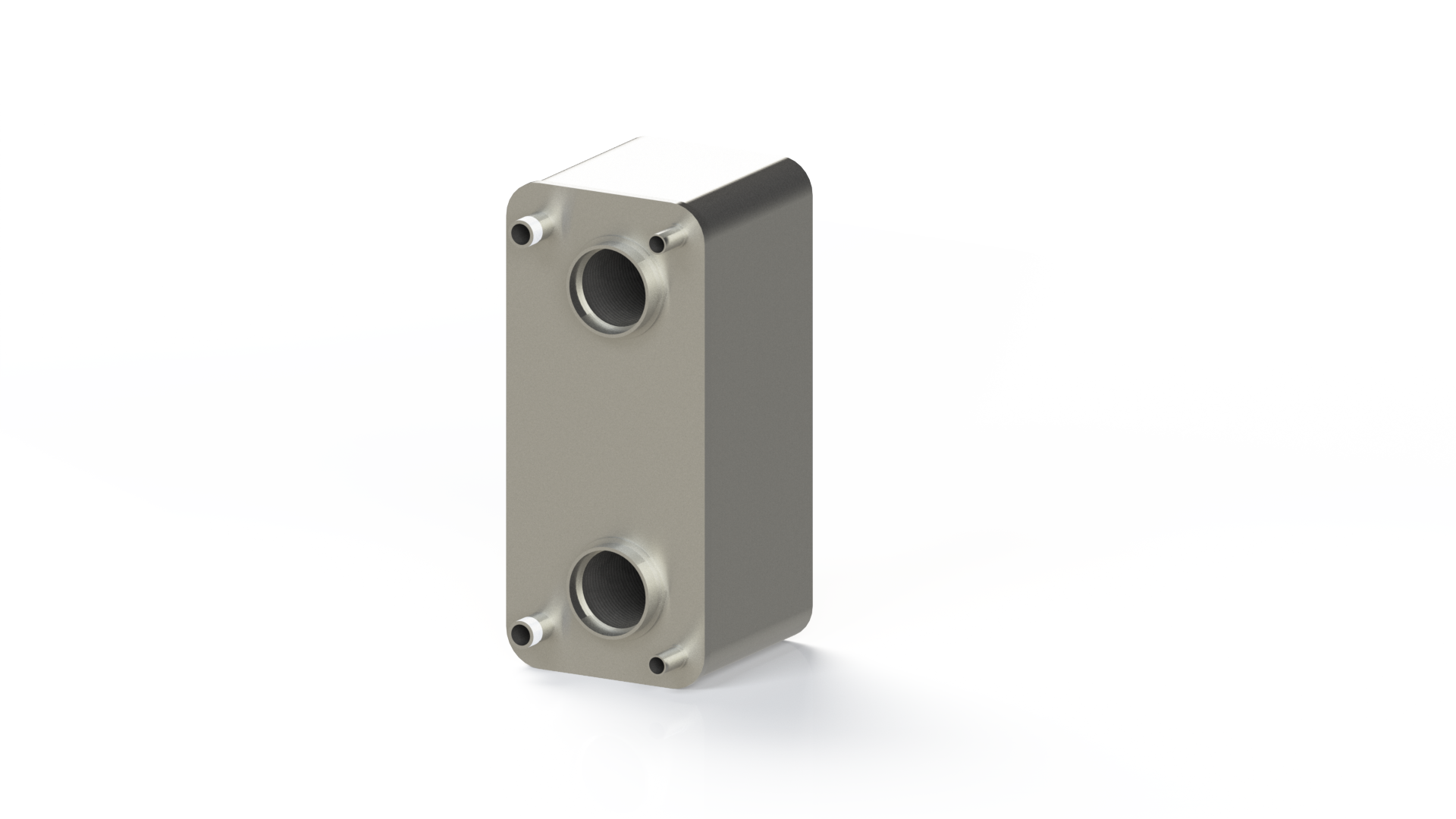
GL35
HEXNOVAS Flue Gas Brazed Plate Heat Exchangers
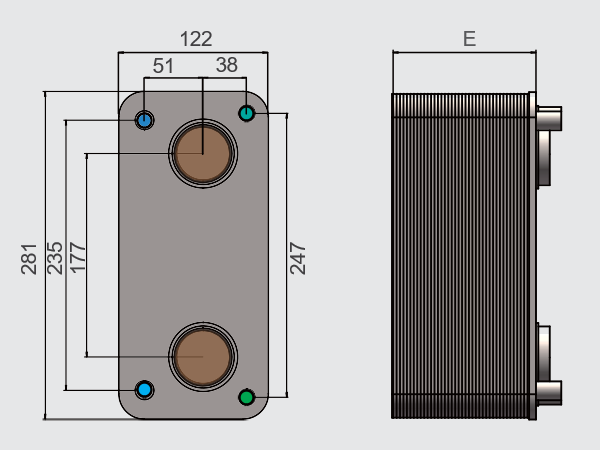
Product configurationDimension drawing
Circuit
Gas–liquid
Width (mm)
122 mm
Height (mm)
281 mm
Thickness E (mm)
4 + 4.0 × N
Max. pressure
20 bar
Temperature classes
250 / 400 / 750°C
Plate materials
304 / 316L / 904L
Bonding materials
Cu / SS / Ni
Plate material
SS304 / SS316L
Brazing material
Copper / nickel
Temperature range
-190°C to 200°C, configuration-dependent
Connections
Threaded, soldered or flanged
Dimensions are for reference only. Final dimensions are subject to the approved order drawing. HEXNOVAS reserves the right of final interpretation.
Designed around performance, integrity and serviceability.
Selected constructions handle flue-gas temperatures up to 750°C
Asymmetric channels minimize gas-side pressure drop while maximizing heat transfer
Compact footprint supports integration where installation space is limited
Special corrugated plates provide high thermal efficiency
Corrosion-resistant stainless plates with copper, stainless-steel or nickel bonding options
Product configuration
Structure and material options.
Available configurations
GL35 compact gas–liquid platform
BY35 Air Cross modular gas–liquid platform
GL35 gas inlet and outlet on the same or opposite sides
BY35 modules combined horizontally or stacked vertically
Module quantity and arrangement selected for flow, space and performance requirements
Material options
SS304, SS316L and 904L plate options
Copper, stainless or nickel bonding options
Project-specific high-temperature material selection
Typical applications
Where this exchanger fits.
01
Boiler flue-gas recovery: typical gas cooling from 180-220°C to 40-89°C, with published energy savings of 8.7-12%
02
Biogas dehydration: cooling biogas from 35°C to 10°C with cooling water from 7°C to 12°C
03
Volatile-vapour condensation, including styrene two-stage cooling and methanol solvent recovery
04
Semiconductor etching off-gas recovery, including SiF4 vapour cooling from 650°C to 60°C
05
Industrial flash-steam and low-pressure exhaust-steam heat recovery
06
Fuel-cell and electrolyzer heating, cooling and condensation duties
07
Compressed-gas aftercoolers, dryers, charge-air coolers and CHP heat recovery
Selection information
What our engineers need from you.
Provide gas composition, gas and liquid flow rates, inlet and target outlet temperatures, condensable and particulate content, allowable gas-side pressure drop, design pressure, material requirements, installation space and required inlet/outlet arrangement.
Frequently asked questions
Key questions before product selection.
How does Flue Gas Brazed Plate Heat Exchangers work?
Hot gas and cold water travel through separate passages in counter-flow. The asymmetric gas channel handles the larger gas volume with low pressure loss, while corrugated stainless-steel plates transfer recovered heat into the liquid circuit. The outgoing gas is cooled and the water leaves at a higher temperature.
What information is required to select the right product?
Provide gas composition, gas and liquid flow rates, inlet and target outlet temperatures, condensable and particulate content, allowable gas-side pressure drop, design pressure, material requirements, installation space and required inlet/outlet arrangement.
Which materials and configurations are available?
SS304, SS316L and 904L plate options; Copper, stainless or nickel bonding options; Project-specific high-temperature material selection
How is the final product size confirmed?
The final size is confirmed by thermal calculation using flow rates, inlet and outlet temperatures, allowable pressure drop, design pressure and fluid properties.
Product documentation
Catalogue and technical downloads.
Use the published catalogue for product-range reference. Final dimensions, ratings and materials are confirmed for the selected model and operating duty.