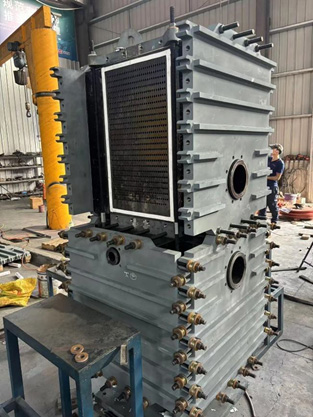
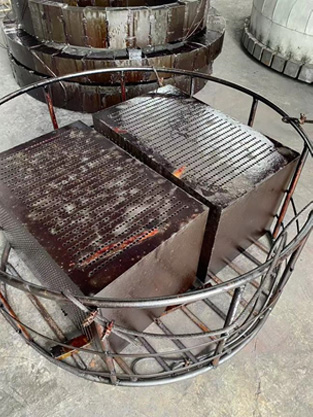
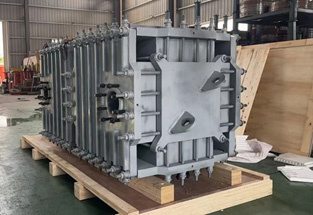
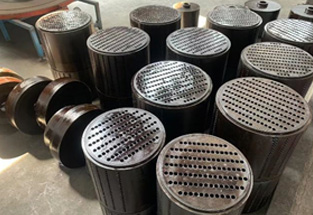
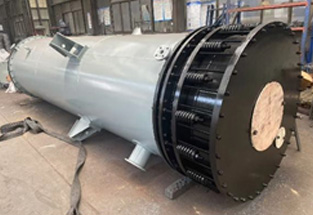
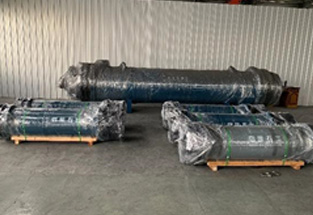
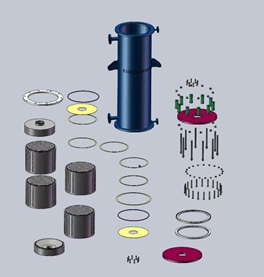
Graphite block heat exchangers consists of several impregnated graphite heat exchanger blocks with material channels, top and bottom impregnated graphite end caps, metallic cover plates (or end caps made of other materials), and a cylindrical shell (for circular block-hole type) or side plates at both ends (for rectangular block type). These components are sealed with gaskets and bolted together. The impregnated graphite heat exchanger blocks, encapsulated in steel components, can be either cylindrical or rectangular in shape. The heat exchanger blocks are drilled with a series of channels in both horizontal and vertical directions, forming process and service channels. Two fluids flow through channels in different directions, and heat is transferred through the graphite walls without direct contact between the fluids. Graphite block heat exchangers are one of the most common, flexible, and durable graphite heat exchangers used in corrosive industry applications. They are suitable for high-corrosion chemical fields and are typically used for cooling, condensation, heating, evaporation, and absorption processes.
Key Advantages
• Excellent corrosion resistance on one or both sides
• Good heat transfer performance due to adjustable cross-sections on both sides
• Larger transfer area with relatively low pressure drop on the product side
• Easy to disassemble, allowing for mechanical cleaning of each block
• Pre-impregnation before processing ensures no resin on the surface
• Single or double row drilling on the product side
• High operational safety
• Robust modular design
• Short delivery time
• Long service life
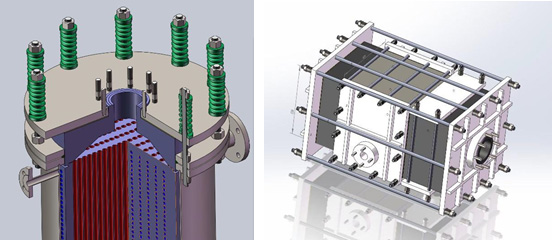
• Fully modular design: Allows adjustment of the number of blocks, block size, and flow passages
• Different hole diameters on the process side and service side
• Maximum block diameter: 1800 mm
• Optional equipment connections
• Tension rods and spiral springs ensure thermal expansion compensation
• Removable joints, facilitating mechanical cleaning
• Rubber lining, enamel lining, or PTFE-lined shells for corrosive fluids on the shell side
• Very large hole diameters, allowing crystallization and preventing blockages
• Wear-resistant protection
• Sight glasses
Main Features
• Design Pressure: -0.1 (full vacuum) to +1.0 MPa
• Design Temperature: -60 to +200°C
• Heat Transfer Area: Up to 600 m²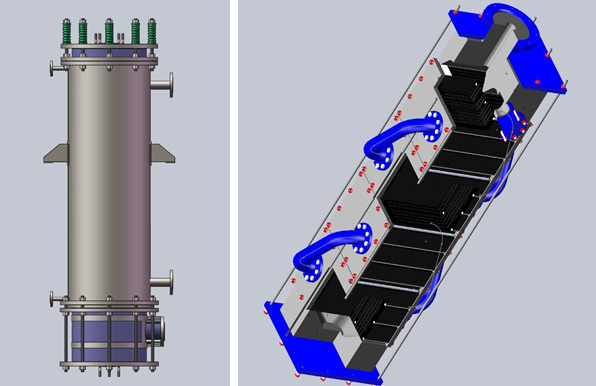
Materials
• Impenetrable Graphite: HEXNOVAS M-2 G1, HEXNOVAS M-2 G2, or HEXNOVAS M-2 G3
• Shell, Pressure Plates, and Flanges: Carbon steel or stainless steel
• Tension Rods, Nuts, Bolts, Washers, Springs: Steel, graphite, plastic
• PTFE Gaskets between blocks
Details at a Glance:
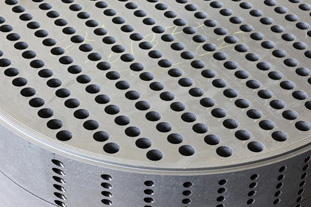
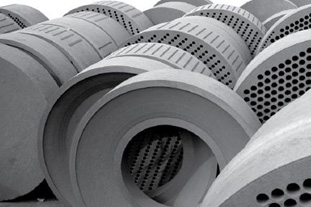
Impregnated Graphite Heat Exchanger Blocks
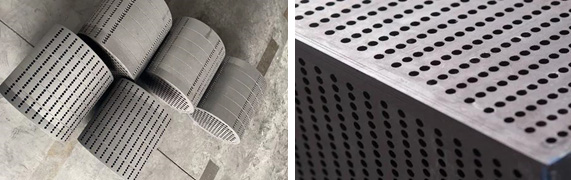
Graphite heat exchanger blocks of various specifications and sizes, along with end caps, make up the block-hole type graphite heat exchanger, which is a stack of graphite blocks encapsulated in a steel shell. The impregnated graphite heat exchanger blocks can be cylindrical or rectangular in shape. The heat exchanger blocks are drilled with a series of channels in both horizontal and vertical directions, forming process and service channels.
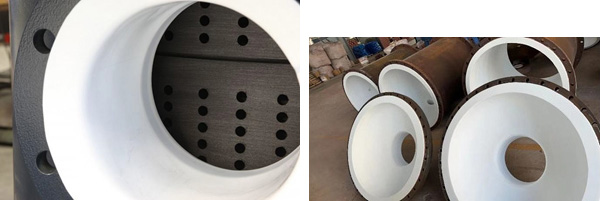
Graphite block heat exchanger with Steel-Lined PTFE Shell
According to different process requirements, the end caps and shell can be made from various structural materials, including impregnated graphite, steel-lined enamel, steel-lined PTFE, steel-lined rubber, carbon steel, and stainless steel.
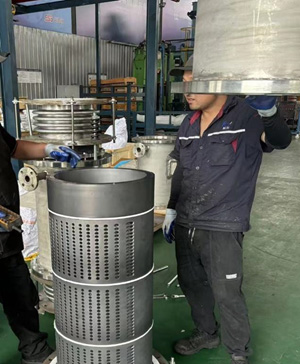
Assembly of Graphite block heat exchanger
A stack of block-hole type impregnated graphite blocks is sealed with flexible PTFE gaskets and then encapsulated in a steel shell. The assembly must be done vertically. During use, the Graphite block heat exchanger can be installed vertically, horizontally, or at an inclined angle.
Example Applications: