
Industry application

Food & Beverage Heat Exchangers

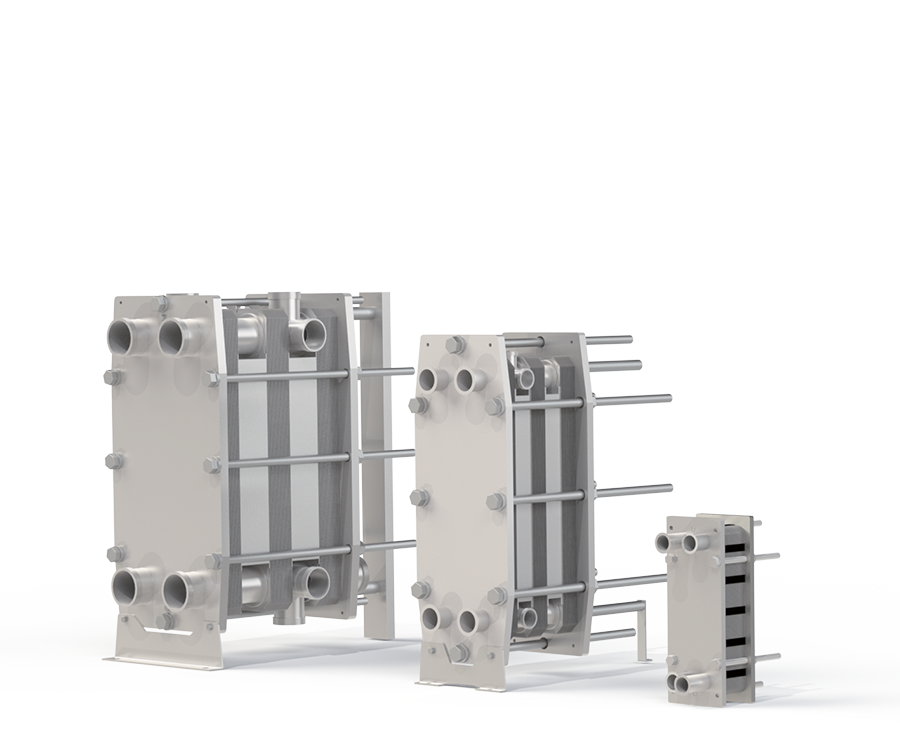
Hygienic heat exchangers for dairy, brewing, beverages, sauces, syrup, seafood cooling, sugar processing, pasteurization and CIP.

Prepare Your Selection Request
Food & Beverage Heat Exchangers heat exchanger engineering application

Application engineering

Process Role

Food-process exchangers heat, cool or regenerate product streams while preserving the specified temperature history and cleanability. A pasteurization line must coordinate the exchanger with holding, controls and product routing; exchanger duty alone does not validate the whole process.

Milk, cream, beverages and jam impose different flow and cleaning conditions. Product viscosity at operating temperature, particles or fibres, fouling and allowable pressure drop determine whether a plate passage, tubular path or separate chilled-water utility is appropriate.

Thermal interfaces

Typical Thermal Duties

Heating, cooling and regeneration

A multi-section exchanger can recover heat between outgoing and incoming product before final heating or cooling. Rate each section against its actual flow and temperature program rather than treating recovered duty as measured plant energy savings.

Dairy chilling and viscous products

Falling-film chilling supplies cold utility water; it is distinct from the product-contact exchanger. Cream and jam require viscosity and deposit behavior to be considered across the temperature range.

Rating basis

Key Engineering Inputs

  • Product composition, viscosity versus temperature, solids/particle dimensions, flow and required temperature history.
  • Utility temperatures and flows, regeneration arrangement, pressure drop and product/utility pressure relationships.
  • CIP/SIP chemistry and operating sequence, inspection access, drainability and specified hygienic documentation.

Design review

Application-Specific Design Challenges

Product passages and hygienic construction

Choose channel geometry for viscosity and solids without assuming a universal architecture. Materials, seals, finish and joining method must fit the product, cleaning regime and applicable customer or jurisdictional requirements.

Relevant HEXNOVAS Case Evidence

HEXNOVAS case evidence

R717 falling-film dairy chiller

The published dairy utility case describes water flowing over pillow plates with ammonia evaporation inside. It illustrates a chilled-water supply duty, not direct product cooling.

Published project data

  • Cooling duty: 1,100 kW; water flow: 75 m³/h.
  • Water: 13°C → 0.5°C; refrigerant: R717.

The page reports these operating figures but provides no separate commissioning measurement series; no COP or energy-saving result is inferred.

View case study: R717 falling-film dairy chiller

HEXNOVAS case evidence

Multi-section exchanger for 50% cream

The published sizing sheet selects an H4-P with 94 plates for heating, regeneration and cooling/recovery. Its section duties illustrate why each temperature program is rated separately.

Published selection / sizing data

  • Section duties: 27.93 kW, 17.07 kW and 69.26 kW; published total: approximately 114.26 kW.
  • Cream flow: 1.50 m³/h; water flow: 2.00 m³/h.
  • Heating section: cream 73.0°C → 94.0°C; water 100.0°C → 87.5°C.

These are selection figures, not a measured energy-saving percentage or process-validation result.

View case study: Multi-section exchanger for 50% cream

HEXNOVAS case evidence

Tubular heating for viscous jam

The case selects a tubular product heater in a steam-heated hot-water circulation system. Its relevance is viscous-product passage design and hydraulic assessment.

Published application / selection data

  • Product viscosity: approximately 8000 cP.
  • Selected area: 10.5 m²; maximum working pressure: 1.2 MPa.

The published snapshot does not establish a product flow, measured heating rate or guaranteed fouling interval.

View case study: Tubular heating for viscous jam

Technology fit

Common Heat Exchanger Technologies

Sanitary gasketed plate

Evaluate for inspectable product paths and multi-section regeneration where the passage geometry fits the product.

Sanitary tubular

Assess for viscous or particulate products with the required cleaning and pressure-drop conditions.

Pillow plate and fusion-bonded utility options

Pillow plates can serve a falling-film utility chiller. A stainless fusion-bonded unit may suit compatible clean utilities; hygienic acceptability still requires review.

Prepare your enquiry

What HEXNOVAS Needs for Selection

  • Send the product specification, viscosity/solids data, flow and all process/utility inlet and outlet temperatures.
  • Identify holding and regeneration requirements, allowable pressure drop, CIP/SIP regime and hygienic standard or customer specification.
  • Include layout, connections, inspection access and any product/utility separation requirements.
Send Your Operating Conditions

Engineering support

Send the operating conditions. We will evaluate the technology.

Request Selection
Contact HEXNOVAS