
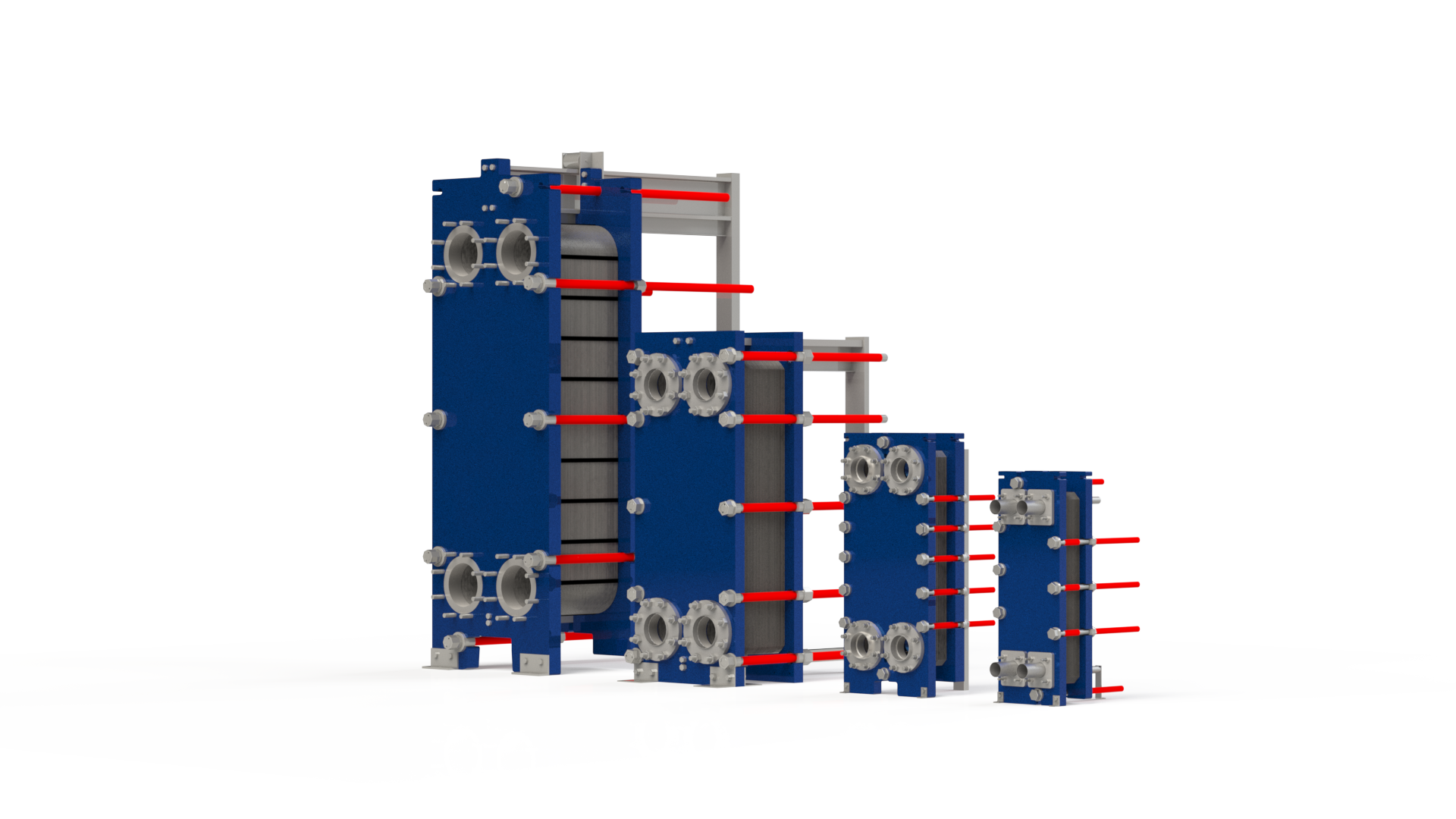
Industry application

Heat Exchangers for Refrigeration

Heat exchangers for industrial and commercial refrigeration, ammonia, CO2, chillers, ice systems, oil cooling and compressed-air dryers.

Prepare Your Selection Request
Heat Exchangers for Refrigeration heat exchanger engineering application

Application engineering

Process Role

Refrigeration exchangers connect refrigerant phase change to a secondary fluid or another refrigerant circuit. Evaporators absorb heat; condensers reject it. A transcritical CO₂ gas cooler needs its actual temperature and pressure path rated rather than a condensing-temperature assumption.

Cascade systems transfer duty between stages. Economizers and vapor-injection circuits introduce additional distribution and control conditions; oil coolers, heat recovery and refrigerated air dryers have their own fluid and temperature requirements.

Thermal interfaces

Typical Thermal Duties

Ammonia, CO₂ and cascade duty

R717 selection requires compatible materials and sealing interfaces. CO₂ equipment must suit the design pressure and operating range, including off-design conditions. Do not transfer a cascade operating pressure to a transcritical rating.

Auxiliary cooling and heat recovery

Oil content, economizer injection behavior and useful heat demand can alter selection. Compressed-air dryers also need moisture removal and freeze-protection conditions to be defined.

Rating basis

Key Engineering Inputs

  • Refrigerant; evaporation/condensation conditions or gas-cooling path; superheat and subcooling.
  • Secondary fluid, composition, flow and inlet/outlet temperatures; design and operating pressures on each side.
  • Allowable ΔP, oil content, refrigerant charge/distribution considerations, materials, cycling and defrost requirements.

Design review

Application-Specific Design Challenges

Distribution, freezing and connection loads

Thermal rating must be paired with stable flow distribution and controls. Review low-flow freezing, oil return and piping loads during startup and cycling.

Refrigerant containment

Welded cassettes reduce gasketed refrigerant-side leak paths but do not eliminate leakage. Weld integrity, remaining seals, conditions and inspection still matter.

Relevant HEXNOVAS Case Evidence

HEXNOVAS case evidence

CO₂ / R134a cascade heat-pump interface

The published selection snapshot rates a BPHE between a condensing R744 low stage and an evaporating R134a high stage. It is a defined operating point, not a generic CO₂ equipment envelope.

Published calculated / selection data

  • Capacity: 30.87 kW; selection margin: 15%.
  • R744: 35.0°C inlet, −6.0°C condensing/outlet; 29.68 bara; 0.1026 kg/s.
  • R134a: −10.0°C evaporation, 5.0 K superheat; 1.991 bara; 0.2273 kg/s.
  • Maximum ΔP: 50.0 kPa on R744; 200.0 kPa on R134a.

Selection margin is not measured efficiency or energy savings. Mechanical design pressure must be confirmed separately.

View case study: CO₂ / R134a cascade heat-pump interface

HEXNOVAS case evidence

Industrial R717 heat pump for hot water

The published project description identifies a semi-welded plate exchanger in an ammonia heat-pump system serving process and cleaning water. It demonstrates the integration role of the exchanger.

Published project description

  • Refrigerant: R717; reported hot-water output up to 88°C.

Detailed stage flows, a measured COP and quantified energy savings are not supplied here; none is inferred.

View case study: Industrial R717 heat pump for hot water

Technology fit

Common Heat Exchanger Technologies

Brazed plate and high-pressure CO₂ BPHE

Consider a sealed plate pack for compatible packaged duties; verify the exact refrigerant, joint materials and pressure rating.

Semi-welded plate

Assess welded cassettes for ammonia service with the appropriate sealing and water-side maintenance arrangement.

Condenser and evaporator GPHE

Evaluate phase-change channel design and distribution for the specified fluid and duty; gasket compatibility remains a selection input.

Prepare your enquiry

What HEXNOVAS Needs for Selection

  • Send the refrigerant circuit diagram and full design/part-load operating points, including superheat, subcooling and defrost.
  • Provide secondary-fluid temperatures and flow, pressure ratings, separate ΔP limits, oil information and the intended control/distribution arrangement.
  • State installation orientation, connection loads, service requirements and any applicable approval scope.
Send Your Operating Conditions

Engineering support

Send the operating conditions. We will evaluate the technology.

Request Selection
Contact HEXNOVAS