
Industry application
Pool Heating & Water-System Heat Exchanger Applications
Titanium and stainless swimming pool heat exchangers for boilers, heat pumps, saltwater pools, spas, aquariums and oceanariums.
Prepare Your Selection Request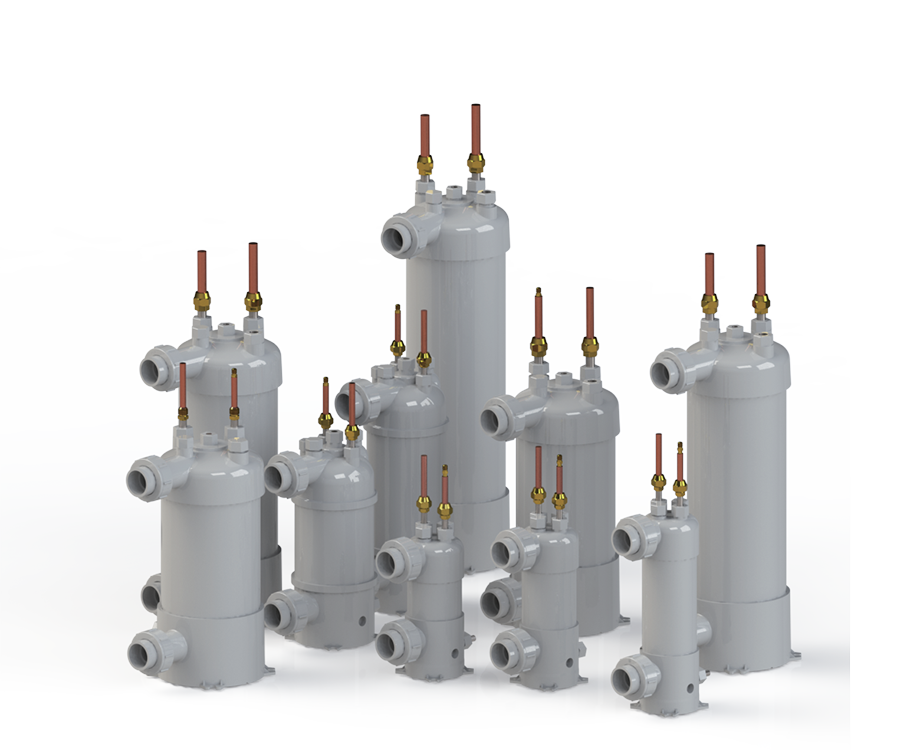
Application engineering
Process Role
The pool exchanger transfers heat from a boiler, heat pump or solar source into the recirculating pool-water system. Source-side flow and pool-side flow are separate inputs: the heat source’s nameplate output alone does not establish the heat transferred at the actual water temperatures.
System sizing combines the energy needed to raise water temperature with heat lost during warm-up and normal use. Pool volume matters, but so do starting temperature, target temperature, desired heat-up time, exposure, cover use and the source capacity available throughout the cycle. This page addresses system selection rather than model comparison.
Thermal interfaces
Typical Thermal Duties
Pool and spa heating
Check both initial heat-up and temperature maintenance. Spa operating patterns and replenishment can differ from a swimming pool; do not size either solely from volume.
Saltwater and disinfected systems
Provide salinity, chloride, disinfectant, pH and temperature data. Review dosing locations, deposits and local concentrations alongside the bulk-water sample.
Aquariums, oceanariums and variable heat sources
Identify the permitted wetted materials and habitat temperature requirements. Boiler, heat-pump and solar supplies deliver different temperature programs; assess the lowest useful source temperature as well as the peak.
Rating basis
Key Engineering Inputs
- Water volume, starting/target temperatures, heat-up time and the expected heat-loss conditions.
- Boiler, heat-pump or solar supply/return temperatures, available output and source-side flow.
- Pool-side flow through the exchanger, bypass arrangement, pressure and available pressure drop.
- Water chemistry, treatment method, deposits, cleaning chemicals and seasonal shutdown conditions.
Design review
Application-Specific Design Challenges
Chemistry before an alloy label
Titanium is a candidate for saltwater service, not a universal corrosion guarantee. Stainless suitability also depends on temperature, oxidizers, deposits, crevices and construction. Confirm the actual water analysis and joining materials before choosing an exchanger.
Scaling, maintenance and winter operation
Deposits increase thermal resistance and may affect local corrosion conditions. Plan cleaning access and compatible cleaning chemistry, and define drainage or freeze protection when the source or circulation stops.
Published Evidence Scope
No strong published pool installation case is identified in the reviewed case set. The sizing guidance is not a claim of a completed project or measured heating time.
Technology fit
Common Heat Exchanger Technologies
Dedicated swimming-pool exchanger
Compare equipment only after establishing the source/pool temperature program and hydraulic arrangement. Model tables remain on the product page.
PVX titanium tube
Evaluate for compatible saltwater, seawater or heat-pump duties using the actual chemistry and operating conditions.
Other tubular arrangements
Consider geometry, cleaning access and connections where the pool system needs a different installation arrangement.
Prepare your enquiry
What HEXNOVAS Needs for Selection
- Send pool volume, current/target temperature, desired heat-up time, cover/exposure information and estimated heat loss if available.
- Provide the source temperature range, available heating capacity and separate source-side/pool-side flow rates.
- Include water analysis, dosing arrangement, pressure limits and access for cleaning or winter drainage.
Engineering support