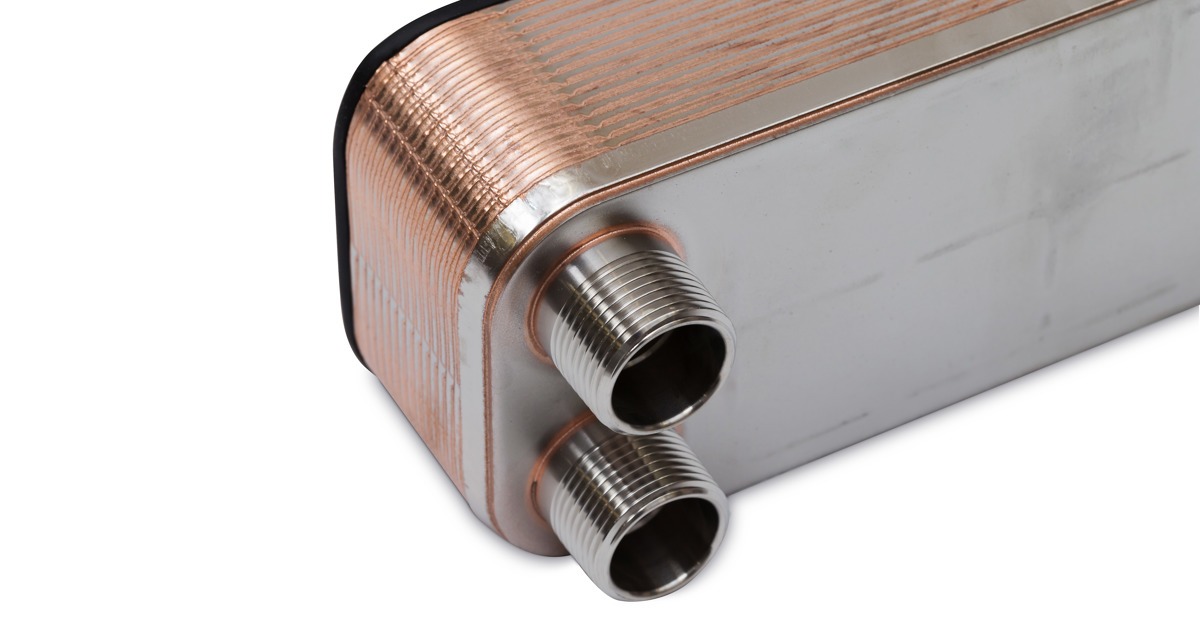
What is a Brazed Plate Heat Exchanger?
A brazed plate heat exchanger is a type of heat exchanger that uses thin metal plates to transfer heat between two fluids. Unlike shell-and-tube heat exchangers, these units are highly compact and lightweight, making them ideal for installations with space constraints. The plates are typically made of stainless steel and are “brazed” together using copper or nickel, creating a robust, leak-proof structure.
The design of these plates allows for a large surface area within a small volume. Fluids flow through alternating channels between the plates, facilitating efficient heat transfer. The brazing process ensures strong adhesion between plates, making the unit capable of withstanding high pressure and high-temperature conditions.
How Does a Brazed Plate Heat Exchanger Work?
The operation of a brazed plate heat exchanger is straightforward yet highly effective. Here’s a step-by-step explanation of how it works:
-
Fluid Entry: Two separate fluids, typically with different temperatures, enter the heat exchanger. One fluid is hot, and the other is cold.
-
Flow Through Plates: The fluids flow through alternating channels formed by the plates. The hot fluid passes through one channel while the cold fluid passes through the adjacent channel.
-
Heat Transfer: As the fluids flow through the channels, heat is transferred from the hot fluid to the cold fluid via the metal plates. The corrugated pattern on the plates increases turbulence, which enhances heat transfer efficiency.
-
Fluid Exit: After exchanging heat, the fluids exit the heat exchanger at the desired temperature. The hot fluid leaves cooler, while the cold fluid exits warmer.
This counterflow design, where the fluids move in opposite directions, maximizes heat transfer efficiency. The compact nature of brazed plate heat exchangers allows them to achieve performance comparable to much larger heat exchangers.
Advantages of Brazed Plate Heat Exchangers
A brazed plate heat exchanger offers several benefits over traditional heat exchangers:
-
High Efficiency: The large surface area of the plates ensures maximum heat transfer in a compact size.
-
Space-Saving Design: These units are smaller and lighter than shell-and-tube or finned-tube exchangers.
-
Durability: Brazed plates can withstand high pressures and temperatures without leaking.
-
Low Maintenance: With no gaskets or complex components, maintenance is minimal.
-
Versatility: They are suitable for various fluids, including water, glycol, refrigerants, and oils.
These advantages make brazed plate heat exchangers ideal for modern HVAC systems, refrigeration units, industrial applications, and even renewable energy systems.
Applications of Brazed Plate Heat Exchangers
Due to their efficiency and reliability, brazed plate heat exchangers are used in multiple industries:
-
HVAC Systems: For heating, cooling, and hot water systems.
-
Refrigeration: For condensing and evaporating refrigerants efficiently.
-
Industrial Processes: Chemical, pharmaceutical, and food processing industries rely on them for precise temperature control.
-
Renewable Energy: Used in solar and geothermal heating systems.
Their compact design allows engineers to incorporate them into systems where space and weight are constraints without compromising on heat transfer efficiency.
Conclusion
Understanding how a brazed plate heat exchanger works is crucial for anyone looking to improve energy efficiency in heating and cooling systems. With its robust construction, high efficiency, and compact size, it provides a reliable solution for diverse industrial and commercial applications.
If you are considering upgrading your heat exchange system or designing a new one, a brazed plate heat exchanger can offer superior performance and long-term durability. For more detailed information and expert guidance, you can explore solutions at XHEXNOVAS.