Why Semi-Welded Plate Heat Exchangers Are Used in Ammonia Refrigeration Systems
Why Semi-Welded Plate Heat Exchangers Are Used in Ammonia Refrigeration
Ammonia (NH₃) is one of the most efficient and environmentally friendly natural refrigerants. It offers excellent thermodynamic performance, zero global warming potential (GWP), and high energy efficiency. For this reason, ammonia is widely used in industrial refrigeration systems such as cold storage, food processing, chemical plants, and ice rinks.
However, ammonia is also toxic, corrosive to certain materials, and operates under relatively high pressure , which places strict requirements on heat exchanger design.
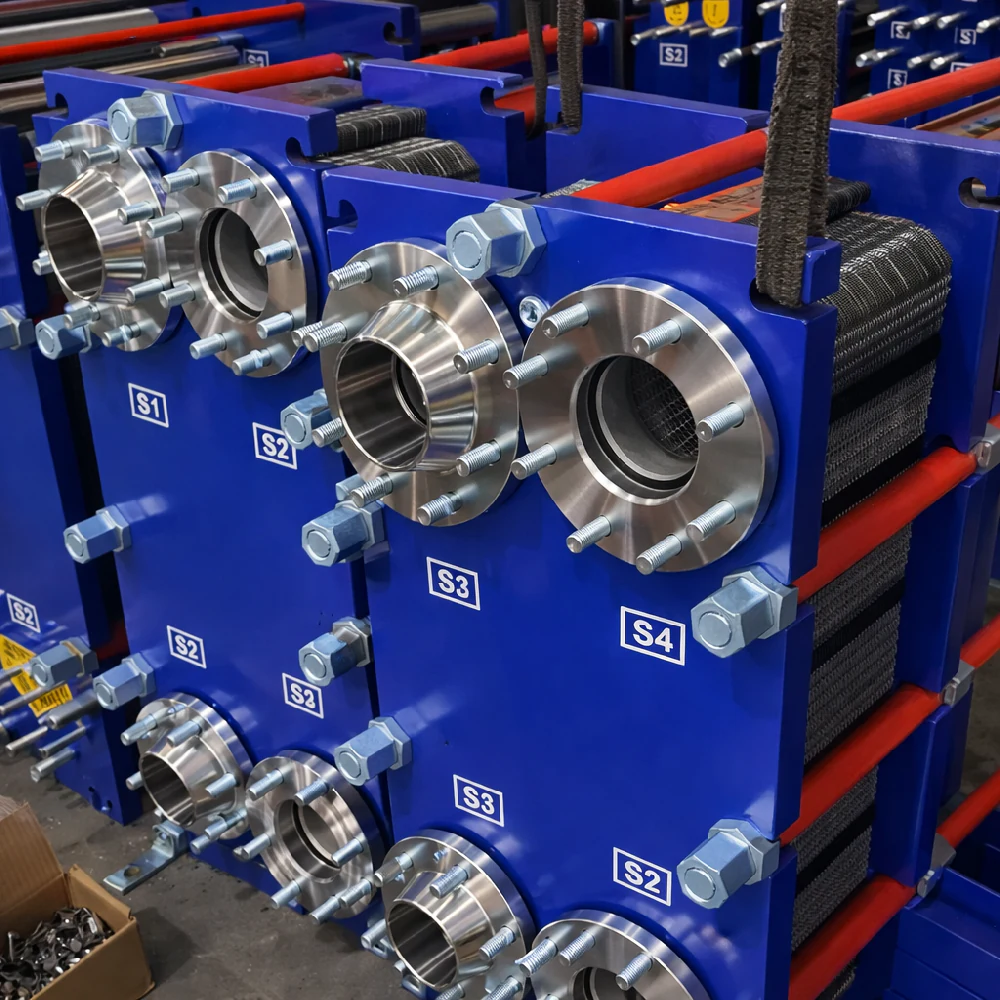
Semi-welded plate heat exchangers are one option for ammonia duties when their materials, pressure rating and maintenance arrangement fit the application.
Key Reasons for Using Semi-Welded Plate Heat Exchangers
Safety: separating ammonia from the water circuit
In ammonia refrigeration systems, one side of the heat exchanger carries ammonia, while the other side carries water or glycol.
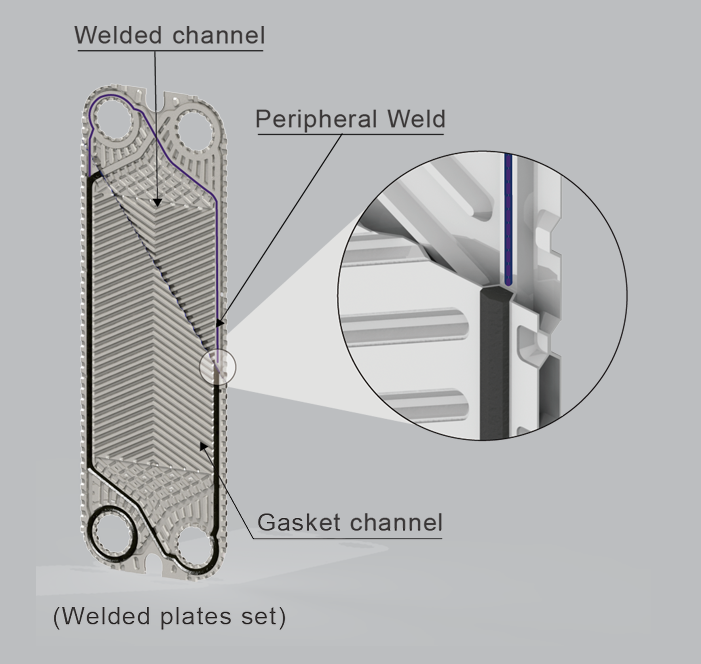
Welded cassette construction reduces gasketed refrigerant-side leak paths, but containment depends on weld integrity, sealing interfaces, operating conditions and inspection.
- The refrigerant flows within welded cassettes; port and other sealing interfaces depend on the design.
- Refrigerant-to-water leakage remains a failure mode requiring design review and inspection.
- Containment must be evaluated for the actual equipment and service.
The required safeguards depend on the ammonia installation and its operating and maintenance procedures.
2. High Pressure Capability
Illustrative operating-pressure references — actual pressures depend on the refrigerant cycle:
- Condenser pressure: 10–18 bar
- Evaporator pressure: 2–6 bar
Design capability must be verified for the selected model; existing examples include:
- Design pressures up to 25–30 bar
- Repeated pressure fluctuations
- Thermal-cycle capability must be verified for the cassette, welds and remaining seals.
The benefit over a fully gasketed design depends on refrigerant compatibility, sealing arrangement, operating cycles and maintenance.
3. Excellent Heat Transfer Efficiency
Compared with shell-and-tube heat exchangers:
- Heat-transfer performance must be compared on the same duty and pressure-drop basis.
- A close approach, such as the existing 1–3 K reference, needs duty-specific rating.
- Lower refrigerant charge
- Compact footprint
This directly reduces:
- Compressor power consumption
- System energy cost
- Equipment installation space
4. Maintenance: One Side Welded, One Side Serviceable
The unique advantage of semi-welded design:
This allows:
- Safe isolation of ammonia
- Easy mechanical cleaning of water side
- Whether cleaning can leave the refrigerant circuit closed depends on the equipment and approved isolation procedure.
Which is extremely important for food and cold storage facilities.
5. Material Compatibility
Semi-welded plate heat exchangers typically use:
- Stainless steel 316L or 304 for plates
- Laser or TIG welded ammonia channels
- Special elastomers for water side gaskets
Material compatibility and construction must be checked for:
- Long-term corrosion resistance
- The applicable food-process and documentation requirements
Engineering Conclusion
Semi-welded construction can balance the following needs when selected for the actual duty:
- Safety
- Efficiency
- Pressure resistance
- Maintainability
Thermal performance and welded-cassette containment require independent verification.
Suitability follows the project requirements, rather than a universal preferred design.
Frequently Asked Questions
What must be checked before using a fully gasketed design with ammonia?
Ammonia (NH₃) can attack certain gasket materials and poses serious safety risks if leakage occurs.
In fully gasketed plate heat exchangers, both sides rely on elastomer sealing. If gasket degradation happens, ammonia could leak into the water circuit or to atmosphere.
Welded cassettes reduce gasketed refrigerant-side leak paths; they do not eliminate leakage or cross-contamination risk.
2. Why not use fully welded plate heat exchangers instead?
Fully welded plate heat exchangers offer high safety, but they are:
- More expensive
- Difficult to mechanically clean
- Less serviceable on fouling water side
A semi-welded design may provide a useful maintenance compromise, depending on the circuit layout and duty.
3. Are semi-welded plate heat exchangers suitable for ammonia evaporators and condensers?
Yes. They are commonly used as:
- Flooded ammonia evaporators
- Ammonia condensers
- Ammonia subcoolers
- Cascade intercoolers
Their pressure resistance and safety design make them ideal for these applications.
4. What design pressure can semi-welded plate heat exchangers handle?
Typical design pressures range from:
- Standard-design examples in this guide: 16–25 bar; verify the actual equipment rating.
- Up to 30 bar or higher depending on manufacturer
Pressure-cycle capability requires verification against the selected design and operating profile.
5. Is refrigerant charge lower compared to shell-and-tube heat exchangers ?
Yes.
Semi-welded plate heat exchangers typically require significantly lower ammonia charge compared to shell-and-tube designs, which:
- Improves safety
- Reduces refrigerant inventory
- Lowers regulatory burden
This is a major advantage in modern industrial refrigeration plants.
6. Can the water side be cleaned?
Yes.
The water (or glycol) side is gasketed and removable, allowing:
- Mechanical cleaning
- Plate inspection
- Replacement of gaskets
The ammonia circuit may remain closed during water-side maintenance only where the manufacturer-approved design and isolation procedure permit it.
7. What materials are recommended for ammonia applications?
Common materials include:
- Stainless steel 316 or another grade verified for the service
- Laser or TIG welded ammonia channels
- Water-side elastomer and refrigerant-port seals must be selected for the actual design and fluids; NBR / EPDM suitability is compound- and service-dependent.
Material selection must comply with pressure and corrosion requirements.
8. How does efficiency compare with shell-and-tube heat exchangers?
Semi-welded plate heat exchangers typically provide:
- Heat-transfer coefficient depends on fluid properties, channel design, flow and allowable pressure drop.
- The existing 1–3 K approach example requires confirmation by thermal rating.
- Compactness depends on duty and required maintenance access.
Any COP or power benefit depends on the complete refrigeration system and baseline.
9. Are semi-welded heat exchangers suitable for CO₂ systems as well?
No. pressure can not reach high pressure. have to choose Utra high pressure plate heat exchanger
10. Why are semi-welded plate heat exchangers considered the industry standard in ammonia refrigeration?
It can offer a useful balance of:
- Containment provisions assessed for the selected design
- High thermal efficiency (plate design)
- Pressure resistance
- Serviceability
- Reduced refrigerant charge
Selection against fully gasketed or shell-and-tube alternatives requires a duty-specific safety, thermal and maintenance review.
| Side | Structure |
| Ammonia side | Fully welded |
| Water side | Gasketed & removable |