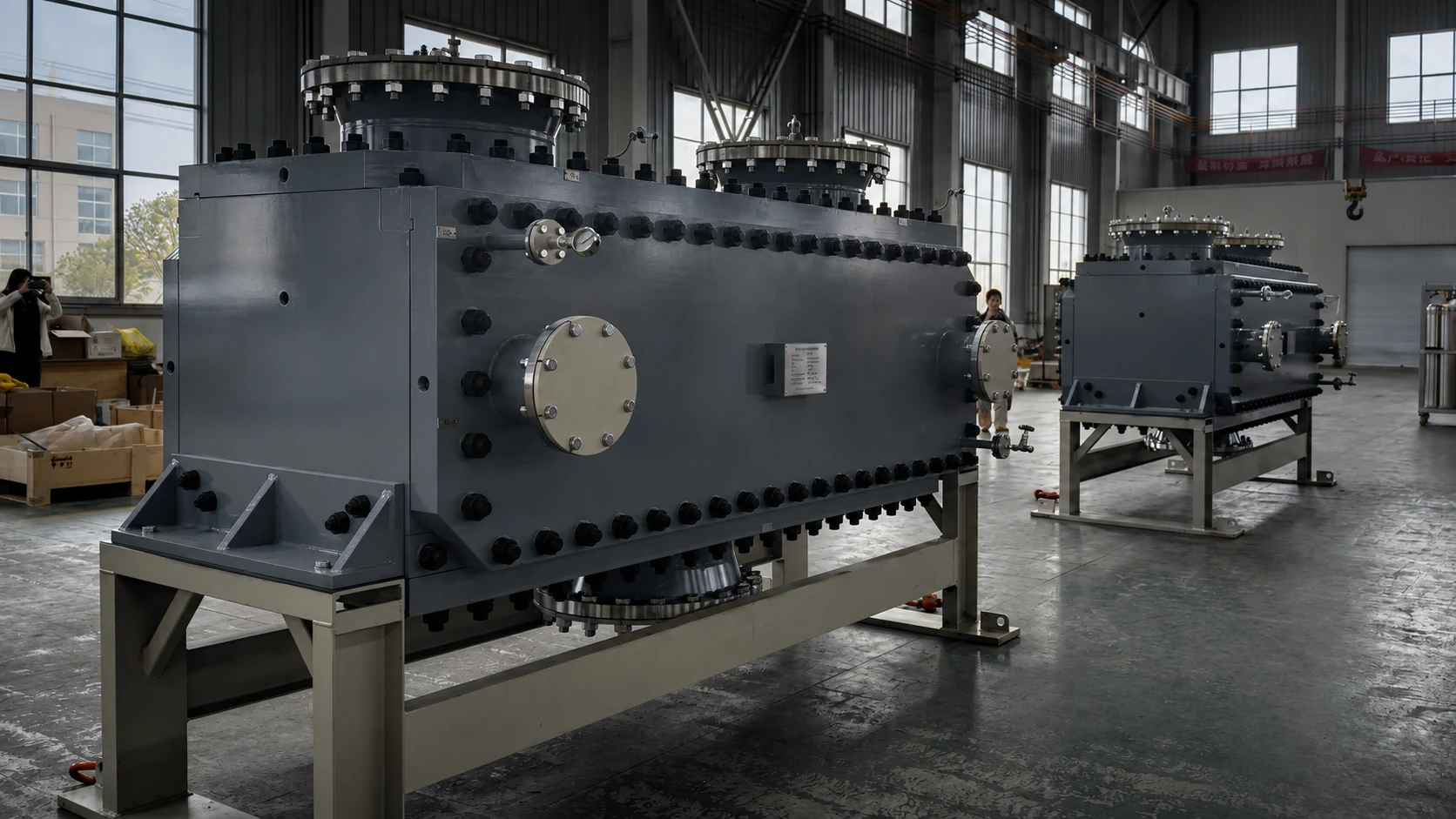
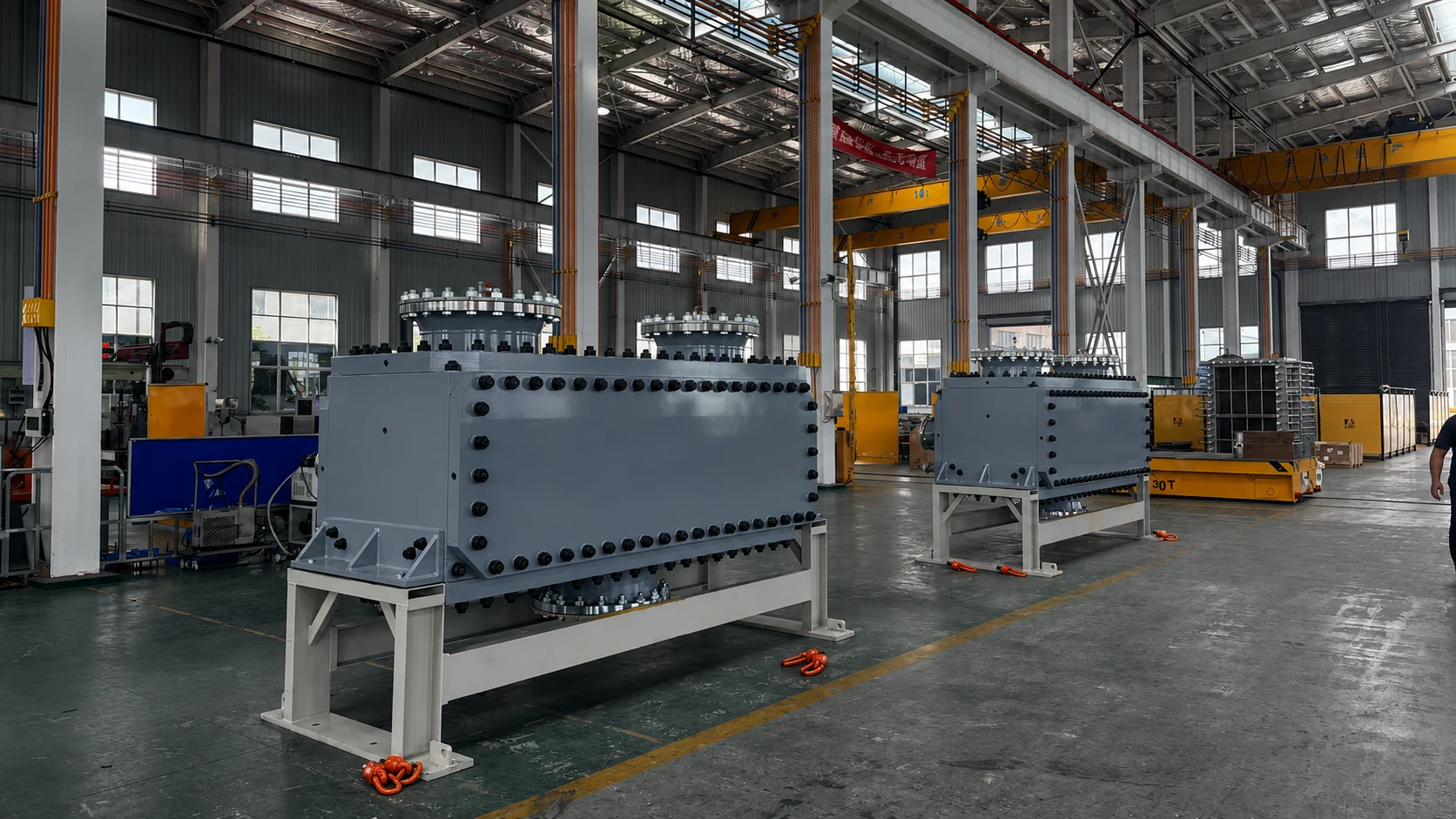
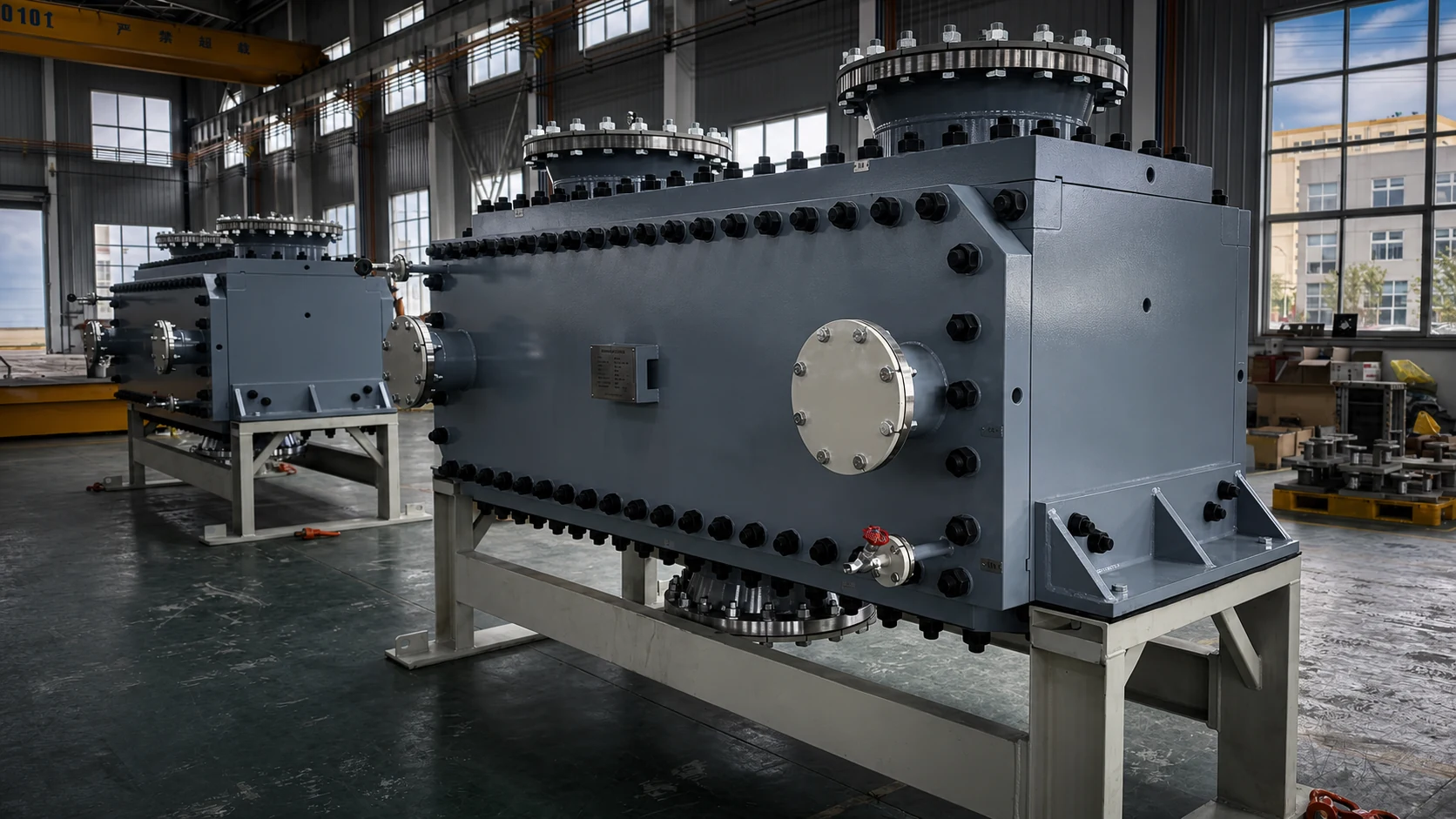
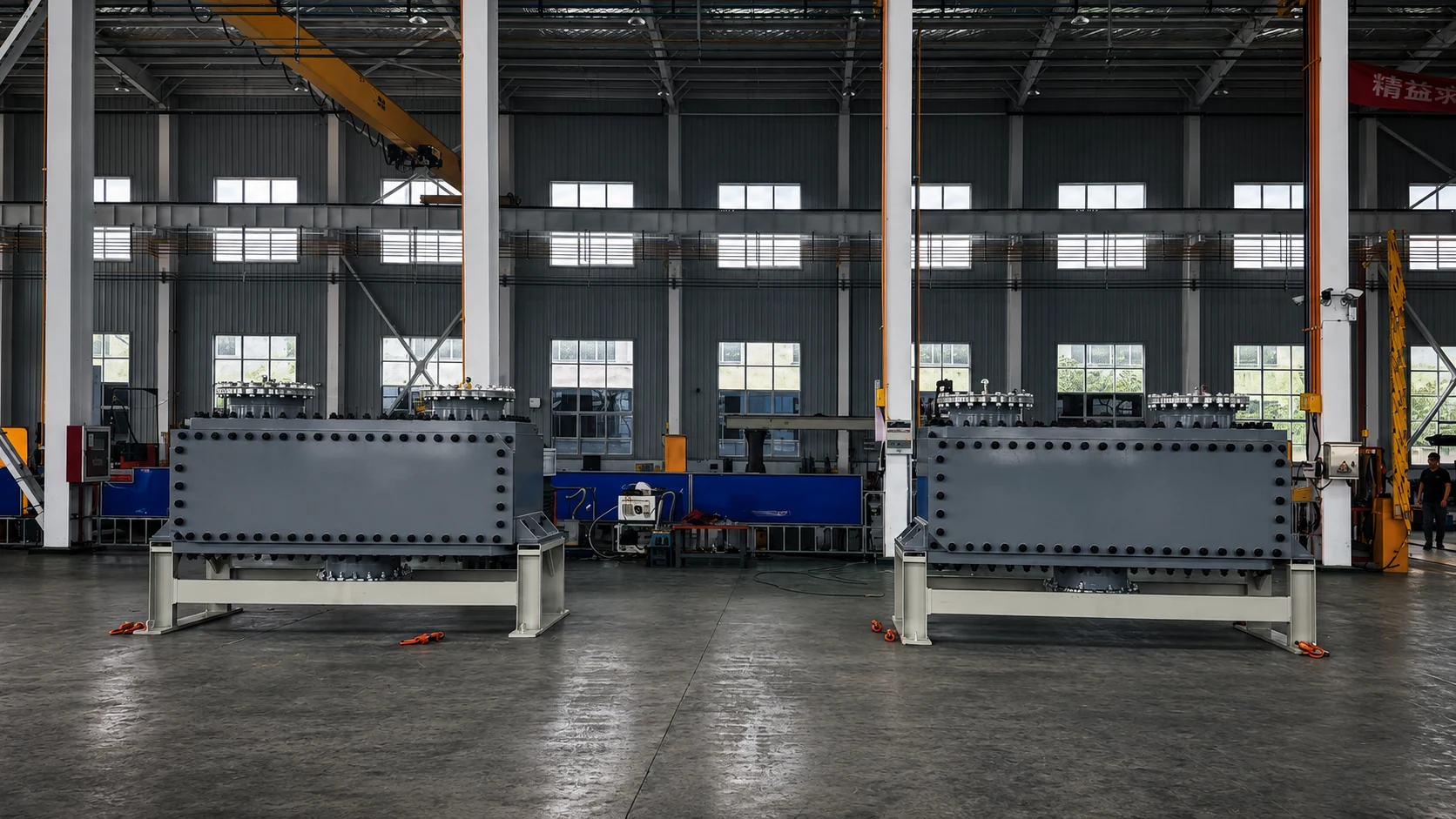
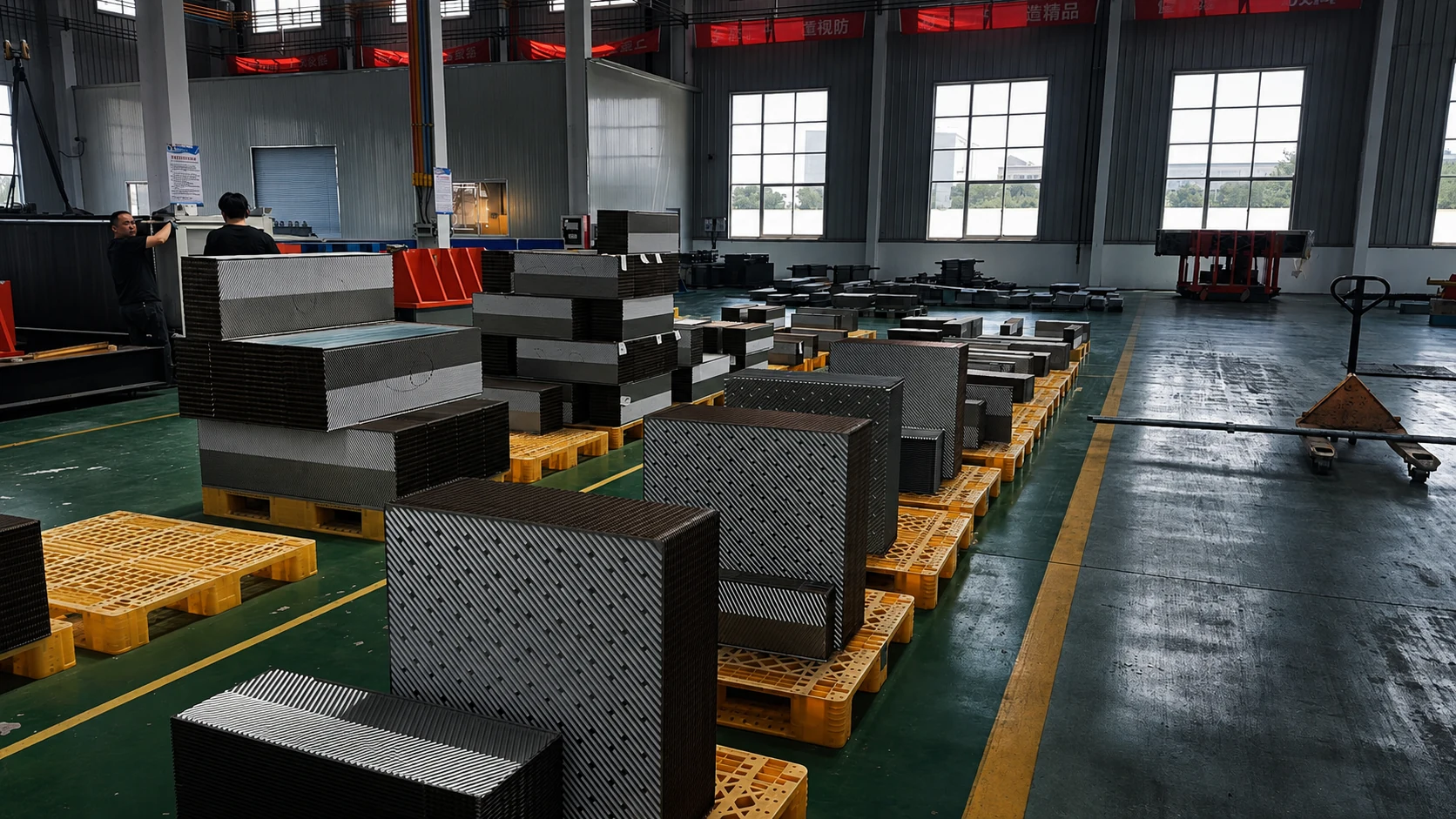
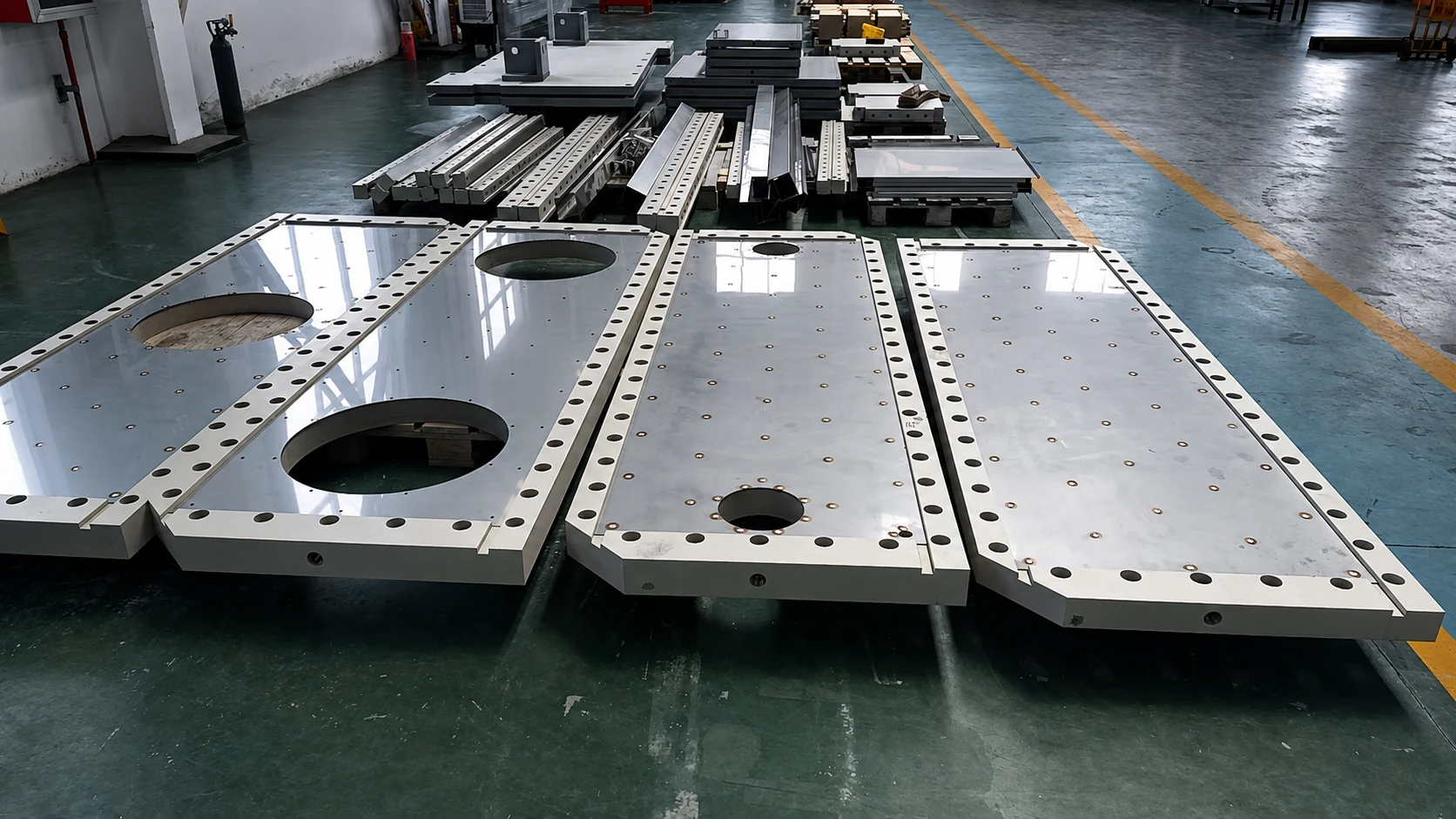
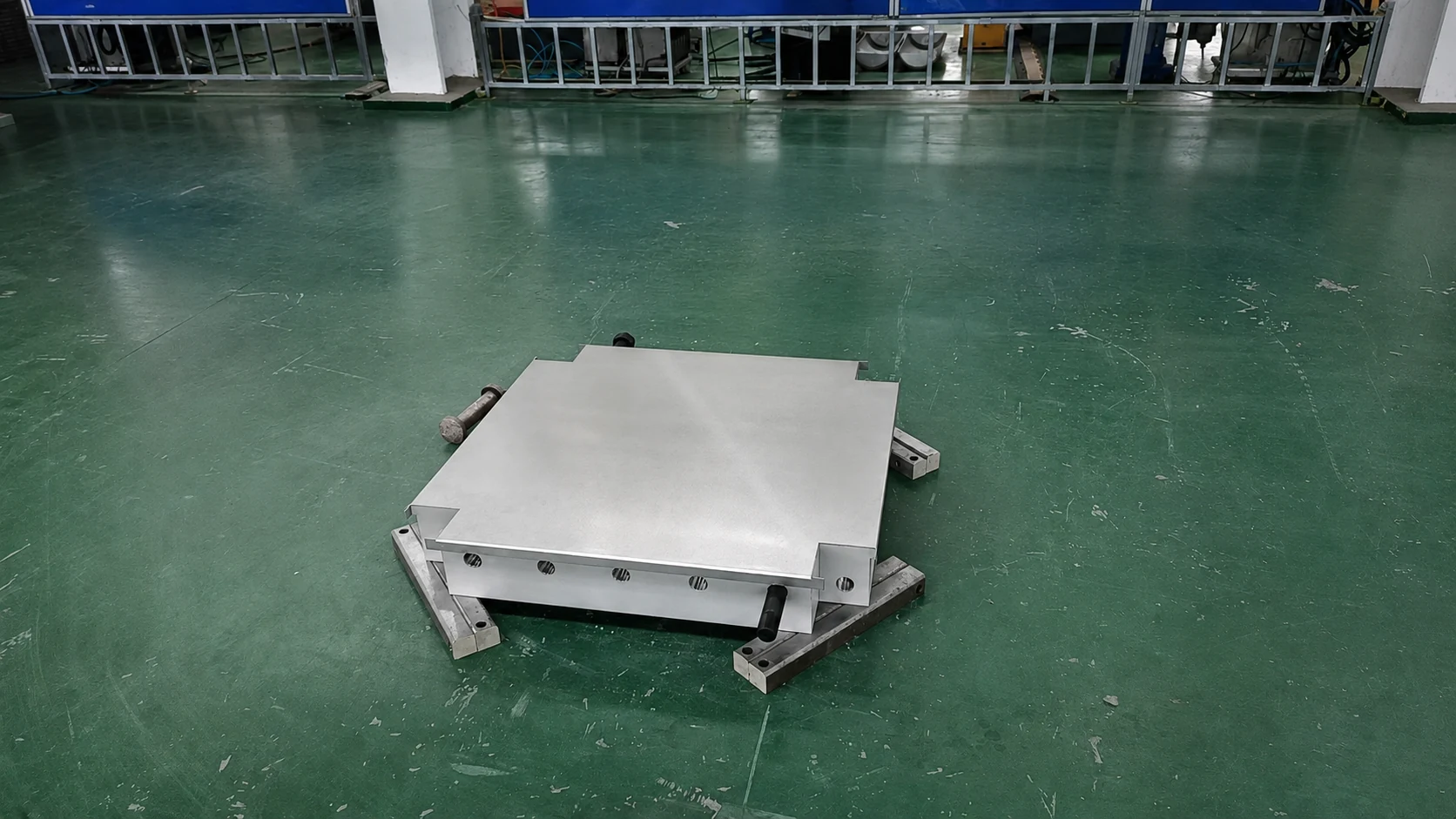
Laser-welded corrugated plates form a rigid rectangular plate pack inside a bolted steel shell. The two media flow through alternating crossed or counter-current channels, and removable side covers provide direct access to each channel group.
Construction
Fully welded rectangular plate pack with removable side covers
Standard model pressure range
Full vacuum to 32 bar
Standard model temperature range
-40°C to 300°C
Engineered operating envelope
Up to 42 bar and 350°C, subject to project design
Flow arrangement
Cross-flow or baffled multi-pass flow
Plate-pack inlet
Open channel across the plate width to reduce stagnant zones and support flushing
Plate welding
End-to-end laser C-weld construction
Engineering explained
See what is happening inside the exchanger.
Product imagery is paired with technical context so buyers and engineers can understand construction, flow path and configuration—not just the exterior.
01
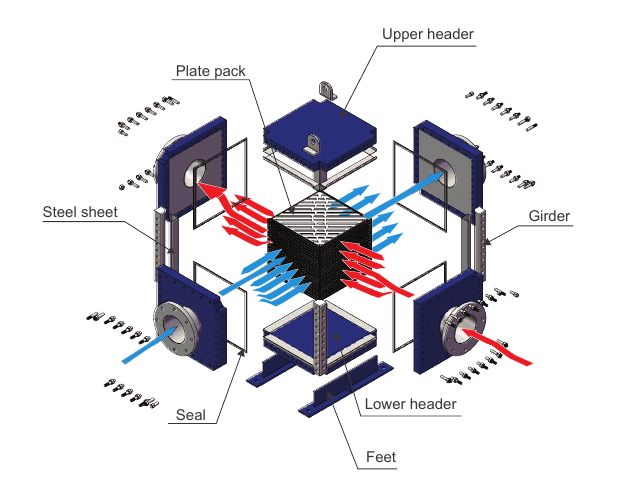
Accessible welded block construction
The exploded view identifies the fully welded plate pack, removable side sheets, headers, seals, girders and support feet.
02
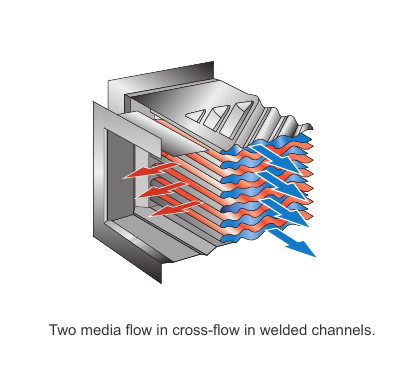
Cross-flow welded channels
The two media pass through separate welded corrugated channels in cross-flow.
03
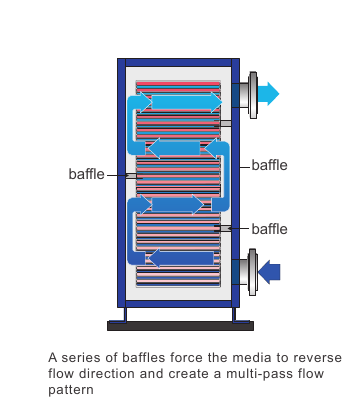
Baffled multi-pass arrangement
Internal baffles reverse the flow direction to create the required multi-pass pattern.
04
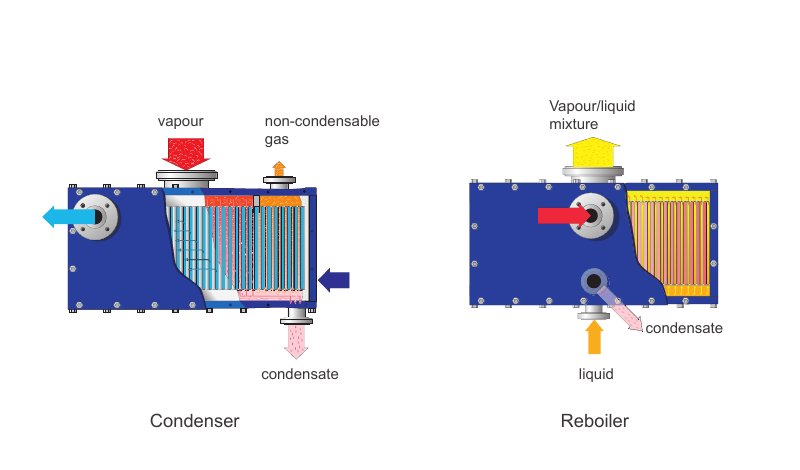
Condenser and reboiler duties
Dedicated arrangements manage vapour, non-condensable gas, condensate and liquid paths for phase-change service.
Models & technical data
Compare models and published specifications.
Compare circuit arrangement and overall dimensions at a glance, then open a product size for its product view, dimension drawing and technical summary.
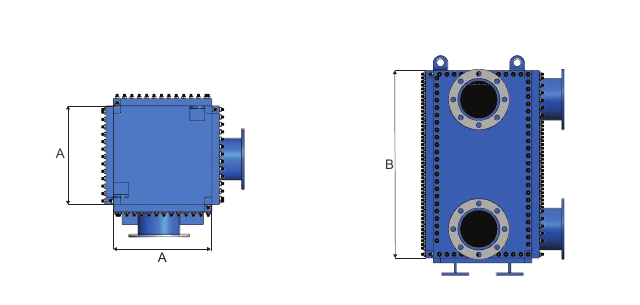
Published HEXNOVAS CP-series standard data. Dimensions are maximum envelope values A × A × B from the product brochure. Final pressure, temperature, material, pass arrangement and nozzle design require project verification.
Dimensions are for reference only. Final dimensions are subject to the approved order drawing. HEXNOVAS reserves the right of final interpretation.
Model details
CP15
HEXNOVAS Compabloc Heat Exchangers
Product configurationDimension drawing
Standard pressure (bar)
FV–32
Standard temperature range (°C)
-40–300
Maximum dimensions (A × A × B)
280 × 280 × 540 mm
Plate materials
AISI 304L / 316L / titanium / alloys
Seal materials
Graphite / PTFE
Construction
Fully welded plate pack with removable side covers
Flow pattern
Cross-flow; multi-pass arrangements available
Published materials
AISI 304L / 316L, titanium, 904L, 254 SMO and alloy options
Dimensions are for reference only. Final dimensions are subject to the approved order drawing. HEXNOVAS reserves the right of final interpretation.
Search Alfa Laval Compabloc and legacy GEA / current Kelvion K°Bloc model families, then use the published envelope as the starting point for a HEXNOVAS replacement review.
Designed around performance, integrity and serviceability.
High thermal efficiency with a footprint up to 80% smaller than a comparable shell-and-tube unit
Fully welded process channels with no inter-plate gaskets
Removable side covers provide access for CIP, inspection and mechanical cleaning
Low fouling, reliable fluid separation and multi-duty operation
Engineered configurations available for elevated pressure and temperature
Product configuration
Structure and material options.
Available configurations
CP15 through CP120 model range
Cross-flow welded channels
Baffled multi-pass flow arrangements
Condenser and reboiler configurations
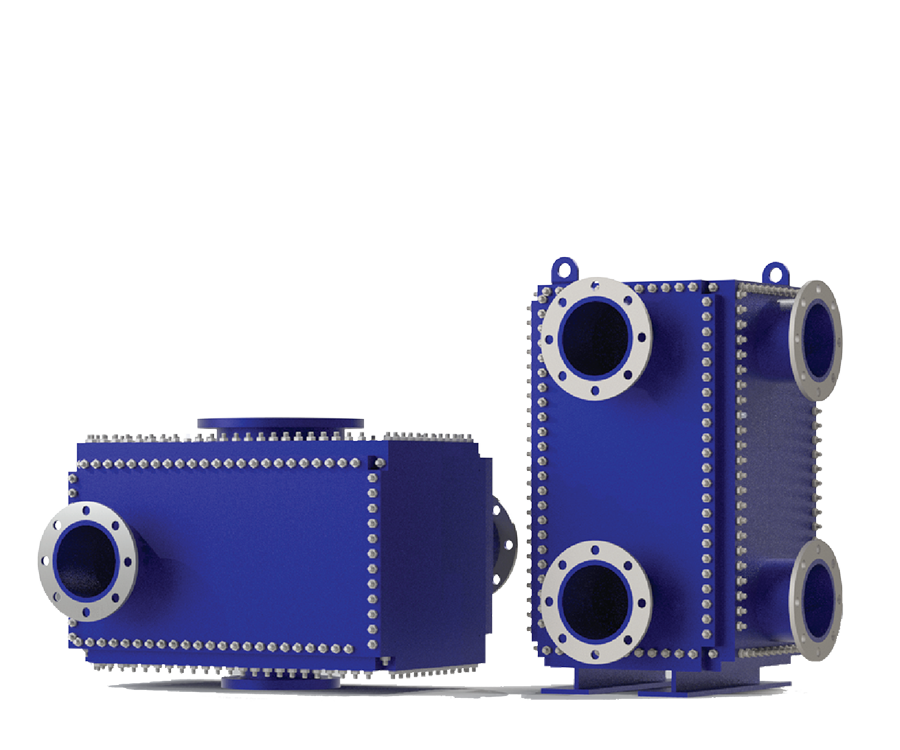
Vertical or horizontal installation
Side access for mechanical cleaning or CIP
Material options
AISI 304L / 316L
Titanium and titanium-palladium
254 SMO and 904L
Hastelloy C276 / C22
Graphite or PTFE cover seals
Typical applications
Where this exchanger fits.
01
Oil and gas: TEG and amine-system heat recovery, cooling, condensation and reboiling
02
Refineries: distillation overhead condensation, H2S and sour-water stripping, steam generation and crude preheating
03
Hydrocarbon processing: primary chemicals, polymers, solvents, paints and coatings
04
Pharmaceutical and specialty chemicals: hygienic condensation and solvent recovery
05
Coke oven, chlor-alkali, fertilizer, hydrogen peroxide and ammonium nitrate production
06
Mining solvent extraction and vegetable-oil deodorization
Selection information
What our engineers need from you.
Provide complete process data, design pressure and temperature, corrosion information, fouling tendency, cleaning method, pass arrangement and nozzle requirements.
Frequently asked questions
Key questions before product selection.
How does Compabloc Heat Exchangers work?
Laser-welded corrugated plates form a rigid rectangular plate pack inside a bolted steel shell. The two media flow through alternating crossed or counter-current channels, and removable side covers provide direct access to each channel group.
What information is required to select the right product?
Provide complete process data, design pressure and temperature, corrosion information, fouling tendency, cleaning method, pass arrangement and nozzle requirements.
Which materials and configurations are available?
AISI 304L / 316L; Titanium and titanium-palladium; 254 SMO and 904L; Hastelloy C276 / C22; Graphite or PTFE cover seals
How is the final product size confirmed?
The final size is confirmed by thermal calculation using flow rates, inlet and outlet temperatures, allowable pressure drop, design pressure and fluid properties.
Product documentation
Catalogue and technical downloads.
Use the published catalogue for product-range reference. Final dimensions, ratings and materials are confirmed for the selected model and operating duty.