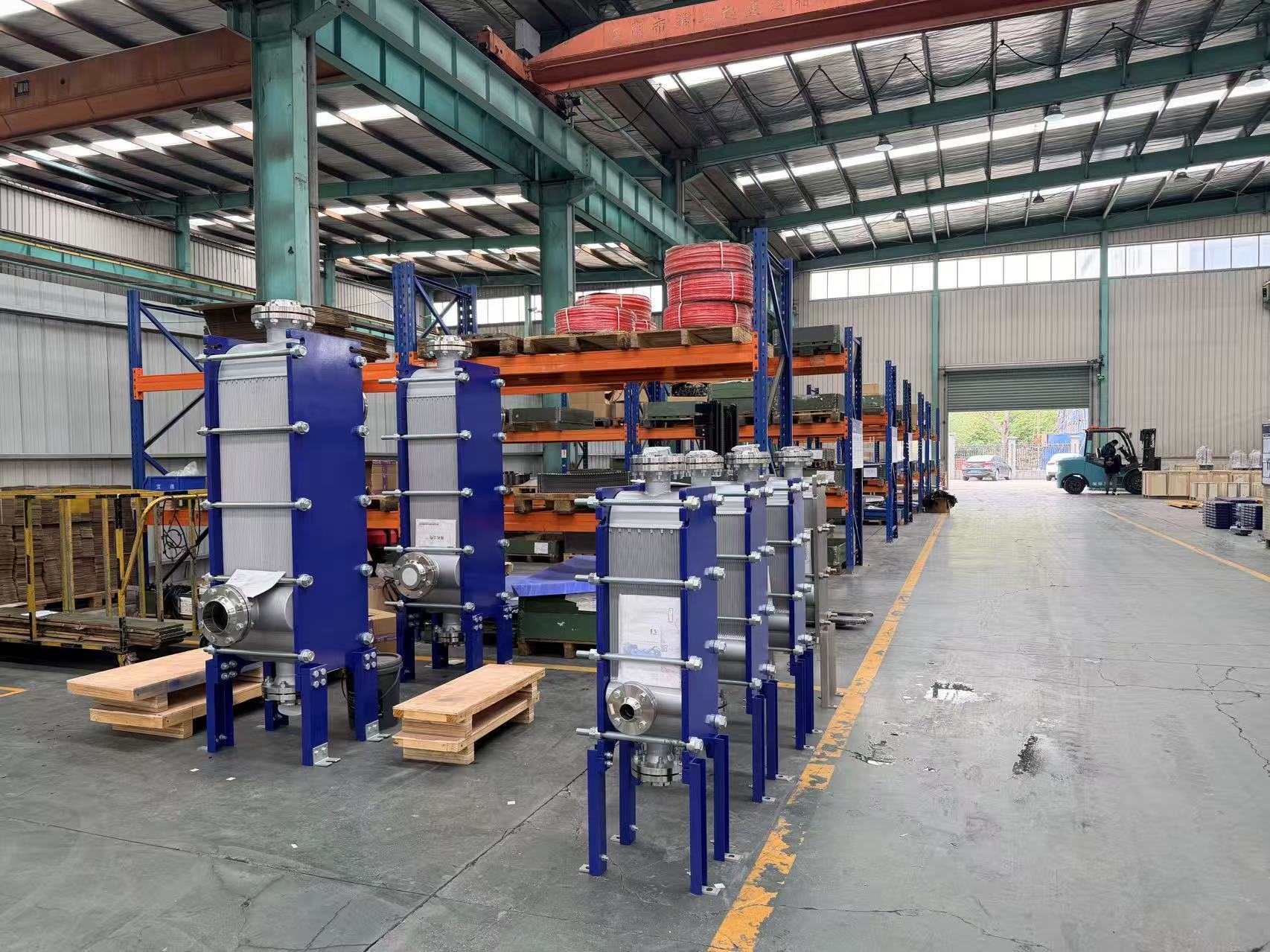
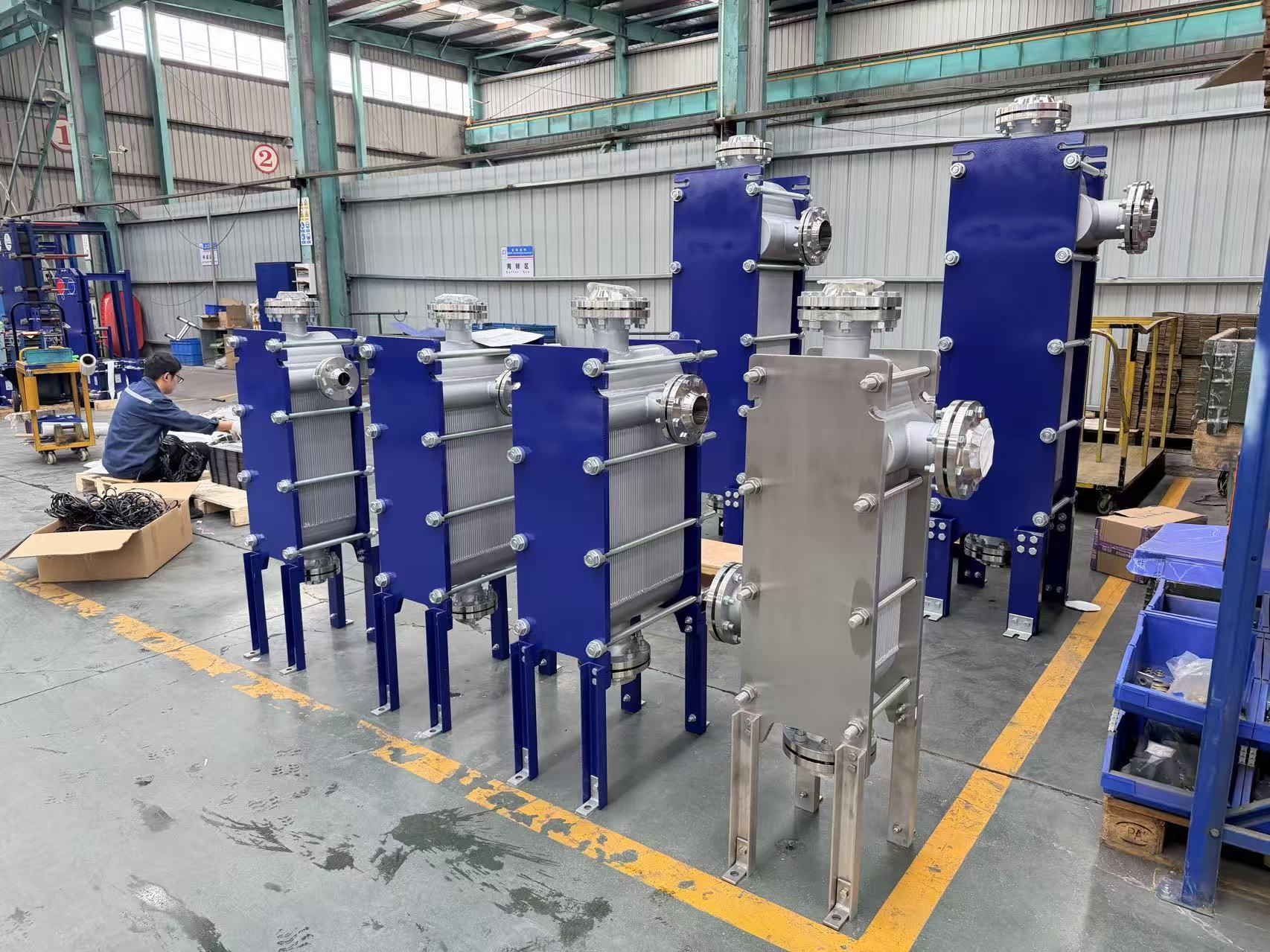
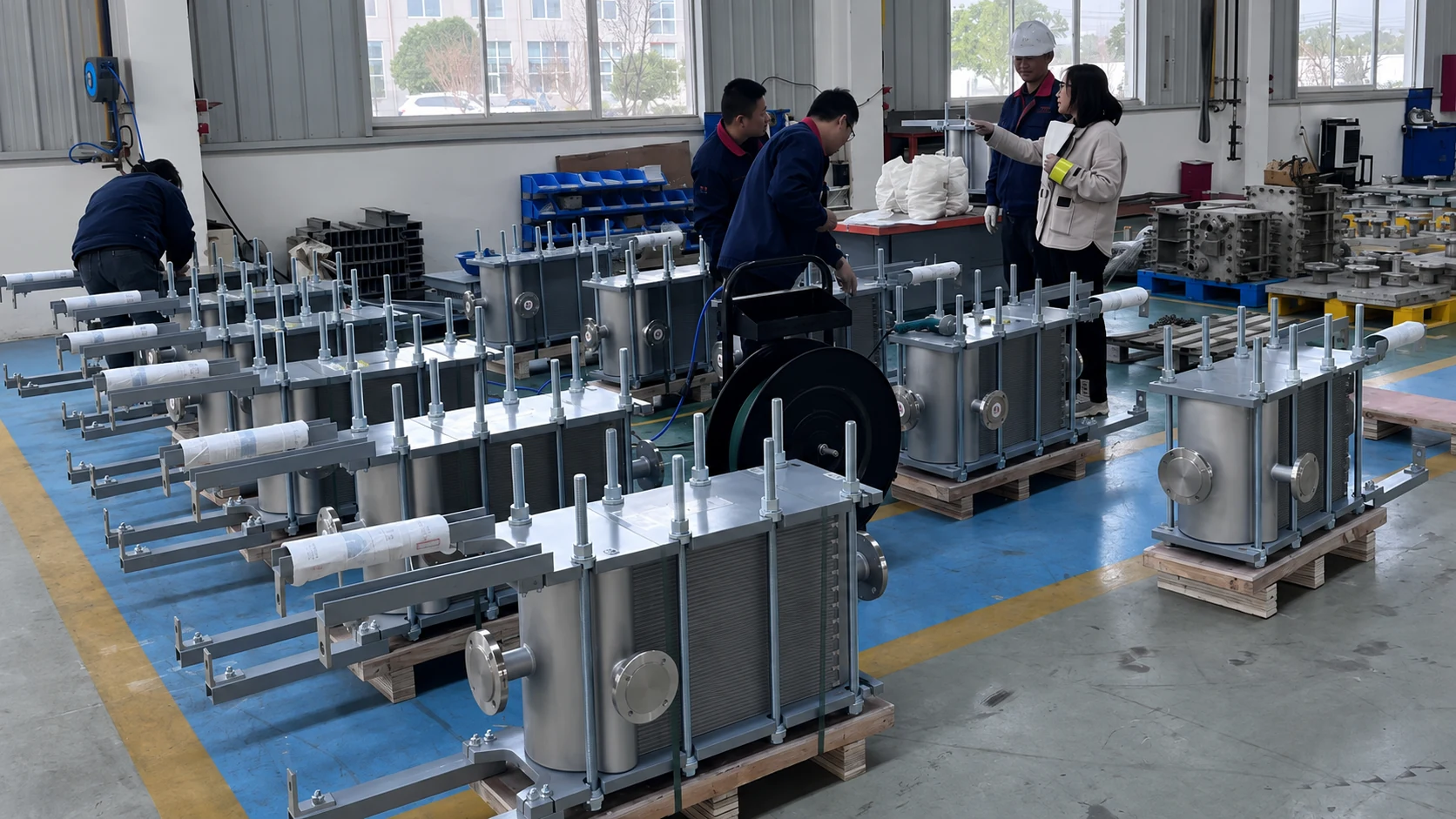
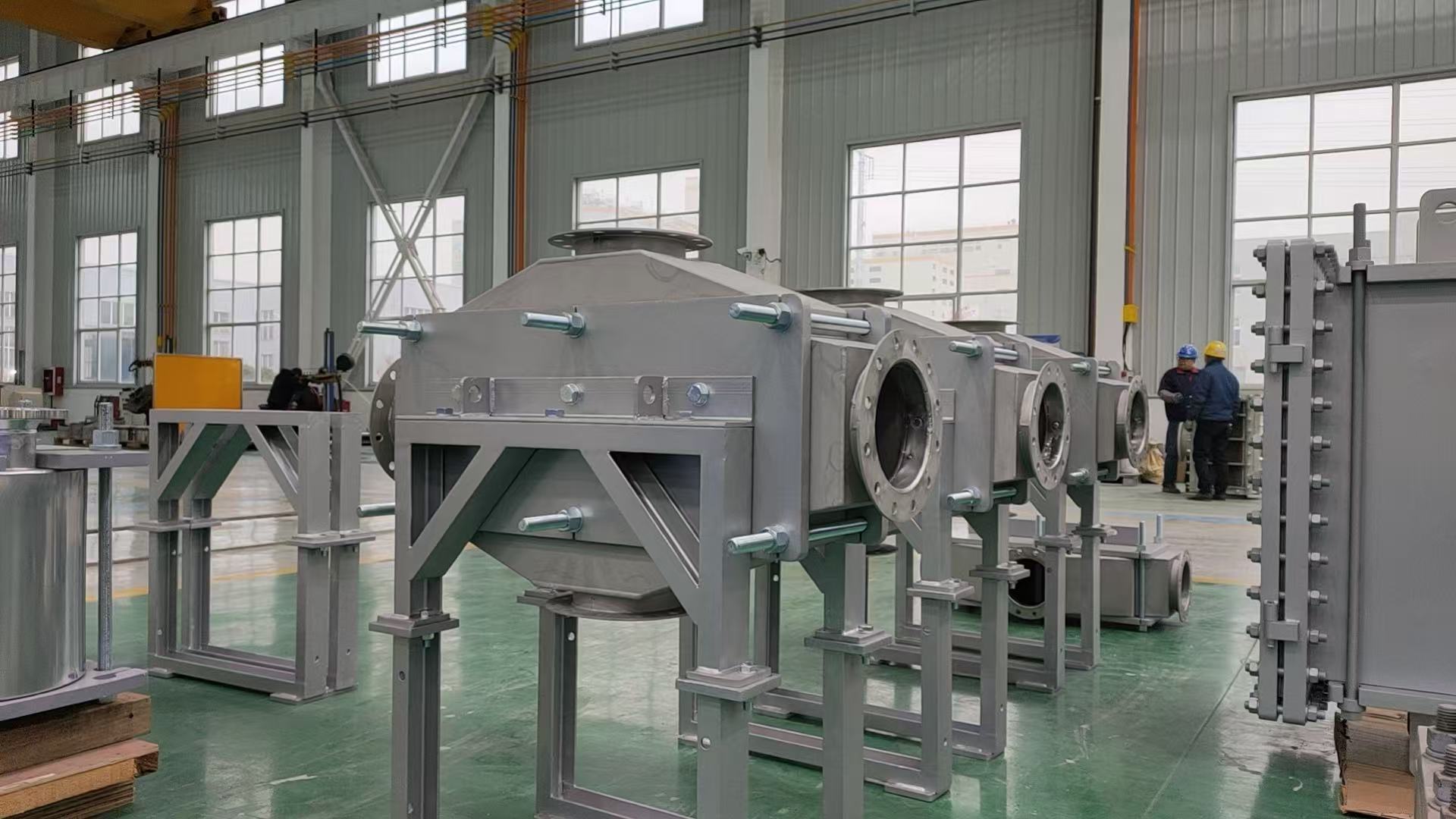
Fully welded corrugated plate blocks installed within pressure-retaining frames for compact, reliable heat transfer at elevated temperature and pressure.
HEXNOVAS WORKSHOPPlate & Block heat exchanger production
01 / 04
Working principle
How the technology transfers heat.
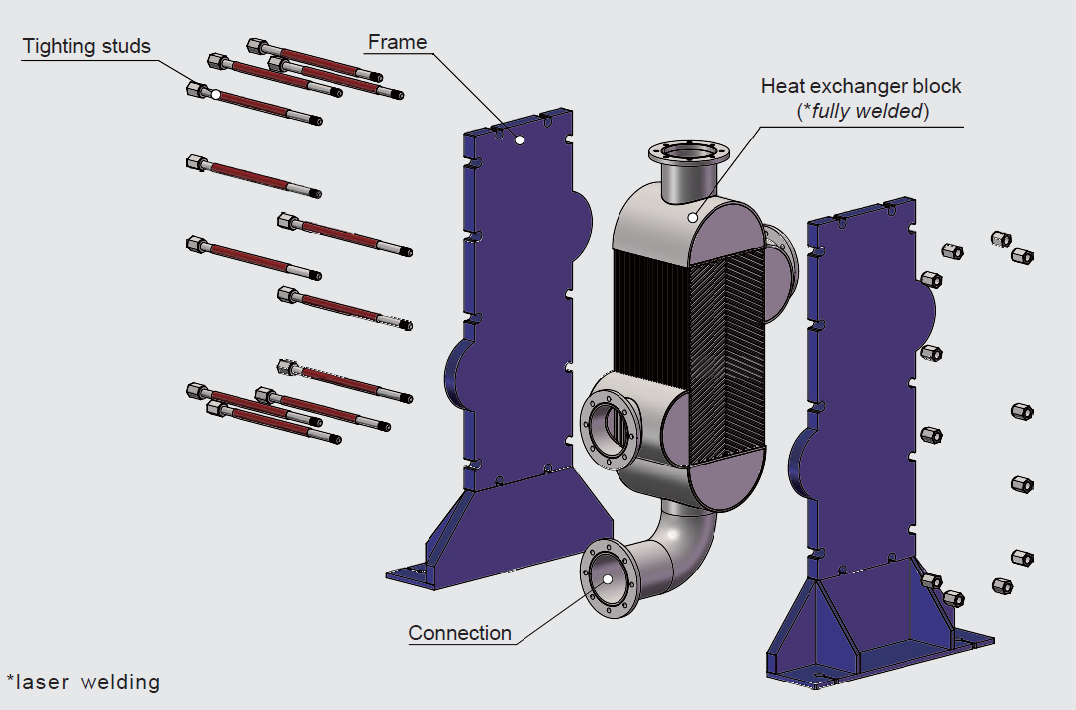
Corrugated plates are welded into a sealed heat-transfer block and secured inside an external pressure frame. The two media pass through alternating channels, while X low-theta and D high-theta plate patterns allow thermal performance and pressure drop to be matched to the duty.
Construction
Fully welded plate block within a pressure-retaining frame
Maximum design pressure
Up to 40 bar
Maximum design temperature
Up to 400°C
Published plate area
0.08 to 1.85 m² per plate
Engineering explained
See what is happening inside the exchanger.
Product imagery is paired with technical context so buyers and engineers can understand construction, flow path and configuration—not just the exterior.
01
Plate & Block construction
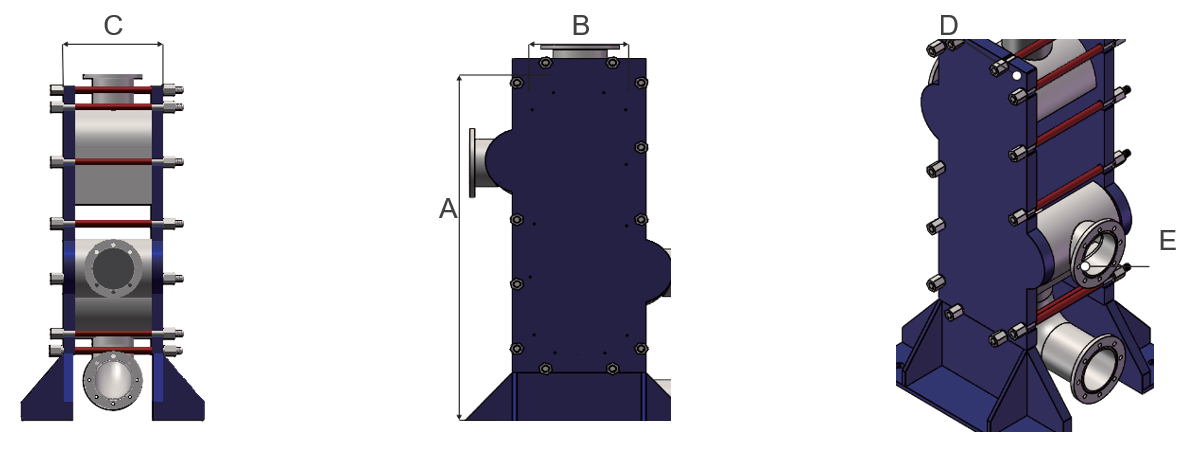
The fully welded corrugated plate block is supported and pressure-retained by the external frame, keeping the two process circuits separated without inter-plate gaskets.
02
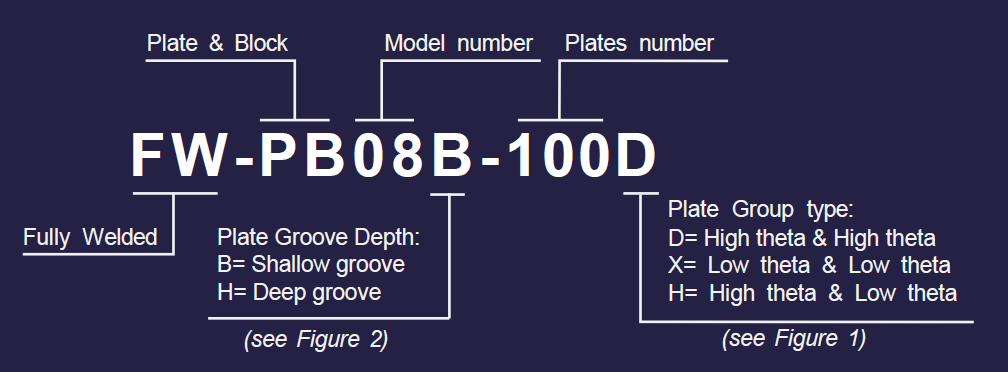
FW-PB model designation
The model designation identifies the plate size, plate count and thermal plate pattern used for the selected duty.
03
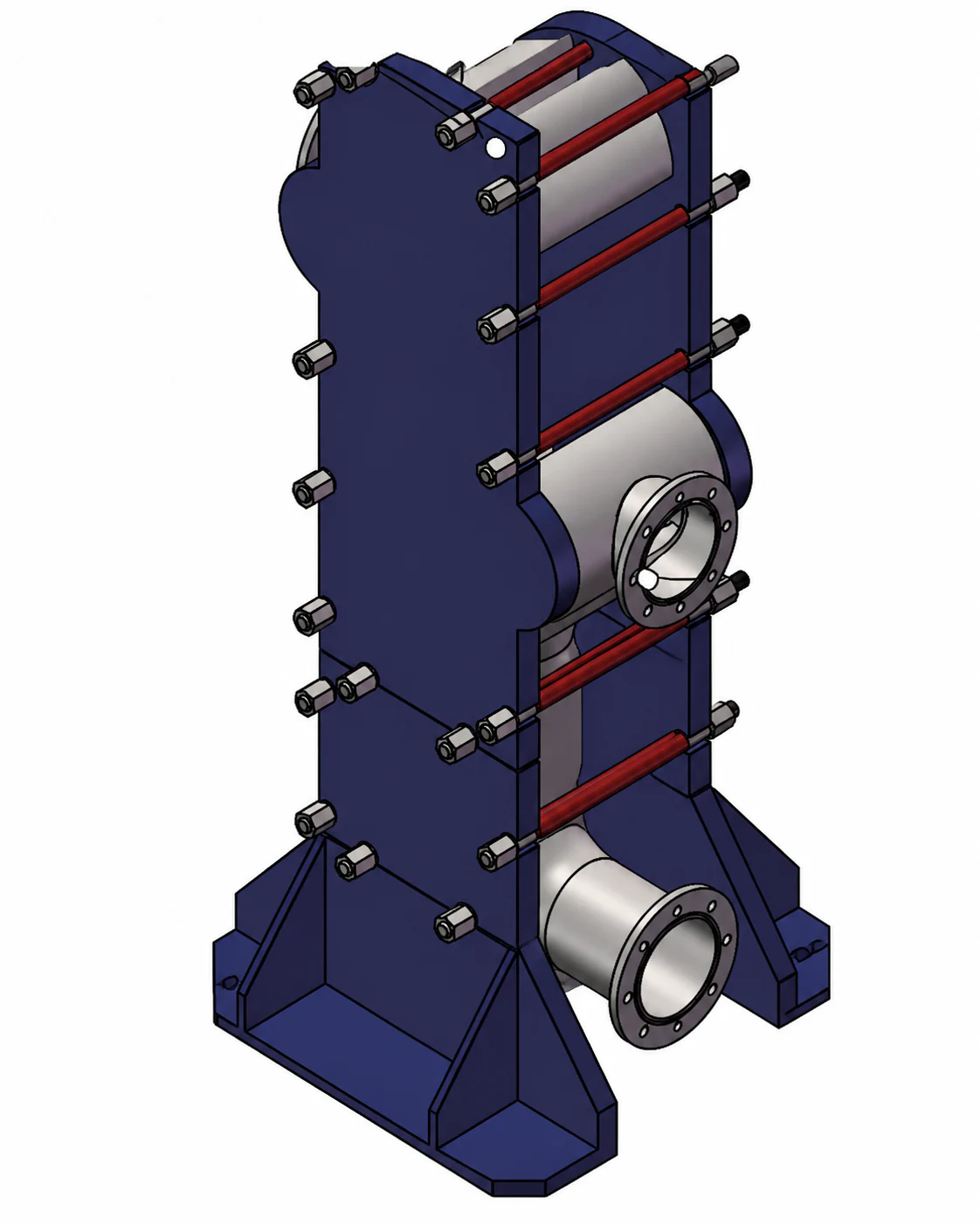
Pressure frame and plate block
The external pressure frame and red tie rods retain the fully welded plate block while keeping the process connections accessible.
Models & technical data
Compare models and published specifications.
Compare circuit arrangement and overall dimensions at a glance, then open a product size for its product view, dimension drawing and technical summary.
Published HEXNOVAS FW-PB series data. A, B and maximum C are catalogue envelope dimensions; D and E are maximum connection sizes. Final pressure, temperature, material, plate pattern, plate count and nozzle design require project verification.
Dimensions are for reference only. Final dimensions are subject to the approved order drawing. HEXNOVAS reserves the right of final interpretation.
Model details
FW-PB08
HEXNOVAS Plate & Block Heat Exchangers
Product configurationDimension drawing
A (mm)
910
B (mm)
262
Max C (mm)
960
Plate area (m²)
0.08
Channel depth (mm)
4
Max D size
DN150
Max E size
DN80
Construction
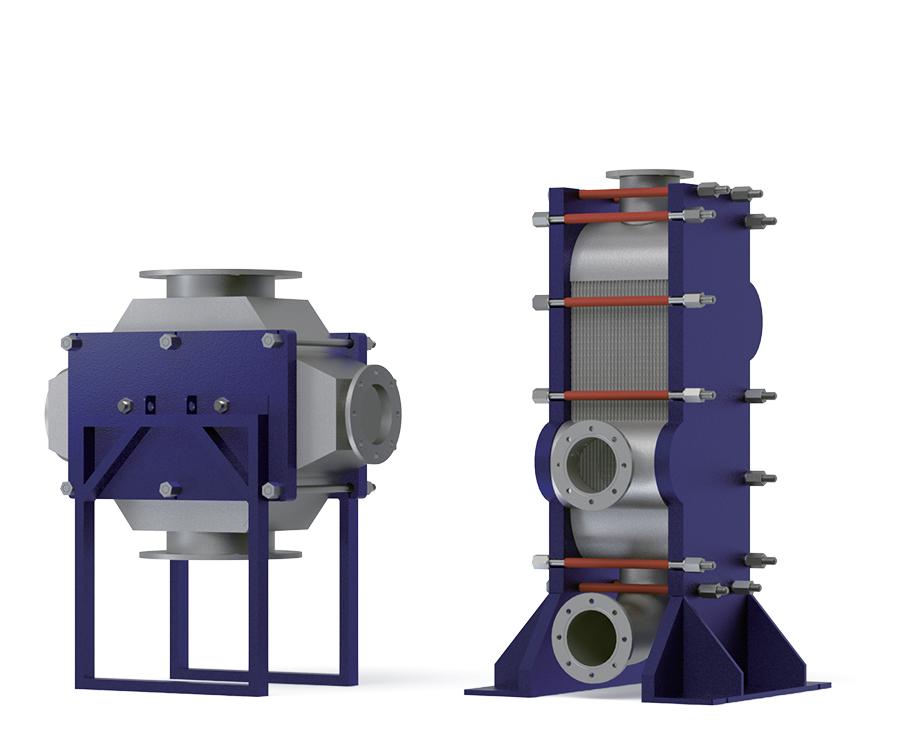
Fully welded corrugated plate block in pressure-retaining frame
Designed around performance, integrity and serviceability.
Fully welded plate block with no inter-plate gaskets
Design capability up to 40 bar and 400°C
Compact alternative to conventional shell-and-tube equipment
High turbulence supports efficient transfer and reduced fouling
Product configuration
Structure and material options.
Available configurations
FW-PB08 through FW-PB185 model range
X low-theta and D high-theta plate patterns
Liquid-to-liquid, condensing and evaporating duties
Vertical or horizontal installation arrangements
Material options
AISI 304 / 316L stainless steel
254 SMO stainless steel
Hastelloy C276 / C22
Titanium Grade 1 / Grade 2
Typical applications
Where this exchanger fits.
01
Chemical and petrochemical processing
02
High-temperature heat recovery
03
Condensation and evaporation
04
Aggressive process media
Selection information
What our engineers need from you.
Provide complete process data, design pressure and temperature, corrosion information, fouling tendency, cleaning method, nozzle sizes and mechanical code requirements.
Frequently asked questions
Key questions before product selection.
How does Plate & Block Heat Exchangers work?
Corrugated plates are welded into a sealed heat-transfer block and secured inside an external pressure frame. The two media pass through alternating channels, while X low-theta and D high-theta plate patterns allow thermal performance and pressure drop to be matched to the duty.
What information is required to select the right product?
Provide complete process data, design pressure and temperature, corrosion information, fouling tendency, cleaning method, nozzle sizes and mechanical code requirements.
The final size is confirmed by thermal calculation using flow rates, inlet and outlet temperatures, allowable pressure drop, design pressure and fluid properties.
Product documentation
Catalogue and technical downloads.
Use the published catalogue for product-range reference. Final dimensions, ratings and materials are confirmed for the selected model and operating duty.