Refrigerant or service fluid flows through the titanium tube circuit while pool or salt water passes through the polymer shell. Heat transfers through the titanium wall without the two media mixing.
Titanium-tube temperature
-50°C to 150°C
Polymer-shell temperature
-10°C to 35°C
Titanium-tube pressure
Up to 45 bar
Polymer-shell pressure
Up to 5 bar
Engineering explained
See what is happening inside the exchanger.
Product imagery is paired with technical context so buyers and engineers can understand construction, flow path and configuration—not just the exterior.
01
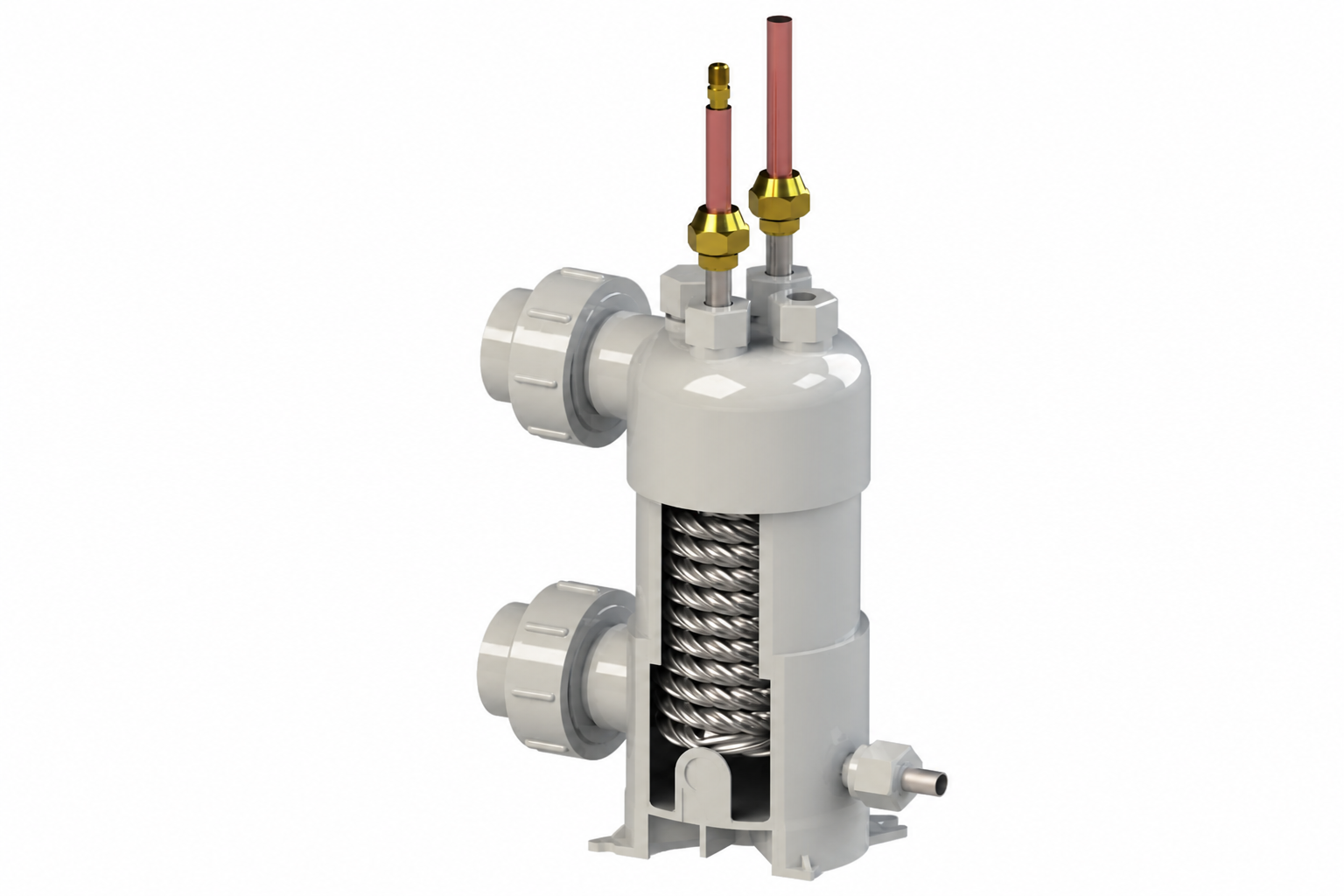
PVC shell with corrugated spiral-wound titanium tube
Pool water flows through the polymer shell while refrigerant remains inside the corrosion-resistant titanium tube circuit.
02
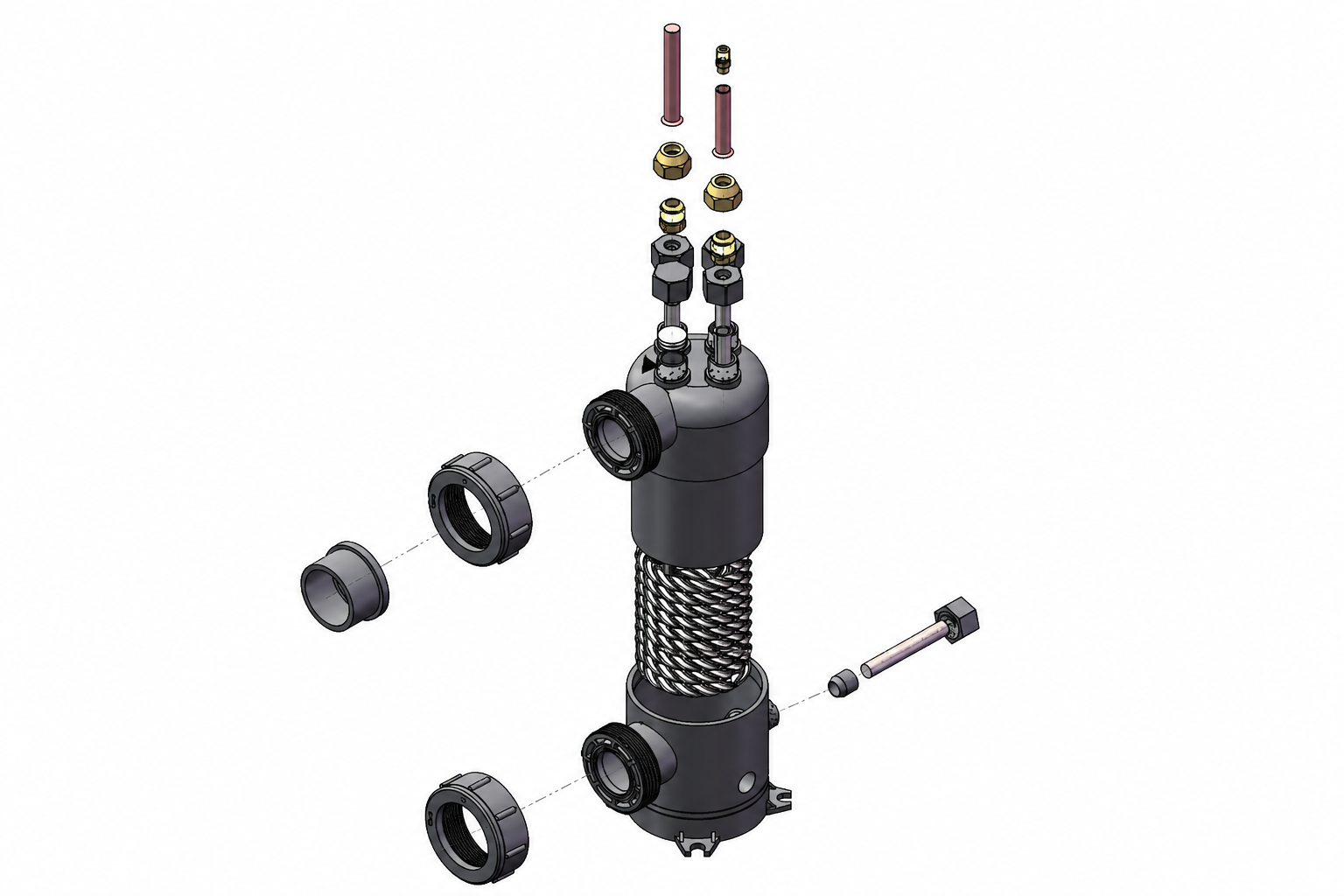
Service connections and replaceable installation components
The published parts diagram identifies unions, copper connections, compression fittings, water-flow sockets, titanium tubing and sensor connections.
03
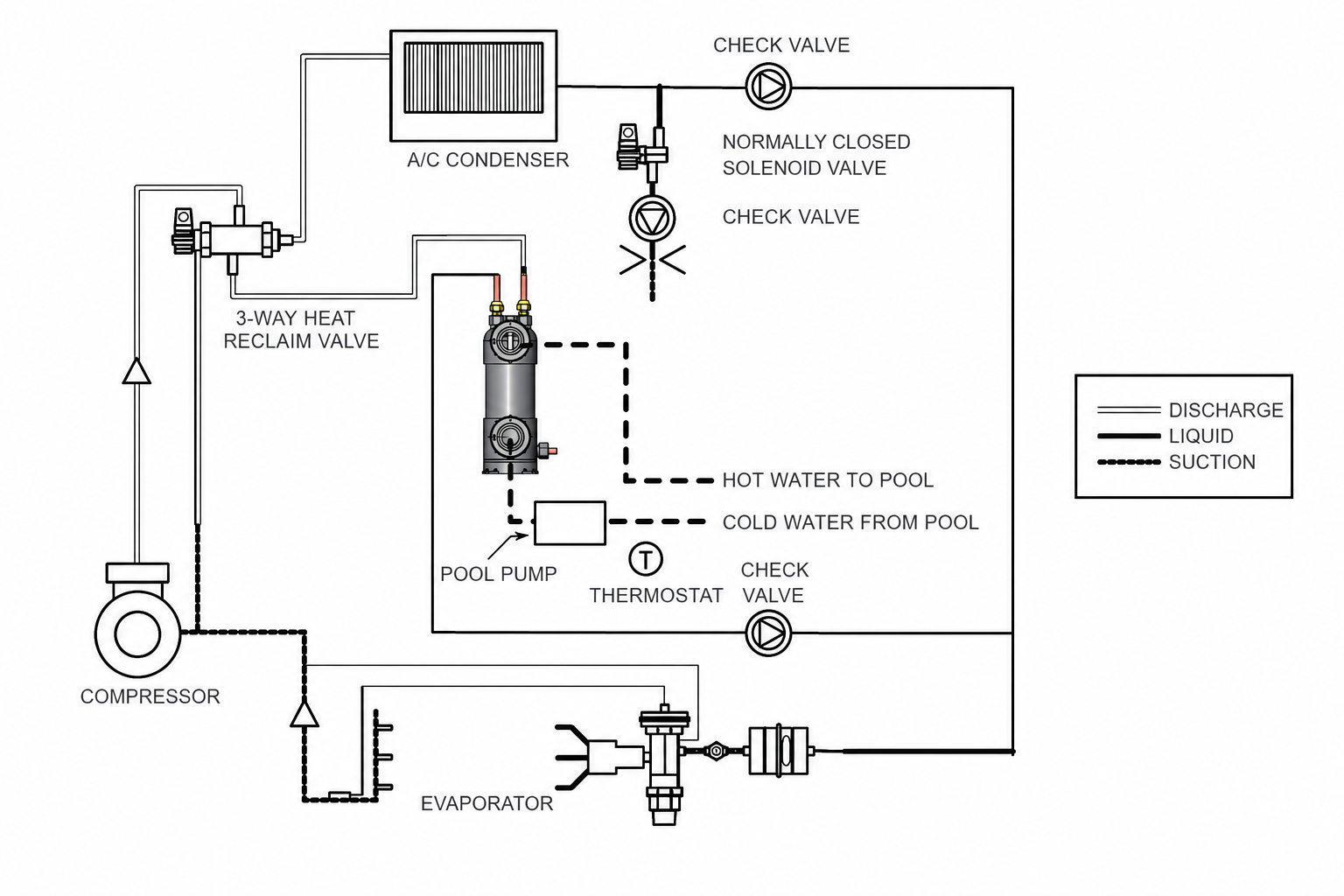
Air-conditioning heat recovery for pool heating
A three-way heat-reclaim valve diverts useful condenser heat through the PVX titanium circuit while the pool pump circulates water through the polymer shell.
Models & technical data
Compare models and published specifications.
Compare circuit arrangement and overall dimensions at a glance, then open a product size for its product view, dimension drawing and technical summary.
Published HEXNOVAS PVX catalogue values. Capacity and water-flow ratings are product-range references, not a substitute for thermal selection. Verify refrigerant, pool chemistry, temperature, pressure, connection and installation requirements for the actual duty.
Dimensions are for reference only. Final dimensions are subject to the approved order drawing. HEXNOVAS reserves the right of final interpretation.
Model details
PVX-38
HEXNOVAS PVX Titanium Tube Heat Exchangers
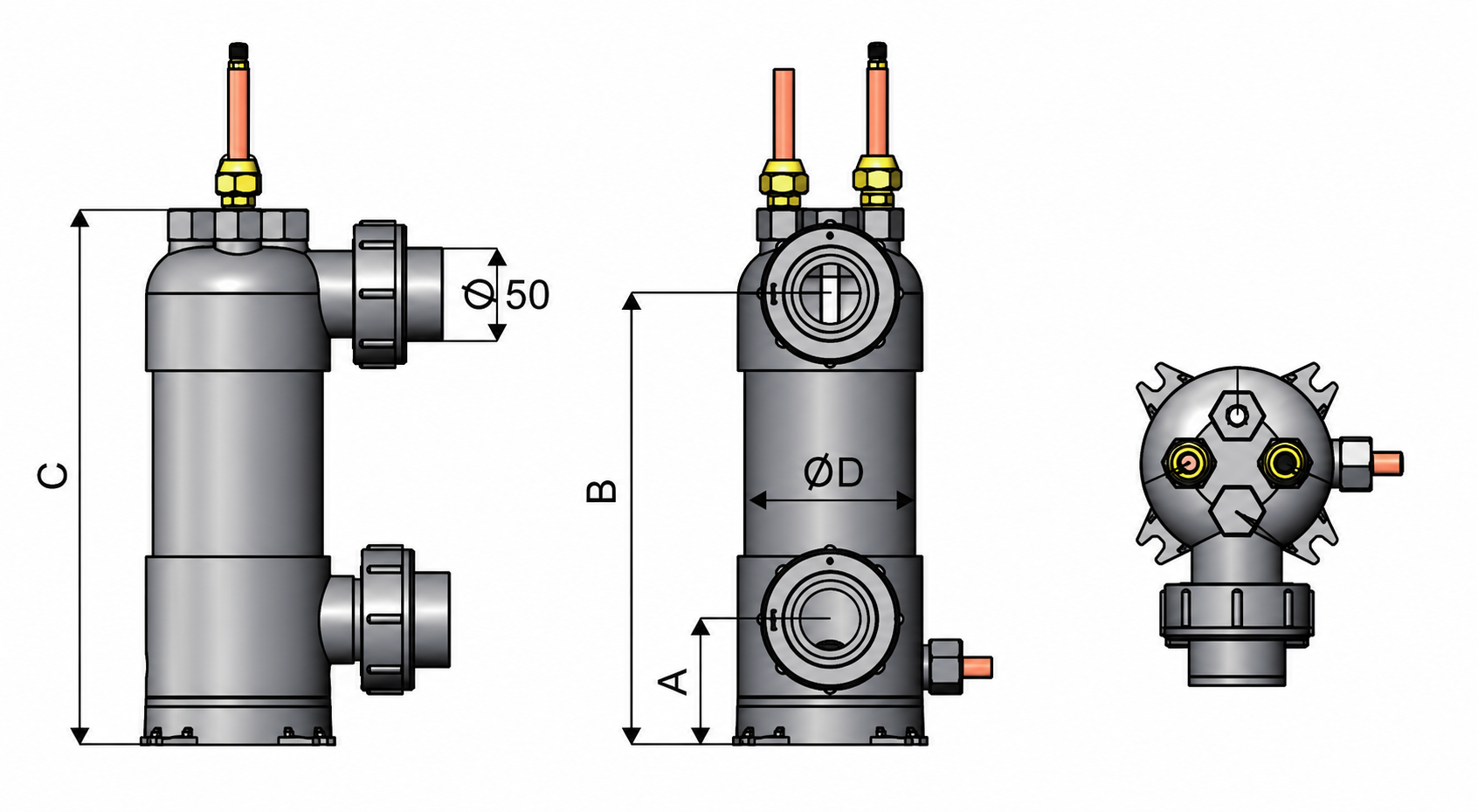
Product configurationDimension drawing
Capacity (kW)
3.8
Water flow (m³/h)
1.8
A (mm)
80
B (mm)
250
C (mm)
310
D (mm)
Ø110
Tube OD (mm)
12.7
Tube length (m)
3
Tube-side media
R22, R134a, R404A, R407C, R410A, R417A, R600A and compatible refrigerants
Shell-side media
Pool water, salt water, plating solutions and glycol mixtures
Published limits
Titanium side: 45 bar; PVC shell side: 5 bar
Main components
Union inserts and nuts, copper connection tubes, compression fittings, water-flow sockets, titanium tube coil and temperature-sensor sockets
Dimensions are for reference only. Final dimensions are subject to the approved order drawing. HEXNOVAS reserves the right of final interpretation.
Designed around performance, integrity and serviceability.
Titanium corrosion resistance
Lightweight polymer shell
Suitable for chlorinated and salt water
Compact heat-pump integration
Product configuration
Structure and material options.
Available configurations
Condenser or evaporator duty
Heat-pump integration
Multiple refrigerant connection options
Pool, salt-water and selected industrial configurations
Material options
Titanium heat-transfer tubes
PVC/polymer shell
Compatible seals and refrigerant connections
Typical applications
Where this exchanger fits.
01
Swimming pool heating
02
Salt-water systems
03
Pool heat pumps
04
Selected plating and glycol duties
Selection information
What our engineers need from you.
Provide pool-water chemistry, refrigerant, heating or cooling capacity, flow rates, temperatures, pressure and connection requirements.
Frequently asked questions
Key questions before product selection.
How does PVX Titanium Tube Heat Exchangers work?
Refrigerant or service fluid flows through the titanium tube circuit while pool or salt water passes through the polymer shell. Heat transfers through the titanium wall without the two media mixing.
What information is required to select the right product?
Provide pool-water chemistry, refrigerant, heating or cooling capacity, flow rates, temperatures, pressure and connection requirements.
Which materials and configurations are available?
Titanium heat-transfer tubes; PVC/polymer shell; Compatible seals and refrigerant connections
How is the final product size confirmed?
The final size is confirmed by thermal calculation using flow rates, inlet and outlet temperatures, allowable pressure drop, design pressure and fluid properties.
Product documentation
Catalogue and technical downloads.
Use the published catalogue for product-range reference. Final dimensions, ratings and materials are confirmed for the selected model and operating duty.