
Available configurations
- Single-tube, multi-tube and modular tubular sections
- Smooth, corrugated or application-specific inner tubes
- Horizontal or vertical skid-mounted arrangements
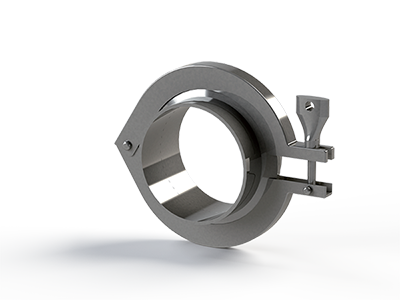
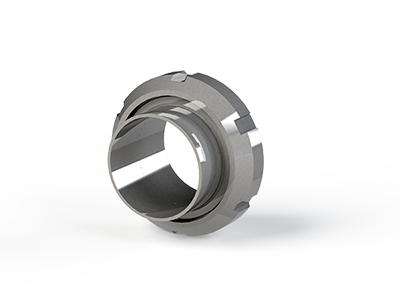
- TC Tri-Clamp or SMS hygienic unions
SANITARY TUBULAR technology
Hygienic tubular heat exchangers for clean, viscous, fibrous, particulate or fouling products in food, beverage, dairy and pharmaceutical processing.
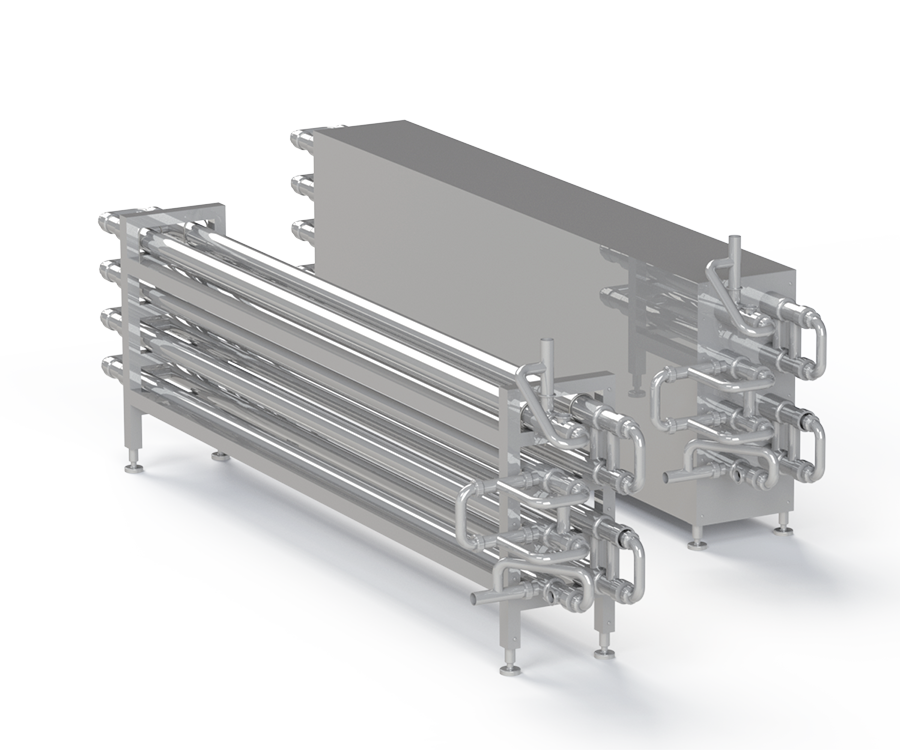
Working principle
One product stream flows through smooth or corrugated inner tubes while the utility fluid flows through the surrounding shell. The separated circuits transfer heat indirectly, and the tube geometry can be selected to keep viscous or particulate product moving with a manageable pressure drop.
Engineering explained
Product imagery is paired with technical context so buyers and engineers can understand construction, flow path and configuration—not just the exterior.
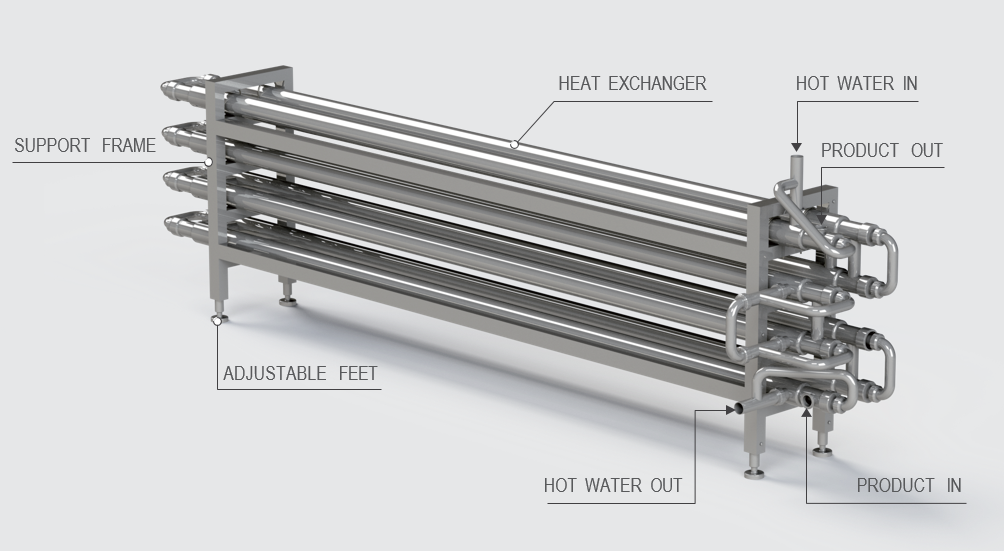
The original HEXNOVAS product drawing identifies the heat exchanger sections, stainless support frame, adjustable feet, product inlet and outlet, and hot-water connections.

The modular tubular bank is supported by a stainless frame and can be supplied with a 304 stainless case; thermal insulation is available when required.
Connection configuration
Choose the hygienic union standard that matches the process line and cleaning procedure.
Material compliance
Product-contact construction can be supplied in SS304 or SS316L, with smooth crevice-conscious surfaces selected for repeated cleaning. The support frame and optional insulated case are available in SS304.


Why this technology
Product configuration
Typical applications
Selection information
Provide product composition, viscosity, particle or fiber size, flow rate, temperature program, allowable pressure drop, CIP procedure, materials, surface finish and sanitary connection standard.
Frequently asked questions
One product stream flows through smooth or corrugated inner tubes while the utility fluid flows through the surrounding shell. The separated circuits transfer heat indirectly, and the tube geometry can be selected to keep viscous or particulate product moving with a manageable pressure drop.
Provide product composition, viscosity, particle or fiber size, flow rate, temperature program, allowable pressure drop, CIP procedure, materials, surface finish and sanitary connection standard.
SS304 casing and support-frame options; SS304 or SS316L heat-transfer construction; Product-contact finishes suitable for hygienic service; Other corrosion-resistant materials by duty review
The final size is confirmed by thermal calculation using flow rates, inlet and outlet temperatures, allowable pressure drop, design pressure and fluid properties.
Product documentation
Use the published catalogue for product-range reference. Final dimensions, ratings and materials are confirmed for the selected model and operating duty.
Discuss this product