
Available configurations
- Horizontal or vertical installation
- Threaded, flanged or welded connections
- Steam-to-water and liquid-to-liquid duties
- Project-specific shell size and coil geometry
SHELL & COIL technology
Compact welded tubular heat exchangers with removable helical tube bundles for steam, water and demanding process duties.
Working principle
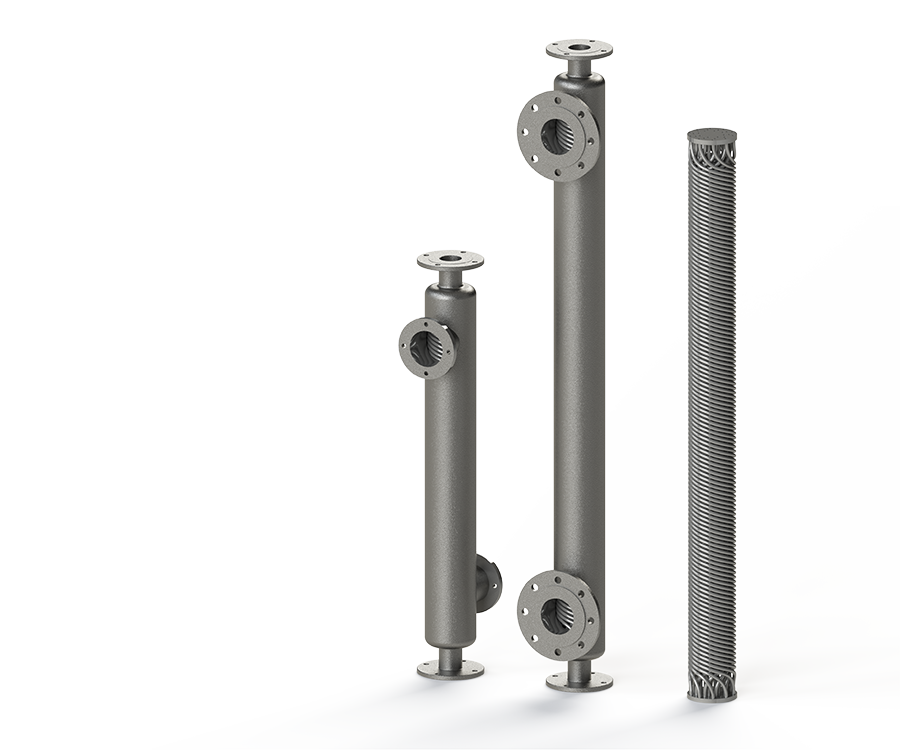
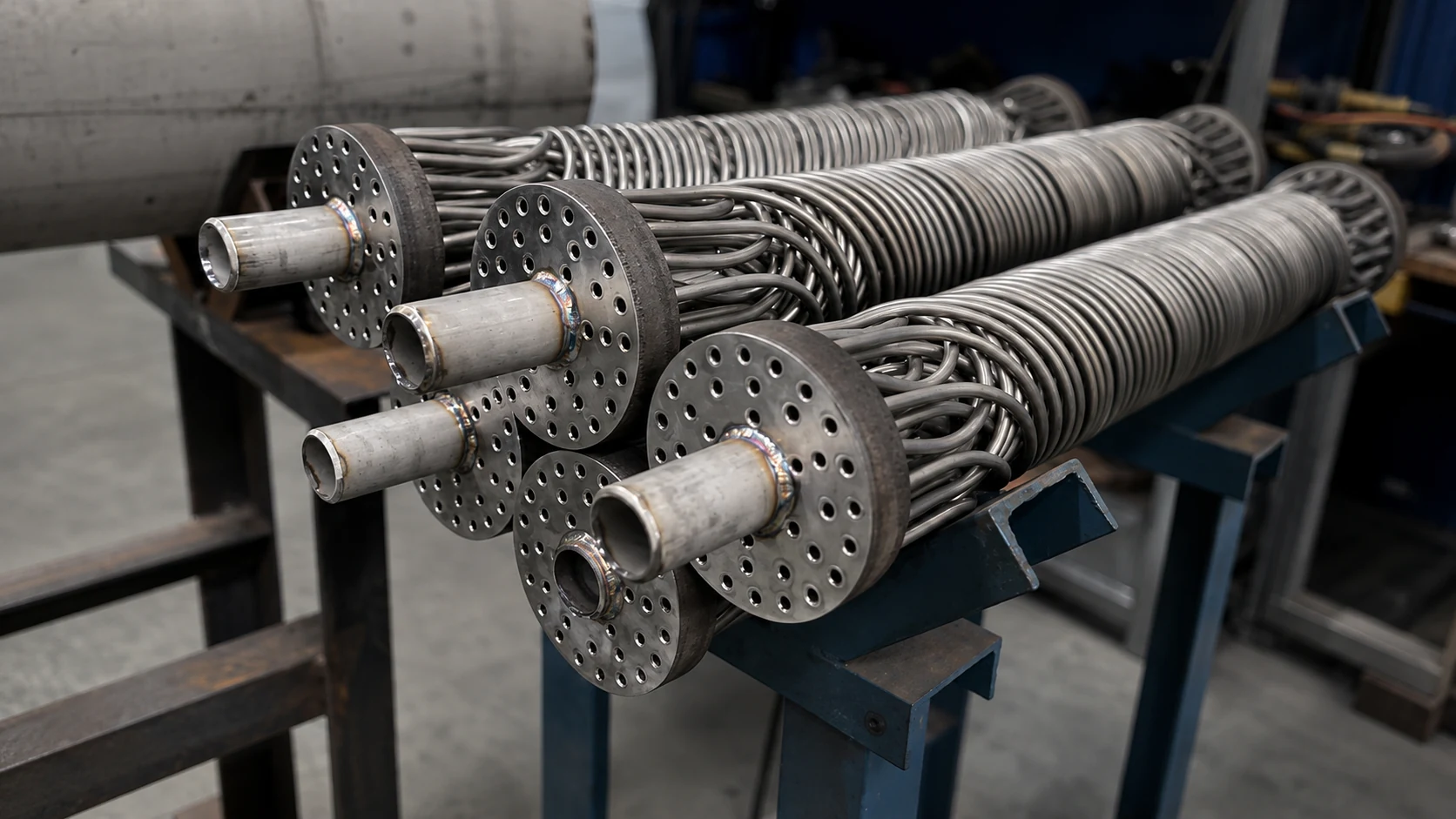
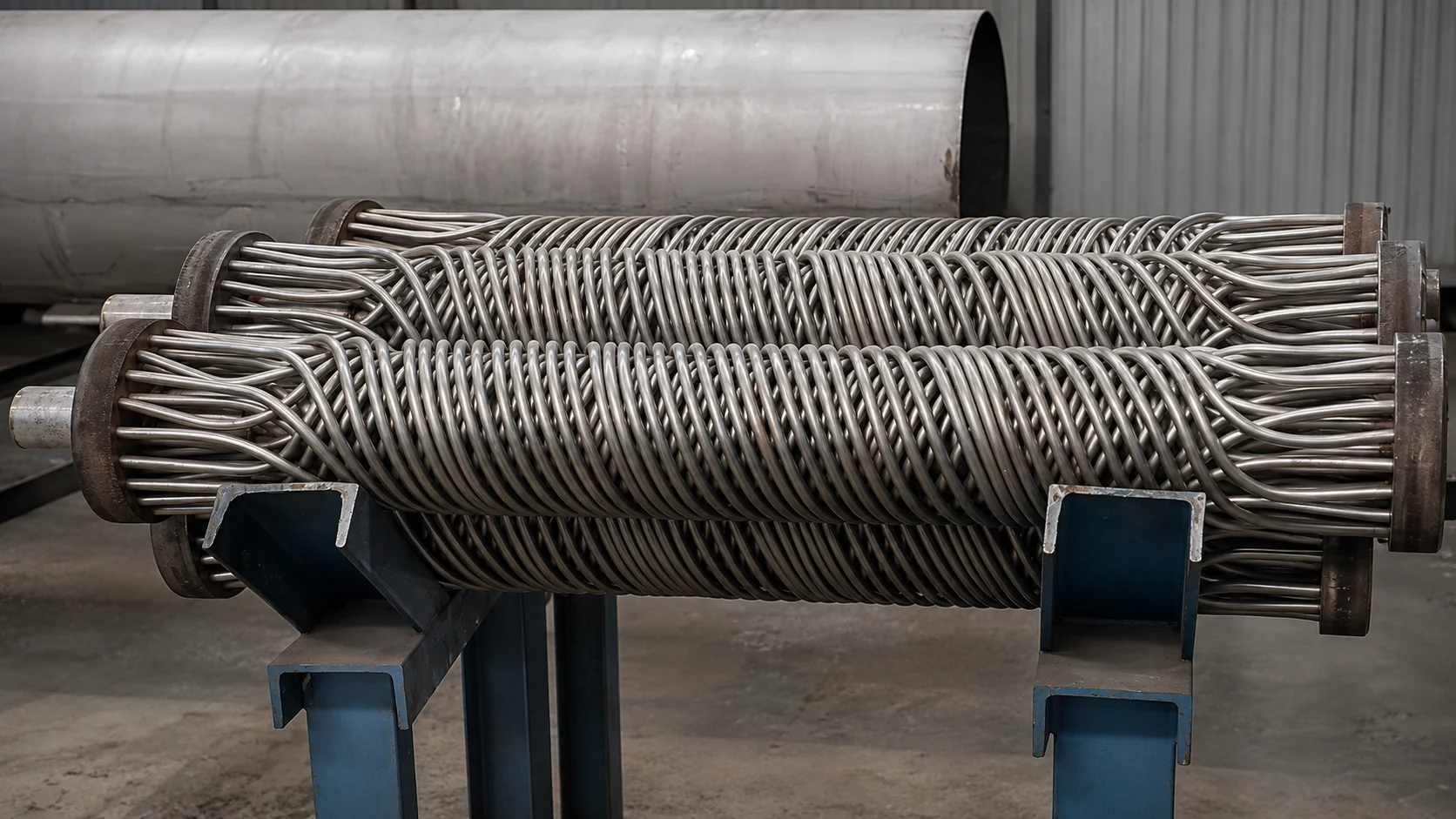
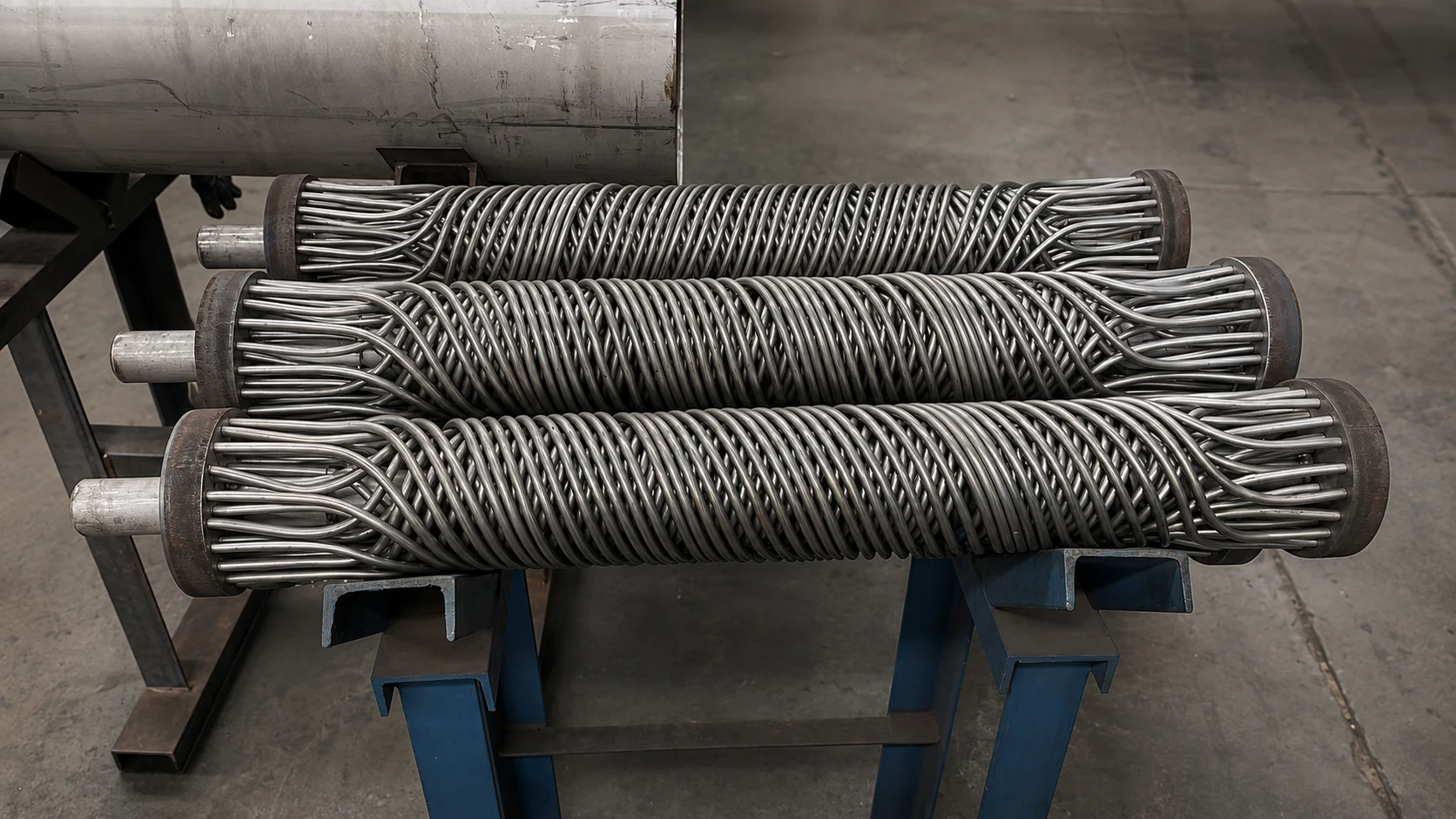
One medium flows through the helical tube bundle while the second medium travels through the surrounding shell. The curved tube path provides a long heat-transfer length in a compact cylindrical body.
Engineering explained
Product imagery is paired with technical context so buyers and engineers can understand construction, flow path and configuration—not just the exterior.
The product view distinguishes the shell-and-coil construction from swimming-pool exchangers and conventional straight-tube shell-and-tube units.
Why this technology
Product configuration
Typical applications
Selection information
Provide shell-side and coil-side media, temperatures, flow rates, design pressure, allowable pressure drop, materials, connection standard and installation orientation.
Frequently asked questions
One medium flows through the helical tube bundle while the second medium travels through the surrounding shell. The curved tube path provides a long heat-transfer length in a compact cylindrical body.
Provide shell-side and coil-side media, temperatures, flow rates, design pressure, allowable pressure drop, materials, connection standard and installation orientation.
Stainless steel 304 / 316L; Titanium or corrosion-resistant alloys after duty review; Project-specific shell and tube combinations
The final size is confirmed by thermal calculation using flow rates, inlet and outlet temperatures, allowable pressure drop, design pressure and fluid properties.
Product documentation
Use the published catalogue for product-range reference. Final dimensions, ratings and materials are confirmed for the selected model and operating duty.
Discuss this product