
Cream Processing Heat Exchanger Case | Food Grade Plate Heat Exchanger (GPHE)
A compact multi-section hygienic plate heat exchanger solution for 50% cream heating, cooling, and product-to-product heat recovery in dairy processing.
Project Overview
This case involved a thermal process for 50% cream, where the customer required a hygienic and energy-efficient solution for controlled heating, intermediate regeneration, and final cooling.
Based on the sizing sheet, the selected unit was a 3-section H4-P food grade plate heat exchanger with 94 plates, configured for dairy service and optimized for compact installation.
For dairy systems, cream is much more demanding than water-like fluids. Its viscosity changes sharply with temperature, heat transfer performance varies across the process, and hygienic design is essential.
That is why a Food Grade GPHE is often the preferred solution for pasteurization and regenerative processing lines.
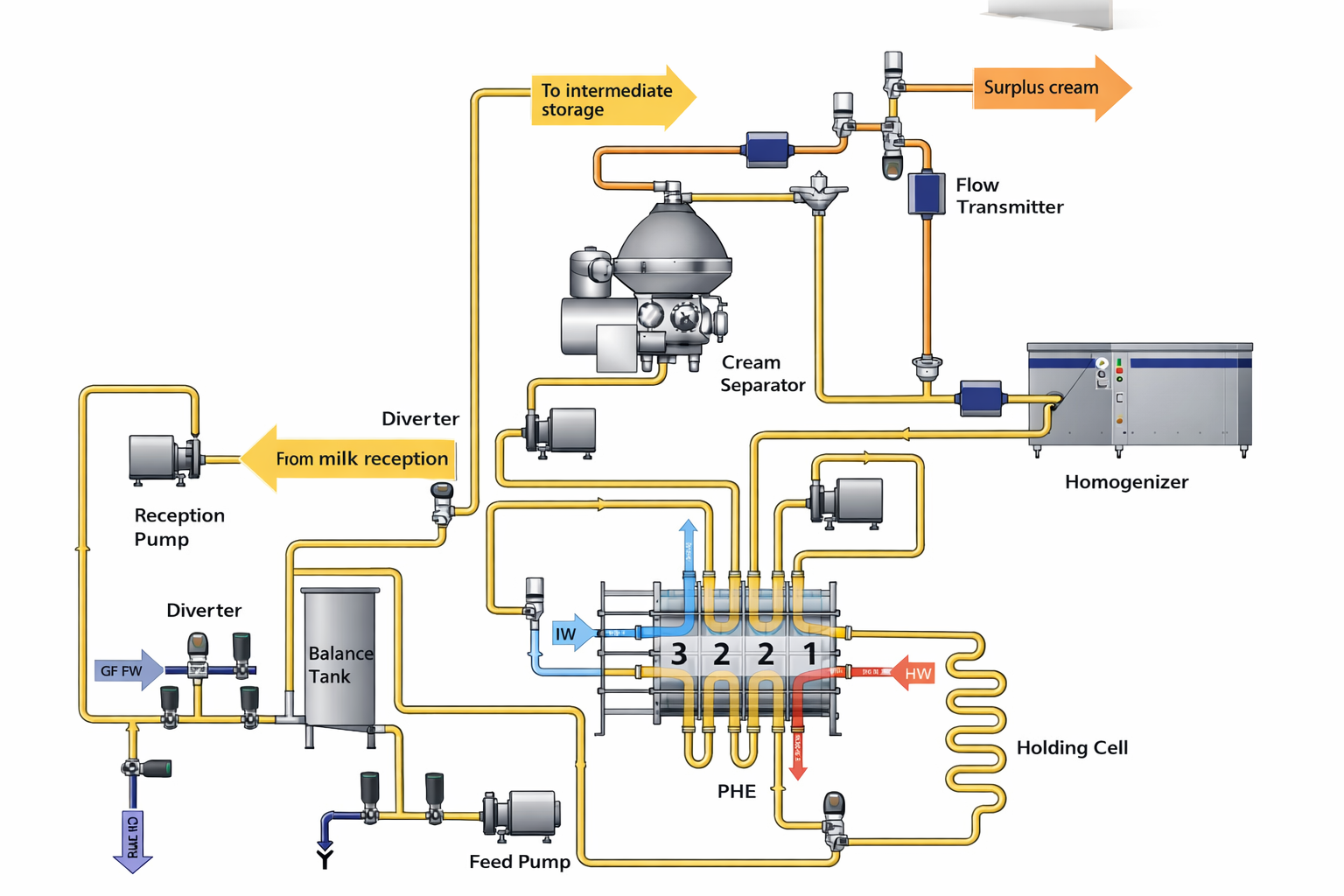
Cream heating, regeneration and cooling process flow
Engineering Challenge
Cream processing requires much tighter thermal control than many general industrial duties. In this case, the system needed to combine:
- Heating the product up to the required process temperature
- Regenerative heat recovery to reduce utility consumption
- Cooling the product for downstream handling or storage
- Hygienic design suitable for food contact service
- Stable performance despite the viscosity of 50% cream
Why Food Grade GPHE fits this duty:
Compared with bulkier alternatives, a food grade gasketed plate heat exchanger provides higher thermal efficiency, compact layout, easier service access, and better suitability for regenerative dairy lines where hygiene and cleanability matter.
Selected Solution
The selected solution was an H4-P Food Grade Plate Heat Exchanger with 3 functional sections and 94 plates total. The unit was designed in AISI 316 with a design pressure of 10.0 bar and a design temperature of 120°C.
Section I · Heating
Water heats cream from 73.0°C to 94.0°C, with hot water cooling from 100.0°C to 87.5°C. Heat duty: 27.93 kW.
Section II · Regeneration
Cream-to-cream heat recovery stage, where the incoming product is preheated from 60.0°C to 73.0°C against a hotter cream stream cooling from 94.0°C to 81.1°C. Heat duty: 17.07 kW.
Section III · Cooling / Recovery
Additional cream-to-cream exchange across a wider thermal range, from 6.0°C to 60.0°C on one side and 81.0°C to 27.0°C on the other. Heat duty: 69.26 kW.
Total process duty is approximately 114.26 kW, confirming a compact but thermally significant dairy application.
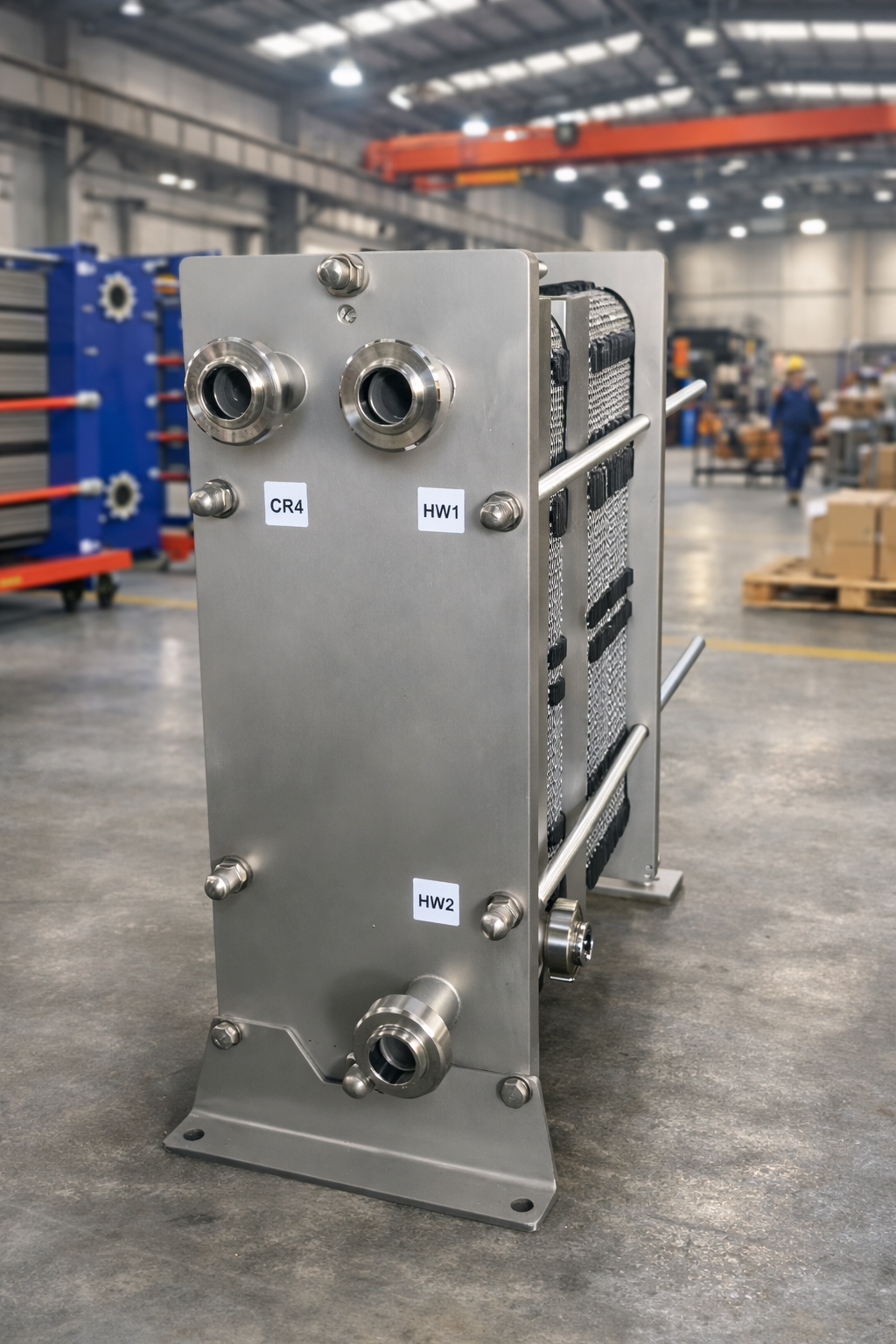
Food Grade GPHE for dairy processing
Key Operating Data
| Parameter | Case Data |
|---|---|
| Heat Exchanger Type | Food Grade Plate Heat Exchanger (GPHE) |
| Model | H4-P |
| Sections | 3 |
| Total Plates | 94 |
| Plate Material | Alloy 316 / AISI 316 |
| Design Pressure | 10.0 bar |
| Design Temperature | 120°C |
| Cream Flow Rate | 1.50 m³/h |
| Water Flow Rate | 2.00 m³/h |
| Section I Duty | 27.93 kW |
| Section II Duty | 17.07 kW |
| Section III Duty | 69.26 kW |
| Total Heat Duty | Approx. 114.26 kW |
The table above presents customer-friendly engineering data. The full thermal sizing sheet can be shown as a supporting technical image rather than pasted as raw calculation output.
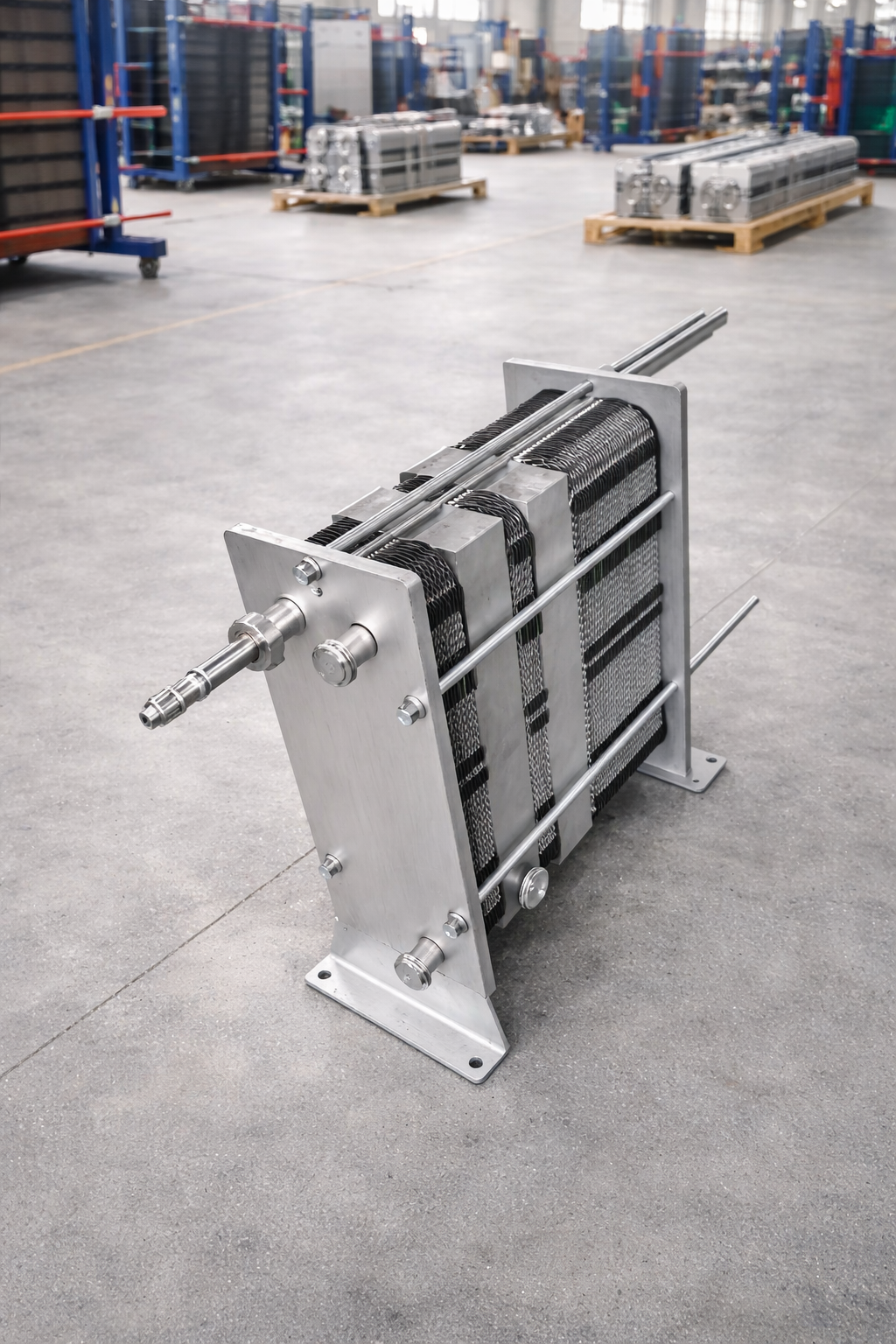
Plate pattern and hygienic flow path detail
Why a Food Grade GPHE Was the Right Choice
High Thermal Efficiency
The multi-section arrangement makes it possible to combine compact size with strong thermal performance for dairy heating, regeneration, and cooling.
Compact Multi-Duty Layout
Heating, recovery, and cooling were integrated into one compact plate frame concept instead of using multiple separate exchangers.
Hygienic Dairy Suitability
Food-grade plate exchangers are well suited to dairy duties thanks to cleanable channels, sanitary materials, and compatibility with hygienic production lines.
Energy Recovery
Product-to-product regeneration reduces hot utility demand and improves overall process efficiency, which is especially valuable in dairy pasteurization lines.
Serviceability
A gasketed plate design allows maintenance access, inspection, and future plate pack adjustments when process conditions evolve.
Better Customer Communication
For case-study content, simplified operating data plus application explanation is much more effective than publishing raw software output only.
How to Present Sizing Parameters in a Case Article
A professional customer-facing case study should not paste the full selection sheet directly into the main text. The better approach is:
- Show the main operating data in a clear summary table
- Use one image slot to place the detailed calculation sheet
- Add a simple note such as “Detailed thermal calculation available upon request”
This keeps the article readable, credible, and technically professional at the same time.Detailed thermal calculation available upon request
Related Product
This application is directly related to our Food Grade Plate Heat Exchanger product line.
Typical Applications for Similar Food Grade GPHE Systems
- Cream heating and cooling
- Milk pasteurization systems
- Dairy regeneration lines
- Viscous food product thermal processing
- Food and beverage hygienic heat recovery
FAQ
Is a food grade GPHE suitable for cream processing?
Yes. A properly selected food grade gasketed plate heat exchanger is widely used for dairy service,especially where hygienic design, compact structure, and regenerative efficiency are required.
Why use multi-section design in dairy heat exchangers?
A multi-section arrangement allows heating, regeneration, and cooling to be integrated into one compact frame,reducing footprint and improving energy recovery.
Should I publish all technical calculation details on the website?
Usually no. It is better to show key process values in a summary table, then provide detailed thermal calculations upon request.
What material is commonly used for food grade plate heat exchangers?
Stainless steel 316 is a common material choice for many dairy and food applications because of its corrosion resistance and hygienic suitability.
Need a Food Grade Plate Heat Exchanger for Dairy or Cream Processing?
HEXNOVAS can support thermal selection for hygienic food processing duties including milk, cream, regenerative heating, and compact pasteurization systems.


