
Industry application
Marine & Transportation Heat Exchangers
Marine and transportation heat exchangers for engine jacket water, lubricating oil, seawater, rail HVAC, traction cooling and LNG terminals.
Prepare Your Selection Request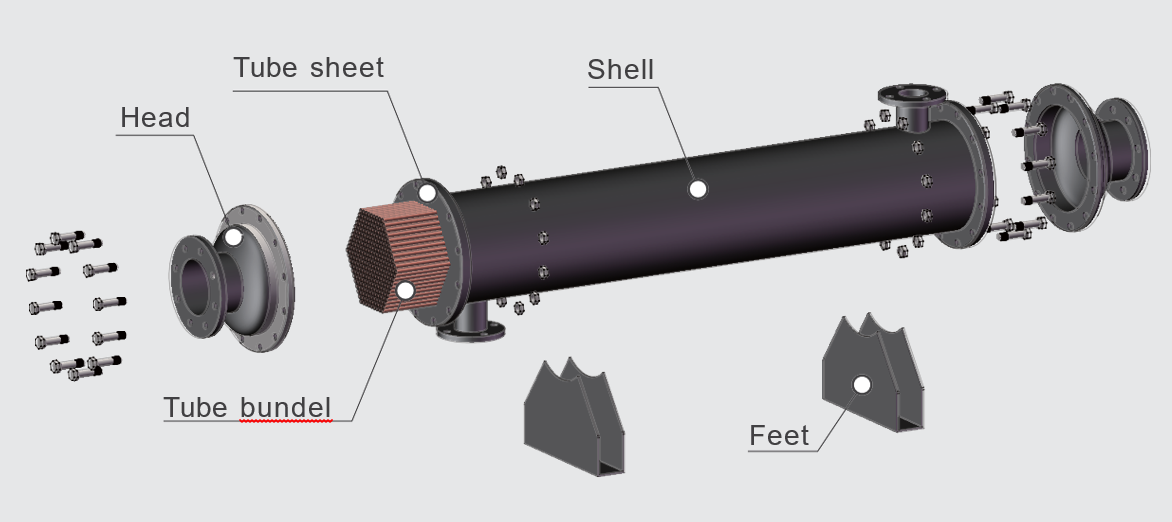
Application engineering
Process Role
A marine central-cooling system transfers heat from freshwater machinery loops to seawater at a controlled interface. Keeping engine jacket water or other treated circuits separate from seawater allows their fluid conditions to be managed independently; the exchanger still needs a compatible seawater-side design.
Rail HVAC and traction cooling face different fluids and load cycles. Define the actual onboard circuit and installation constraints rather than transferring a marine selection to rail equipment. LNG-terminal or shipping-support utility cooling can be assessed as a separate duty; suitability for cryogenic process service is not implied.
Thermal interfaces
Typical Thermal Duties
Engine jacket water and lubricating oil
Provide engine load cases, coolant temperatures and oil viscosity at the relevant operating points. Confirm whether oil exchanges heat with freshwater or another utility before rating either side.
Seawater and central cooling
Assess the seawater temperature range, chemistry, marine growth and cleaning approach. A strainer does not remove all fouling or corrosion risks, and passage dimensions must fit the actual debris strategy.
Rail and shipping-support circuits
For traction electronics and onboard HVAC, include coolant compatibility, cycling and vibration. For terminal utilities, identify the process boundary, fluid phase and design pressure explicitly.
Rating basis
Key Engineering Inputs
- Seawater or freshwater circuit definition, engine/equipment load and operating schedule.
- Both fluids, flow rates, inlet/outlet temperatures, design/operating pressures and allowable ΔP.
- Seawater analysis, oil properties where relevant, approved material options and cleaning method.
- Vibration, mounting loads, connection layout, removal clearance and project-specific classification documentation.
Design review
Application-Specific Design Challenges
Corrosion and marine growth
Titanium, Cu-Ni or stainless options need review for the particular fluid, temperature, velocity and construction. Include galvanic interfaces, deposits, oxidizing treatment and joining materials; no alloy is universally corrosion-proof.
Access and mechanical loads
Compare installed space with the room needed to open covers, remove a bundle or clean passages. Piping loads and vibration can affect connections, so mounting and support must be considered with thermal sizing. Any classification or certification requirement is project-specific, not an approval claimed by this page.
Published Evidence Scope
No strong direct marine or rail installation case is identified in the reviewed published HEXNOVAS case set. No vessel identity, class approval or measured onboard result is claimed.
Technology fit
Common Heat Exchanger Technologies
Shell & tube
Evaluate tube material, cleaning access and mechanical configuration for oil, jacket-water or seawater interfaces.
Titanium tube
A candidate for compatible seawater interfaces; verify the complete assembly, hydraulic conditions and project requirements.
Brazed plate
Consider for compatible closed freshwater/glycol or refrigerant circuits. Seawater suitability cannot be inferred from compact size.
Prepare your enquiry
What HEXNOVAS Needs for Selection
- Send a cooling schematic identifying seawater, treated water and oil circuits, plus the equipment load schedule.
- Provide fluid analyses, temperatures, flows, pressure/ΔP limits and preferred materials with their basis.
- Include mounting/vibration conditions, cleaning access and the exact documentation or classification scope requested.
Engineering support