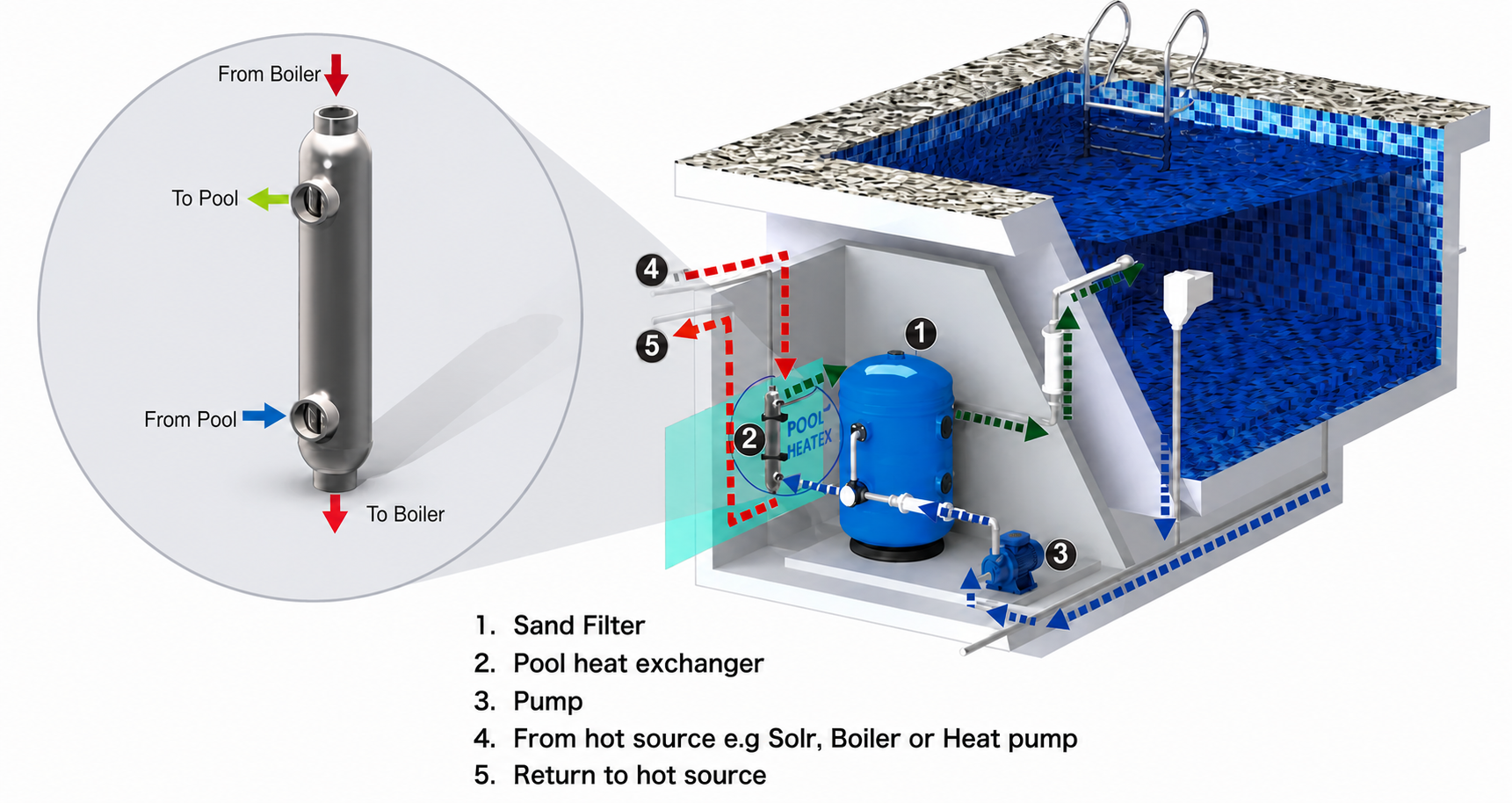
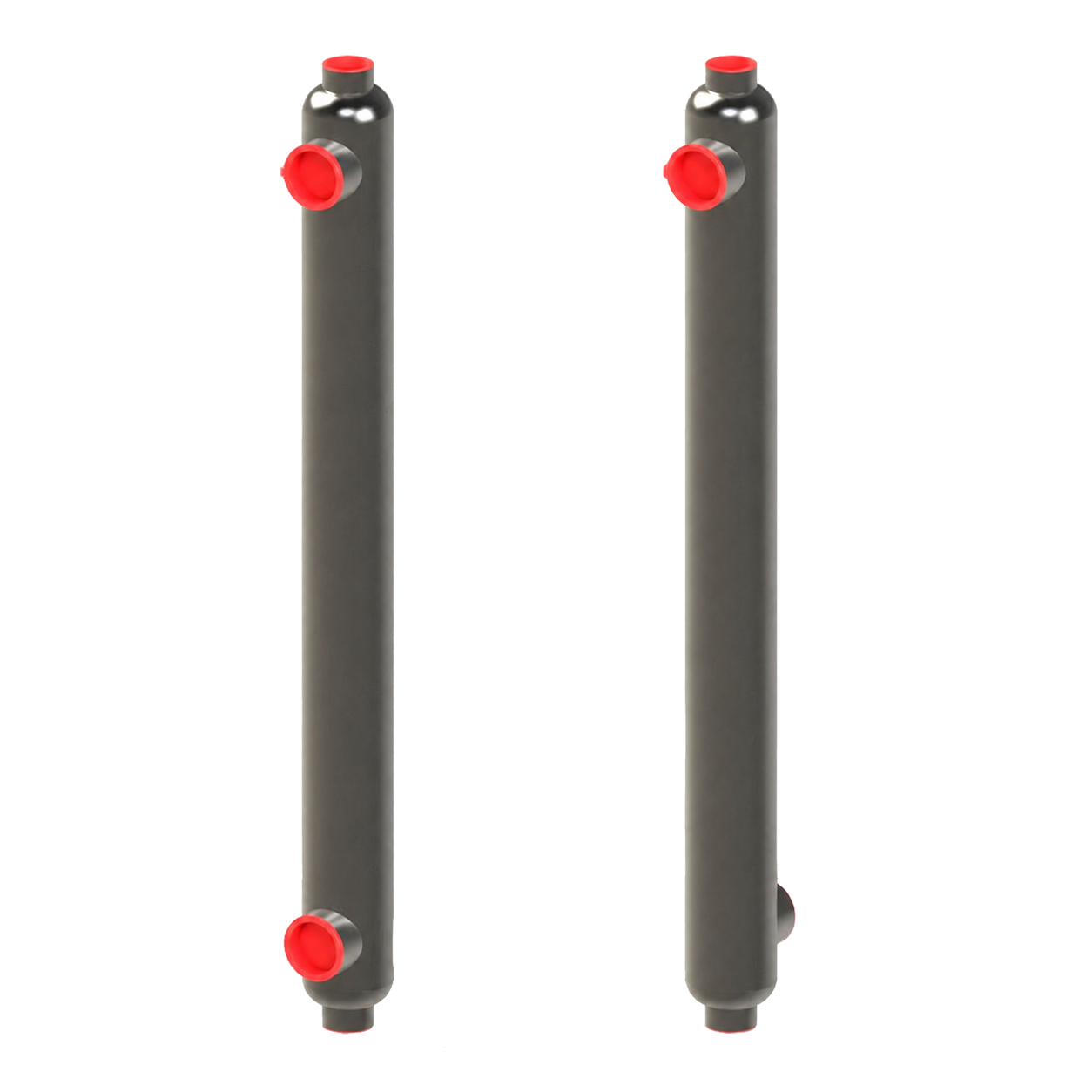
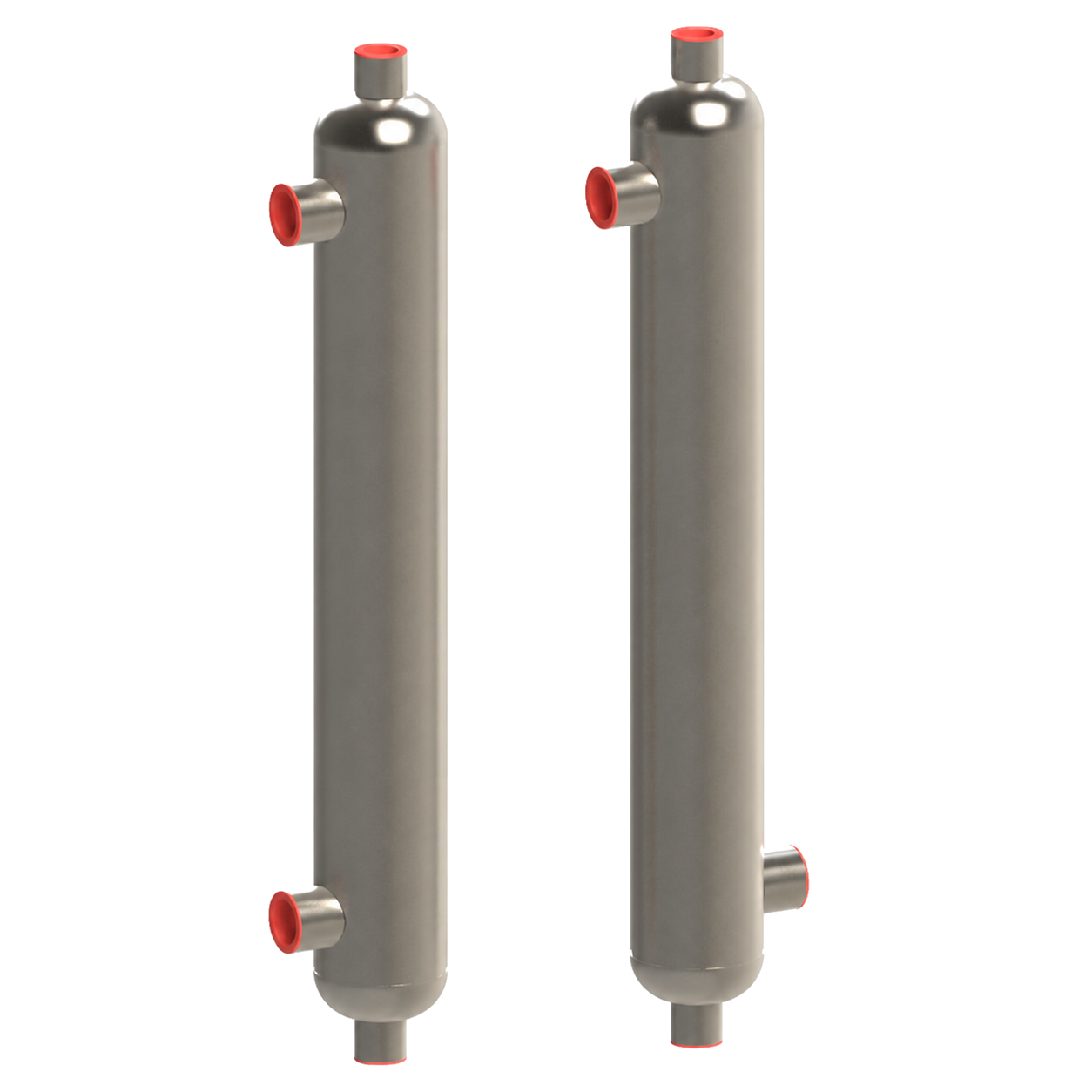
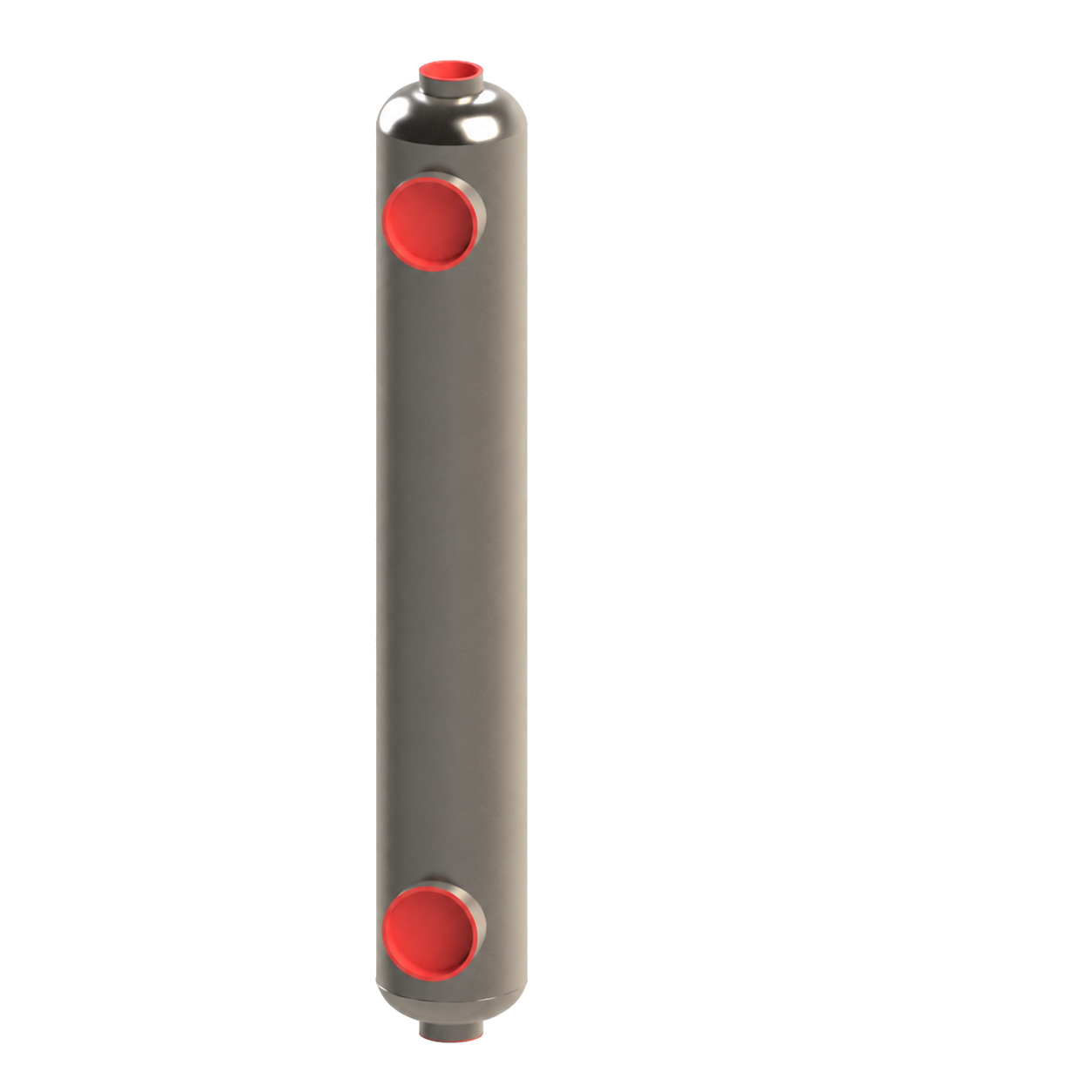
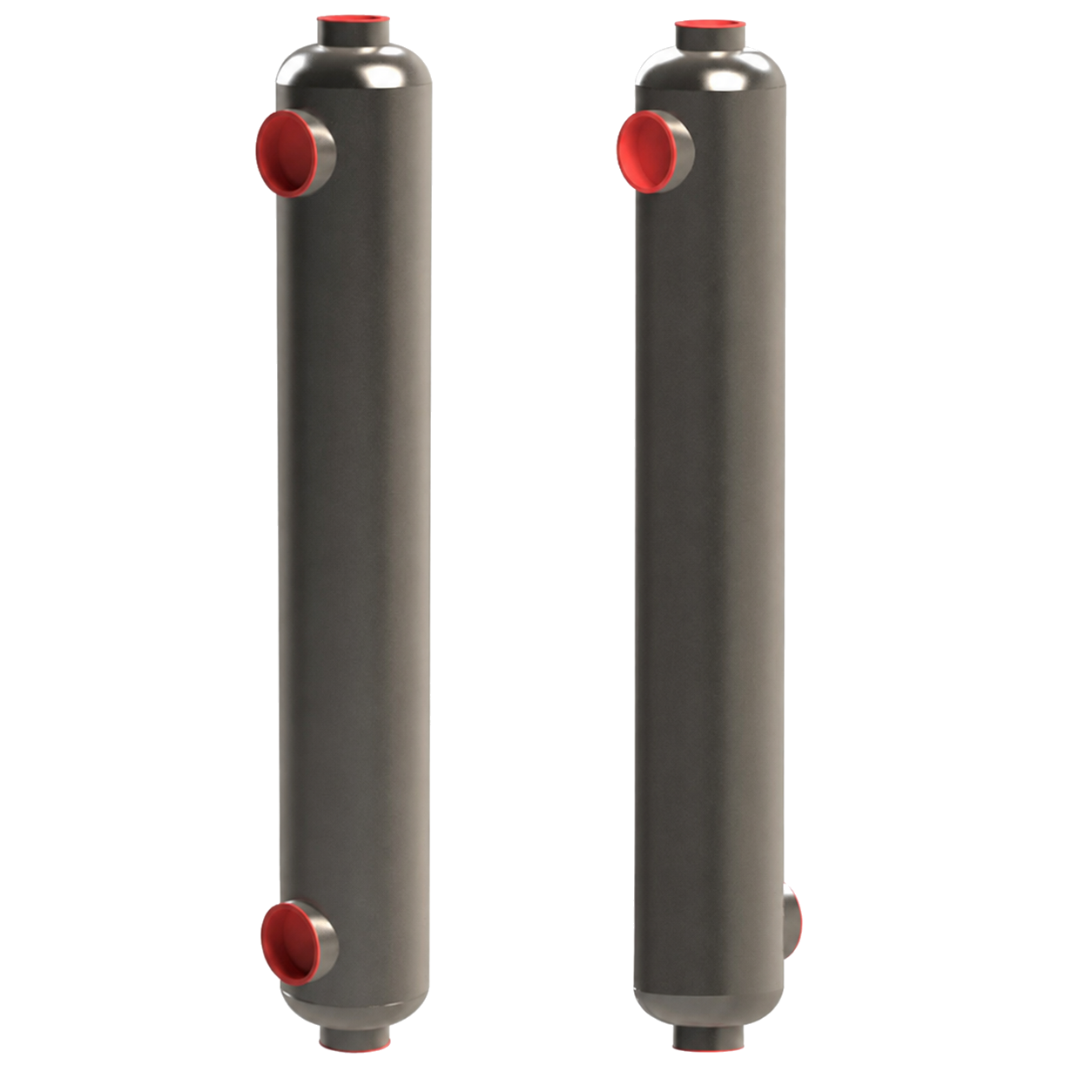
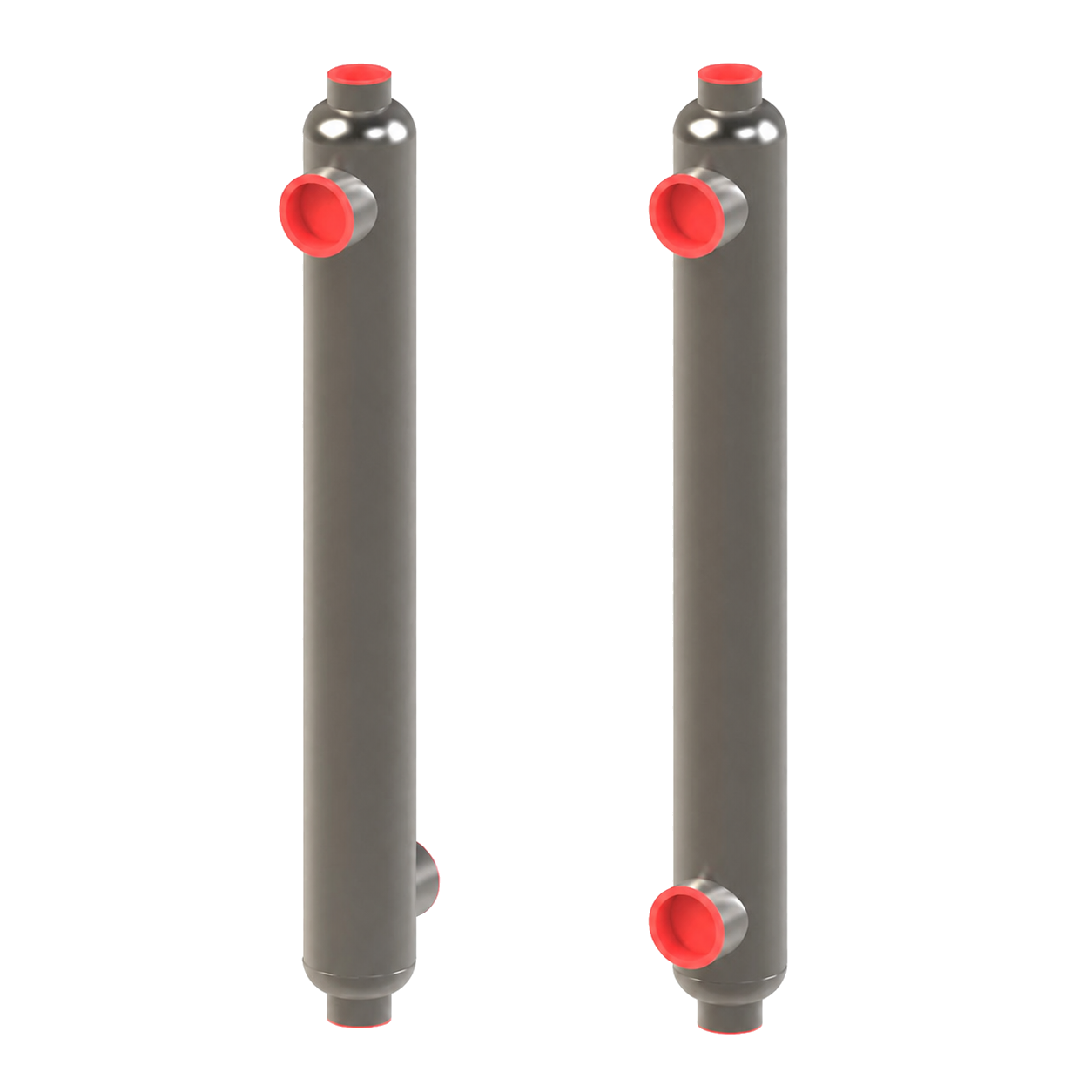
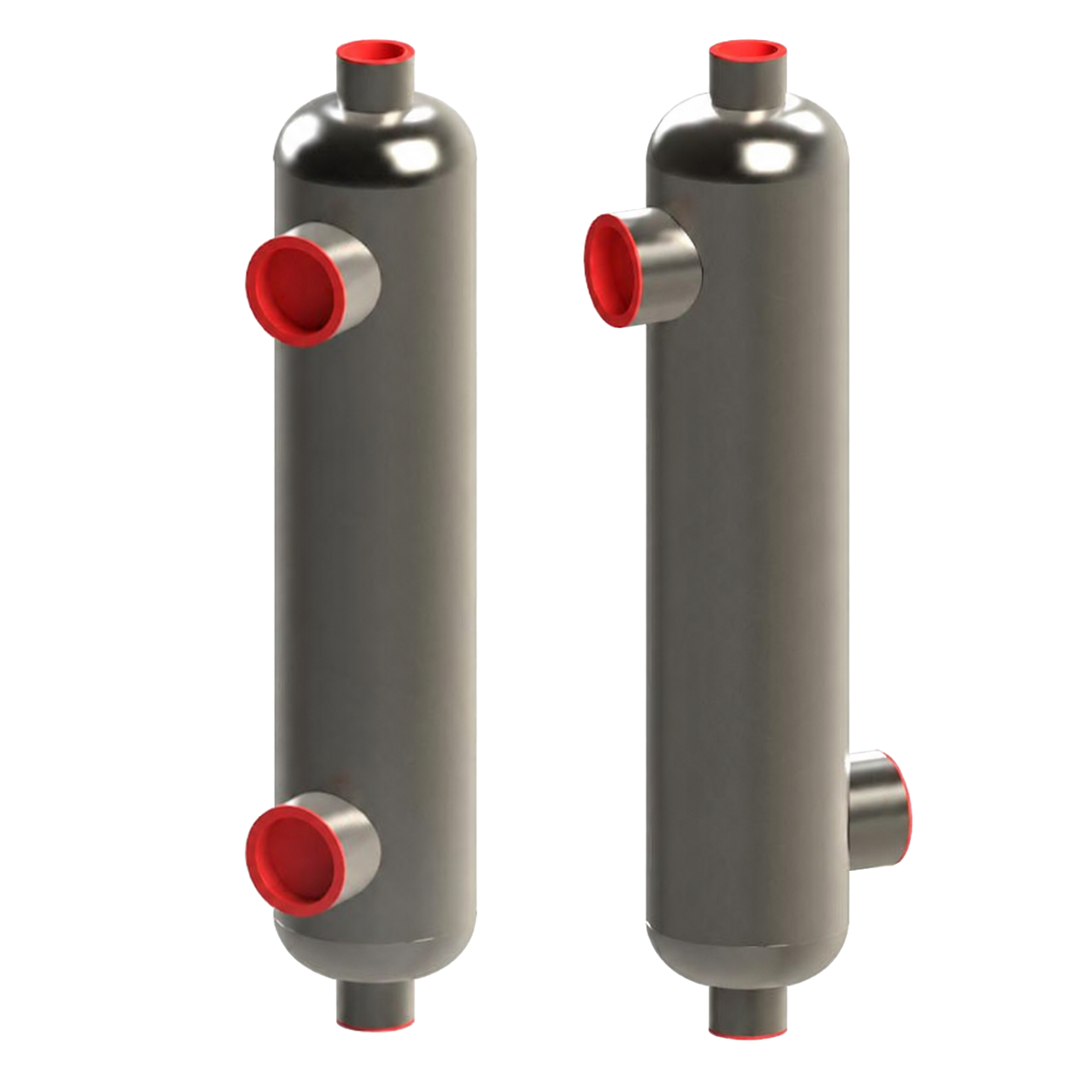
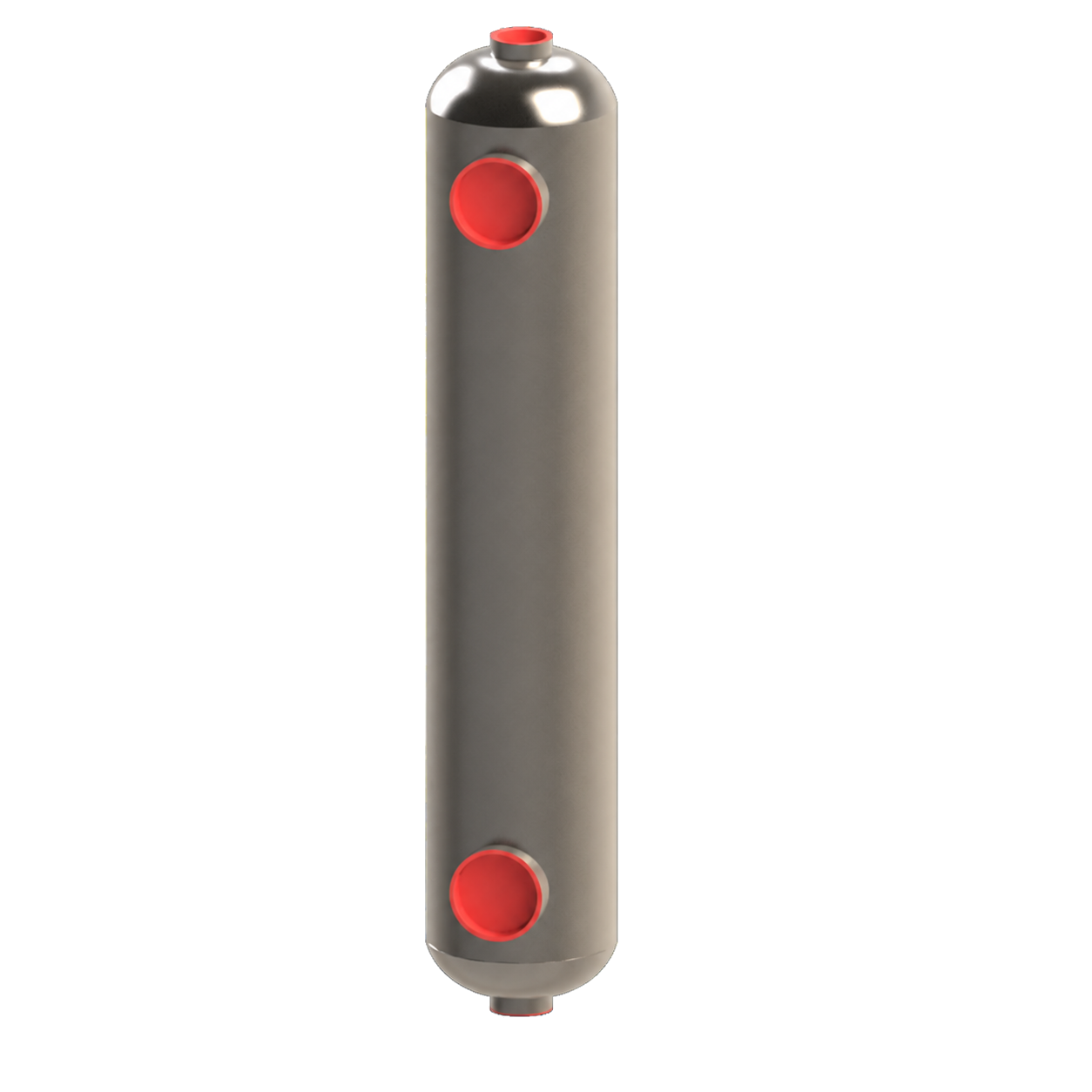
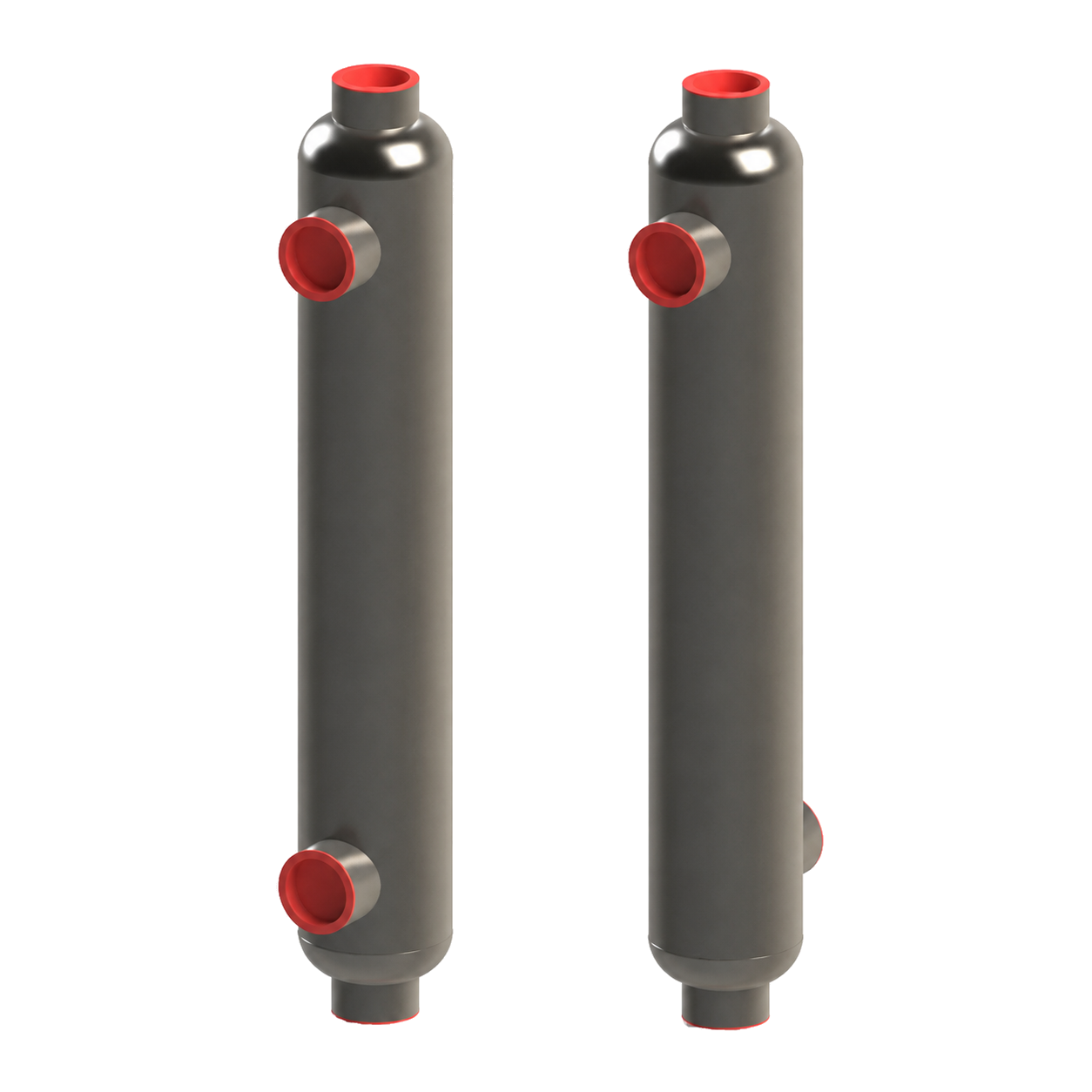
Pool water passes through the shell while the hot boiler, heat-pump or solar fluid travels through the internal corrugated helical tube. The corrugation increases turbulence and heat-transfer efficiency while the large shell-side path supports pool circulation with low pressure drop. For maximum performance, the two circuits are installed counter-currently so the hot and cold streams maintain a useful temperature difference along the exchanger.
Construction
Tubular shell with internal corrugated helical tube
Flow arrangement
Counter-current; pool water in shell, hot fluid in tube
Published heat-transfer coefficient
Up to 14,000 W/m²·K; duty-dependent
Published maximum flow velocity
Up to 5.5 m/s; verify pressure drop and erosion limits
Pool-water-side performance
High flow capacity with low pressure drop
Mounting support
Plastic or steel bracket options according to model and installation
Published range
ST16–ST1750 / SP55–SP6000
Published capacity range
16–1,750 kW / 55–6,000 kBtu/h
Engineering explained
See what is happening inside the exchanger.
Product imagery is paired with technical context so buyers and engineers can understand construction, flow path and configuration—not just the exterior.
01
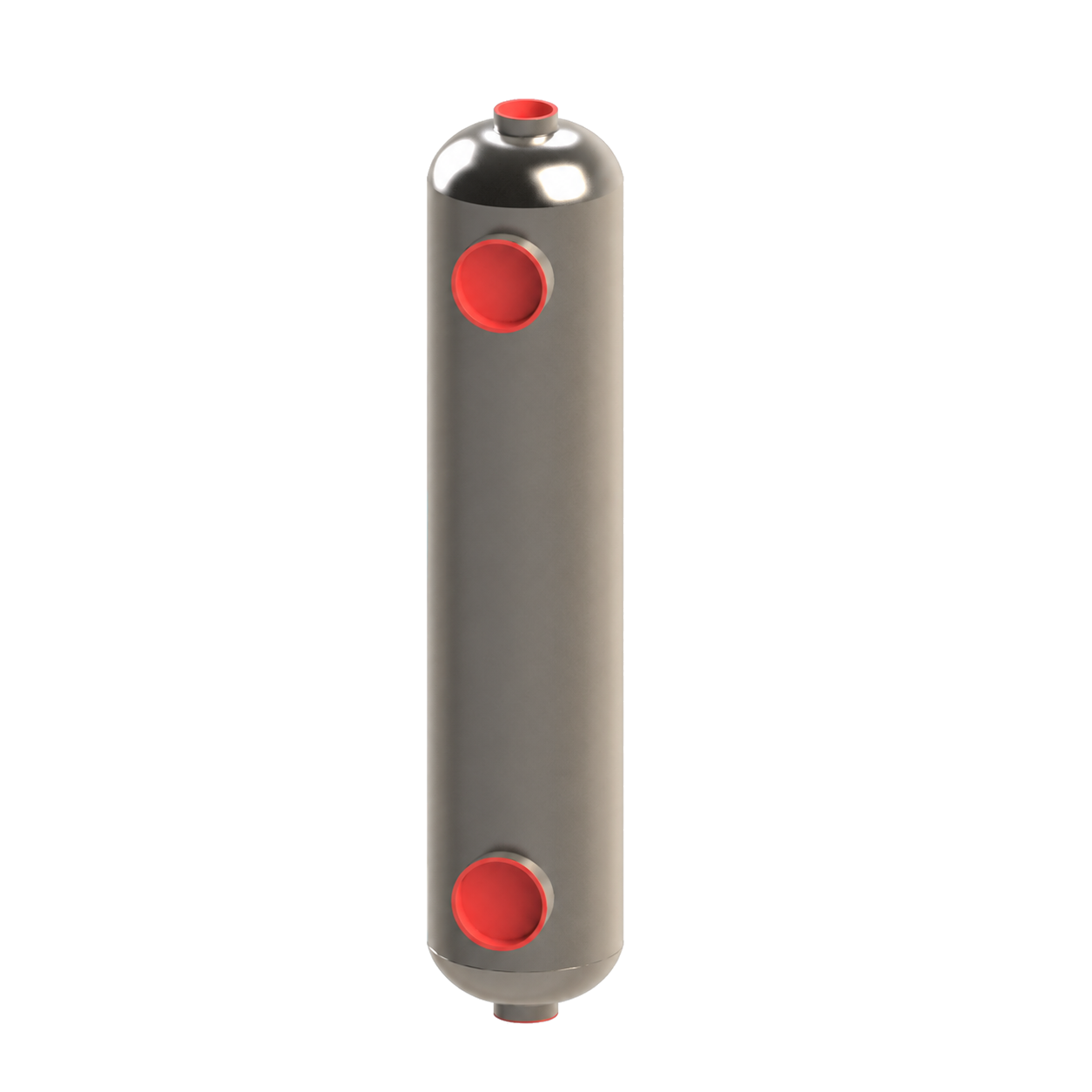
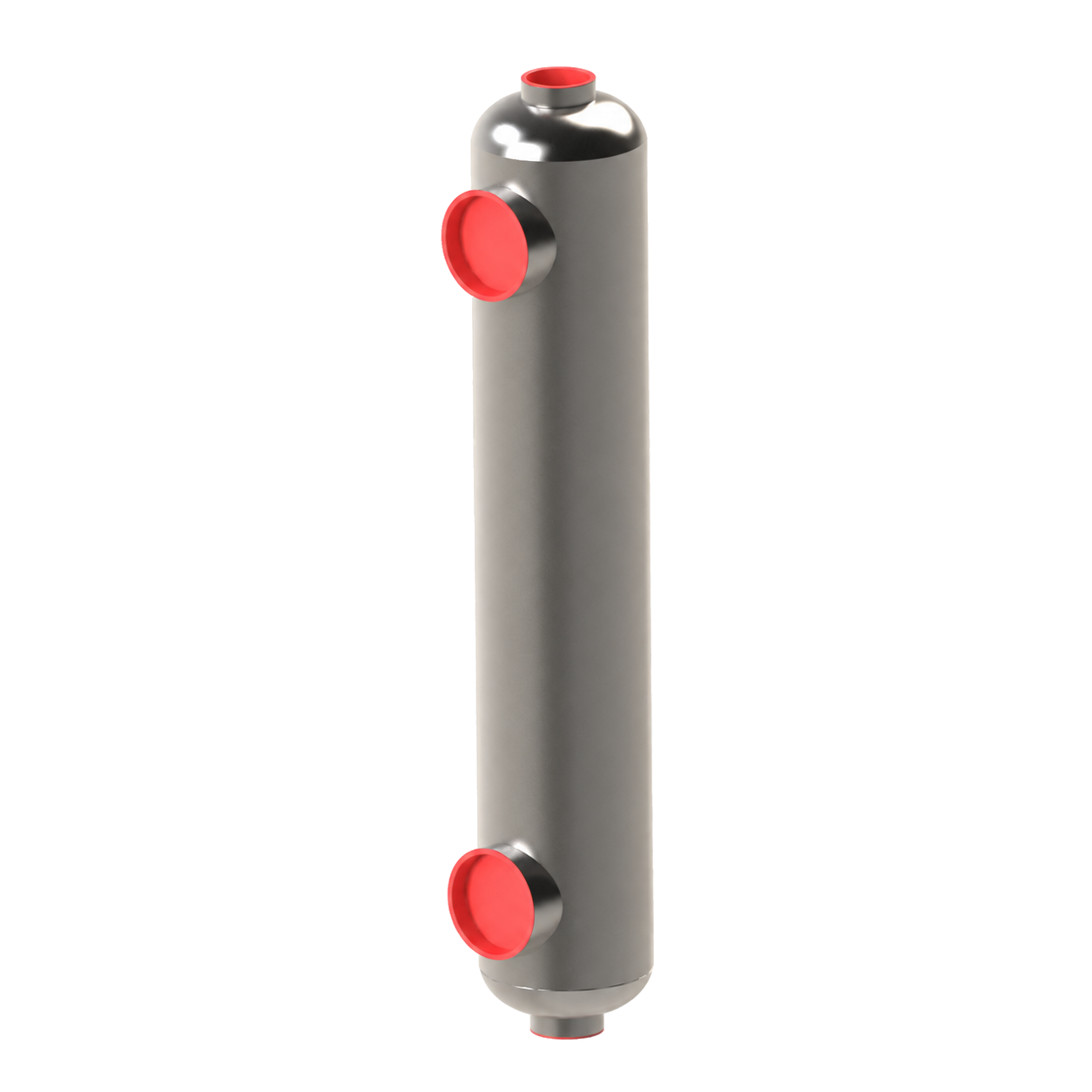
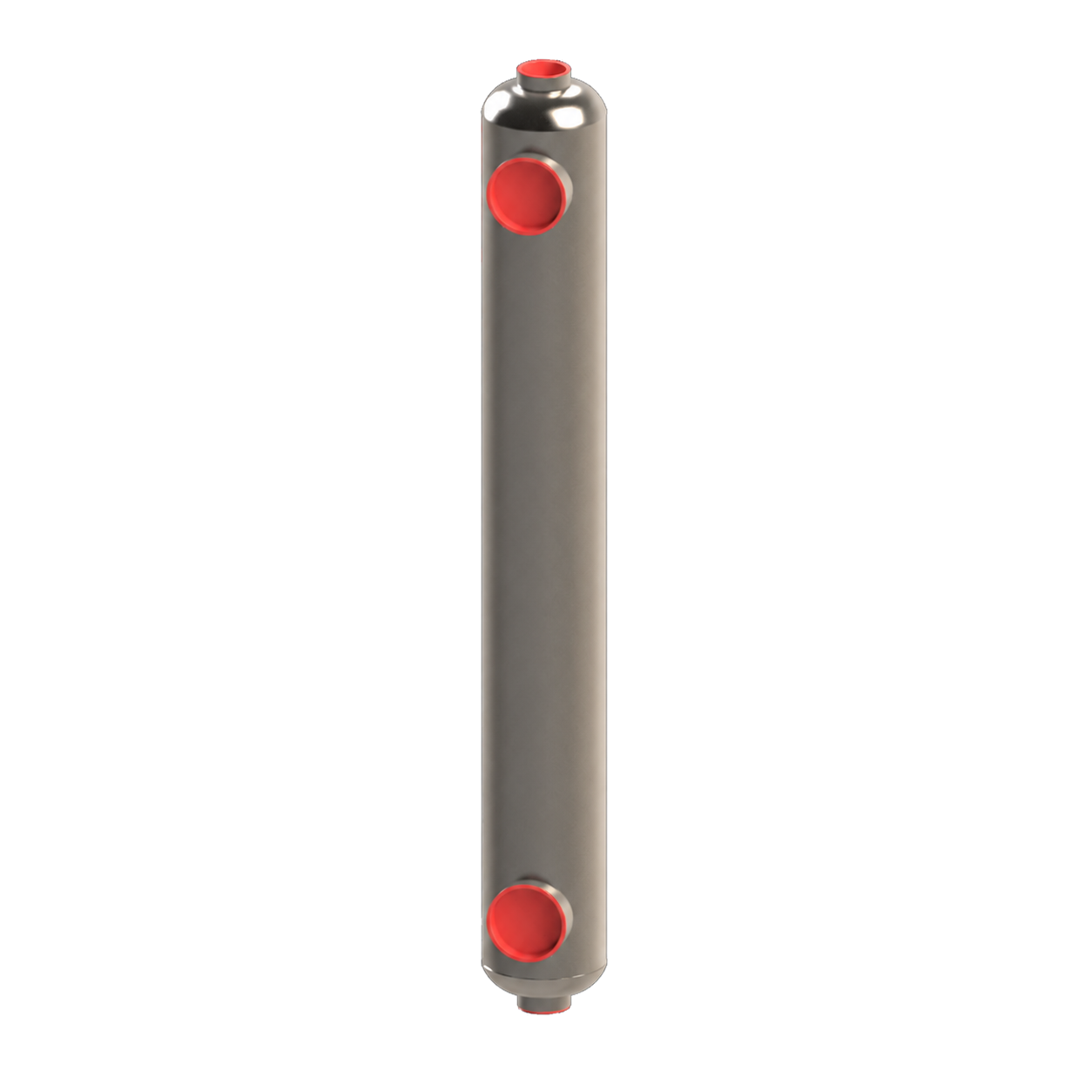
Pool-water heating circuit and flow path
Pool water passes through the shell circuit while the boiler, solar or heat-pump fluid travels through the internal tube circuit in counter-current flow.
02
Stainless-steel and titanium product family
Material and connection arrangement are selected for the heat source, pool chemistry and installation requirements.
Why this technology
Purpose-built for swimming pools and spas.
Helical corrugated-tube construction combines high heat-transfer efficiency, generous pool-water flow area and corrosion-conscious material options in a compact unit.
Low pressure drop
The large pool-water-side flow path supports high circulation rates with low resistance.
Compact size
The published design can require about one-tenth of the space of conventional reference systems.
Pool-water resistance
Stainless steel or titanium is selected around chlorine, bromine, salt content and cleaning chemistry.
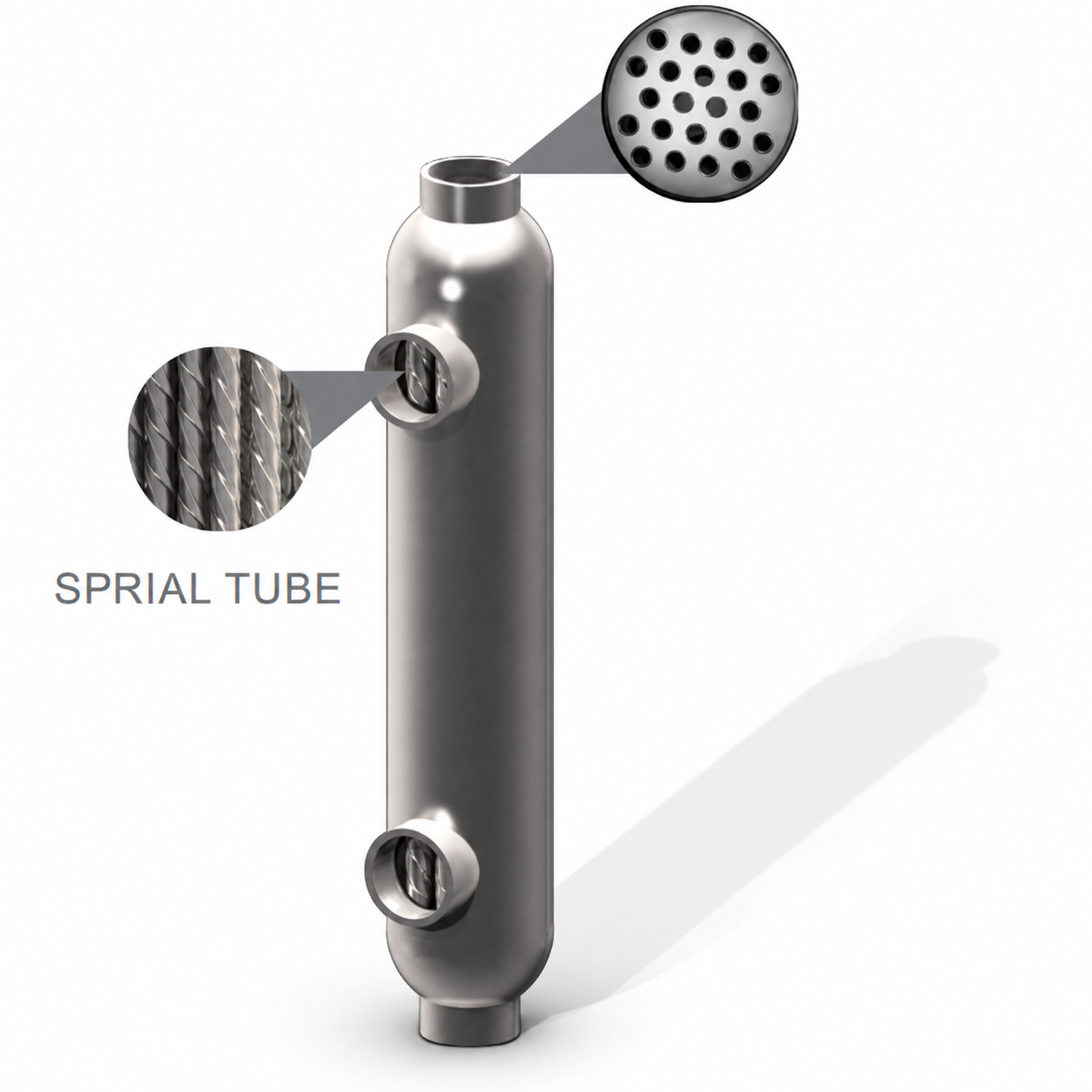
Corrugated spiral tube
Tube corrugation increases turbulence and can deliver a published heat-transfer coefficient up to 14,000 W/m²·K.
01
Corrugated spiral-tube construction
The enlarged details show the corrugated internal spiral tube and tube sheet. Corrugation promotes turbulence, improving heat transfer while retaining a compact exchanger body.
02
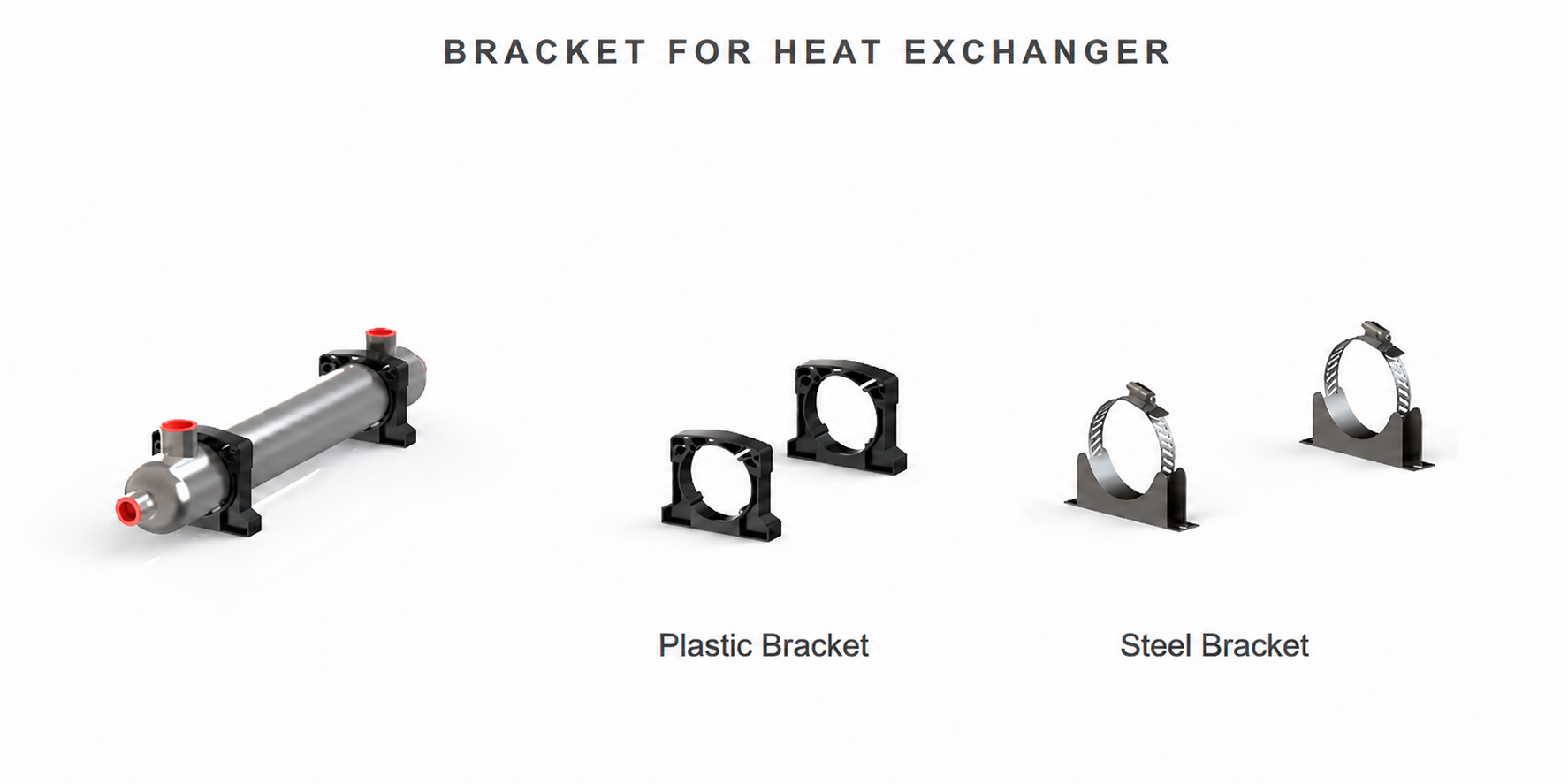
Plastic and steel brackets
Plastic supports suit compact standard installations; steel brackets provide robust support for larger models and demanding mounting arrangements.
Models & technical data
Compare models and published specifications.
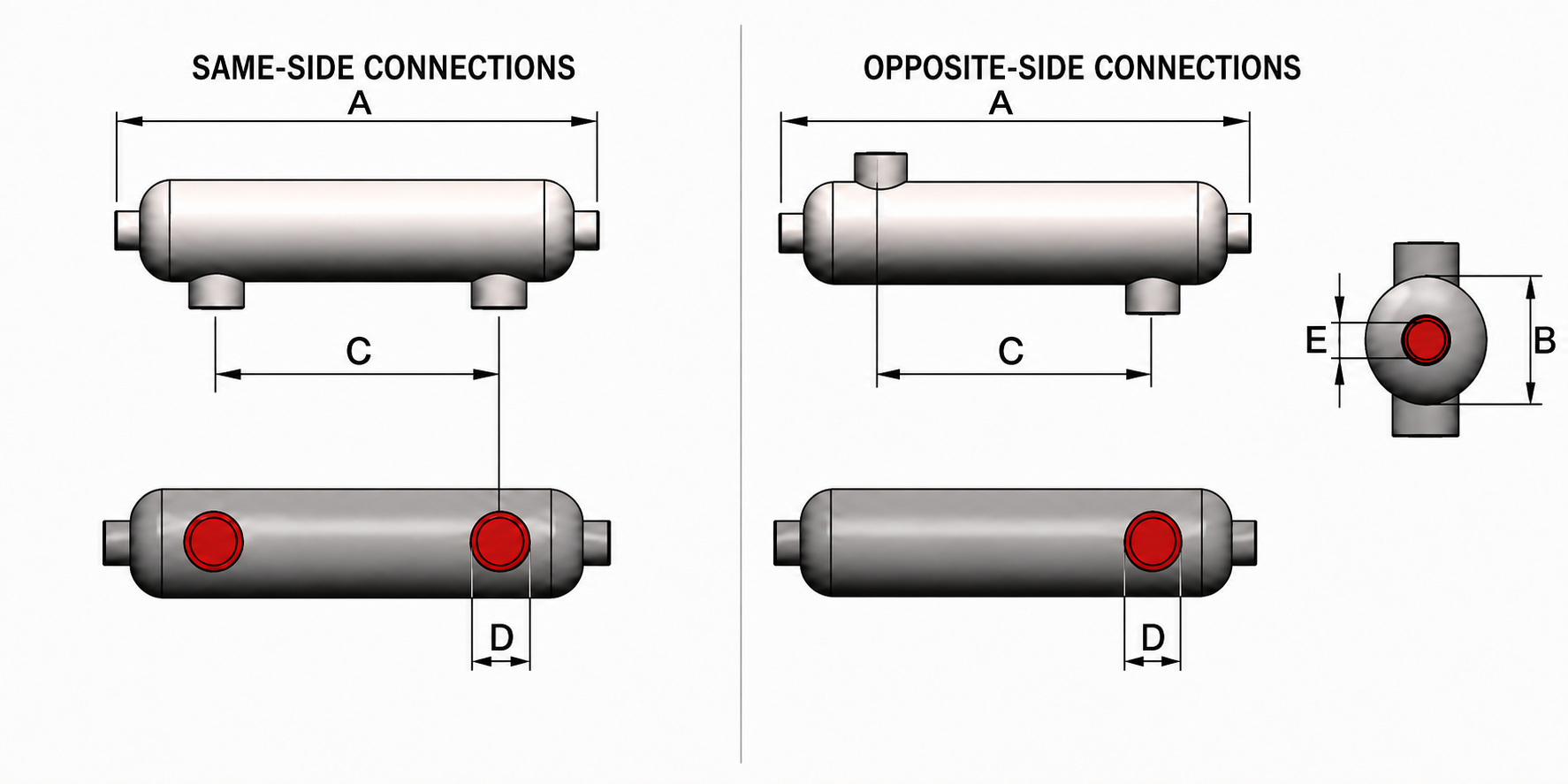
Compare circuit arrangement and overall dimensions at a glance, then open a product size for its product view, dimension drawing and technical summary.
Published HEXNOVAS swimming-pool catalogue dimensions and nominal performance data. Capacity, flow, pressure drop, pool heating rate and heat-transfer area are nominal specification values based on a 60°C (140°F) inlet temperature difference. Final exchanger selection must be checked against pool volume, warm-up time, heat-source temperatures, water chemistry, flow, pressure drop and local installation requirements.
Dimensions are for reference only. Final dimensions are subject to the approved order drawing. HEXNOVAS reserves the right of final interpretation.
Model details
ST16 / SP55
HEXNOVAS Swimming Pool Heat Exchangers
Product configurationDimension drawing
Capacity (kW / kBtu/h)
16 / 55
Pool size (m³)
15
A (mm)
339
B (mm)
63.5
C (mm)
253
Pool port D
1 in
Hot port E
3/4 in
Nominal pool capacity (gal @ 1°F/hr / m³ @ 1°C/hr)
4,700 / 32.0
Hot-water flow (L/min / USGPM)
28 / 7.49
Hot-side pressure drop (kPa / psi)
5.83 / 0.85
Pool-water flow (L/min / USGPM)
185 / 48.84
Pool-side pressure drop (kPa / psi)
7.08 / 1.03
Heat-transfer area (m² / ft²)
0.15 / 1.636
Performance basis
Nominal ratings at a 60°C (140°F) inlet temperature difference
Construction
Corrugated helical tube inside a tubular shell
Published tube-bundle materials
SS316L, SS304 or titanium
Port arrangements
Same-side or opposite-side layouts
Mounting
Plastic or steel bracket options
Dimensions are for reference only. Final dimensions are subject to the approved order drawing. HEXNOVAS reserves the right of final interpretation.
Plastic mounting brackets for compact standard installations
Steel mounting brackets for larger units and robust mechanical support
Material options
Stainless-steel construction for compatible treated pool water
Titanium versions for demanding chloride or salt-water service
Material review includes chlorine, bromine, salt content, operating temperature and cleaning chemicals
Material selection must be confirmed against actual water chemistry
Typical applications
Where this exchanger fits.
01
Residential and commercial swimming pools
02
Spa and hot-tub water heating
03
Boiler-to-pool and heat-pump-to-pool systems
04
Chlorinated and salt-water pools with compatible material selection
Selection information
What our engineers need from you.
Provide pool volume, desired warm-up time, chlorine or bromine concentration, salt content, heat-source capacity and temperatures, water flows, allowable pressure drop, connection standard, preferred port arrangement and installation-bracket requirements.
Frequently asked questions
Key questions before product selection.
How does Swimming Pool Heat Exchangers work?
Pool water passes through the shell while the hot boiler, heat-pump or solar fluid travels through the internal corrugated helical tube. The corrugation increases turbulence and heat-transfer efficiency while the large shell-side path supports pool circulation with low pressure drop. For maximum performance, the two circuits are installed counter-currently so the hot and cold streams maintain a useful temperature difference along the exchanger.
What information is required to select the right product?
Provide pool volume, desired warm-up time, chlorine or bromine concentration, salt content, heat-source capacity and temperatures, water flows, allowable pressure drop, connection standard, preferred port arrangement and installation-bracket requirements.
Which materials and configurations are available?
Stainless-steel construction for compatible treated pool water; Titanium versions for demanding chloride or salt-water service; Material review includes chlorine, bromine, salt content, operating temperature and cleaning chemicals; Material selection must be confirmed against actual water chemistry
How is the final product size confirmed?
The final size is confirmed by thermal calculation using flow rates, inlet and outlet temperatures, allowable pressure drop, design pressure and fluid properties.
Product documentation
Catalogue and technical downloads.
Use the published catalogue for product-range reference. Final dimensions, ratings and materials are confirmed for the selected model and operating duty.