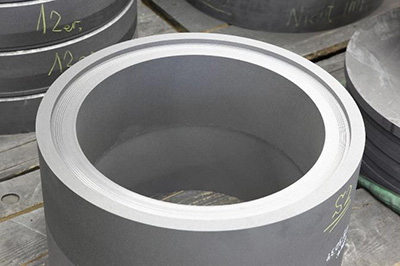
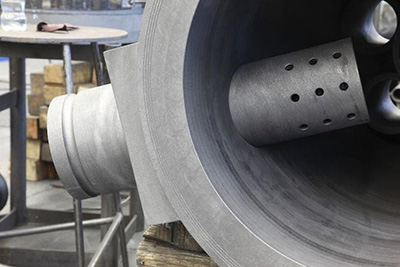
Various types of towers and vessels are commonly used operational units in process engineering, employed in industrial operations such as absorption, cooling, distillation, evaporation, filtration, washing, and more. When corrosive components are present, graphite is the material of choice. Graphite towers are composed of graphite tower sections and internal components. Based on the properties of graphite materials, commonly used tower types include spray towers, packed towers, bubble cap towers (with round or strip bubble caps), and sieve tray towers, among others.Graphite towers, made from our excellent impregnated impermeable graphite material, offer extensive corrosion resistance and thermal shock capabilities, providing high operational flexibility and reliability. They are widely used in industries dealing with highly corrosive media, such as hydrochloric acid (HCl), phosphoric acid (H3PO4), and others. HEXNOVAS Nantong Yinan's graphite tower systems are primarily used in industries such as chemicals, pharmaceuticals, agrochemicals, food, electronics, solar energy, and environmental protection.Our product range includes both the design and manufacture of the units and their internal components.
Main Advantages
• Excellent corrosion resistance on one side or both sides
• Easy to disassemble
• High operational safety
• Robust modular design
• Short delivery time
• Long service life
Design
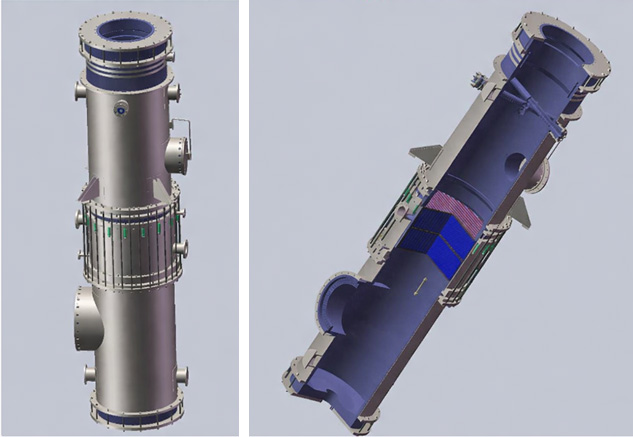
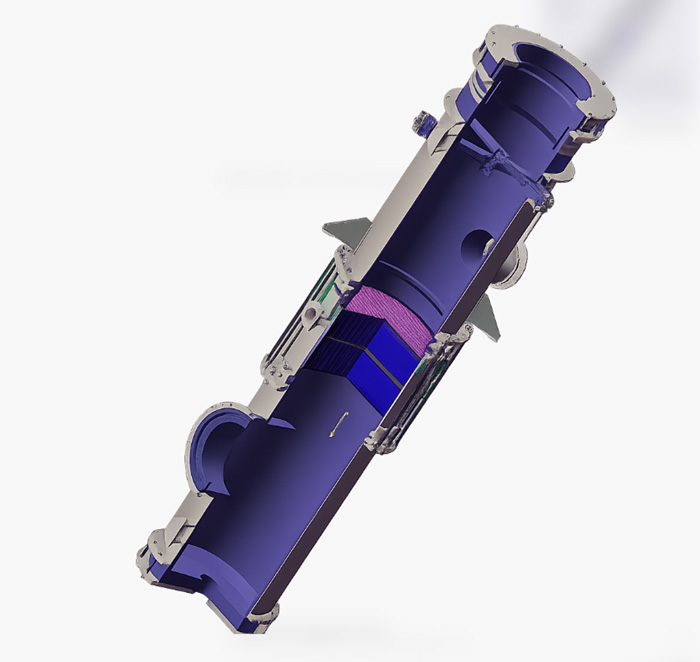
• Modular design: Diameter and number of sections are adjustable
• Can integrate process equipment (e.g., condensers, reboilers, etc.)
• Tower diameter: Standard up to DN2000, with larger diameters available upon request
• Fully corrosion-resistant and vacuum-resistant
• Graphite nozzle positions and directions can be customized according to process requirements
• Thermal expansion compensated by tie rods and springs
• Tie rods and coil springs e
• nsure compensation for thermal expansion differences
|
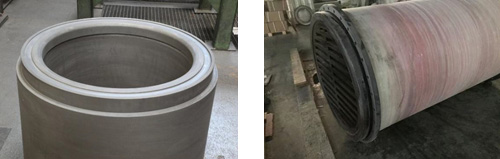
Tower Wall |
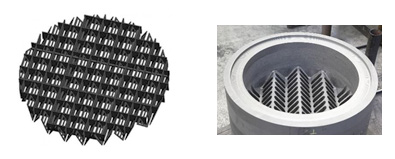
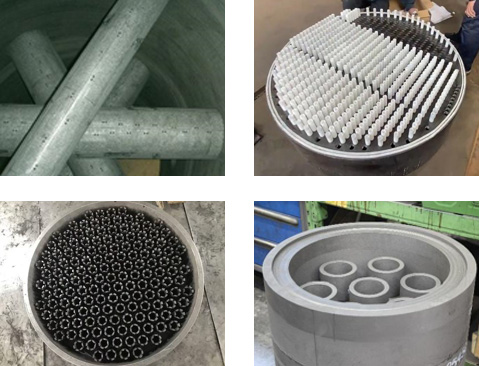
Internal Components |
Main Features
• Design pressure: Tube side -0.1 (full vacuum) to +0.3 MPa, depending on nominal diameter, design pressure, and temperature
• Design temperature: -60°C to +200°C
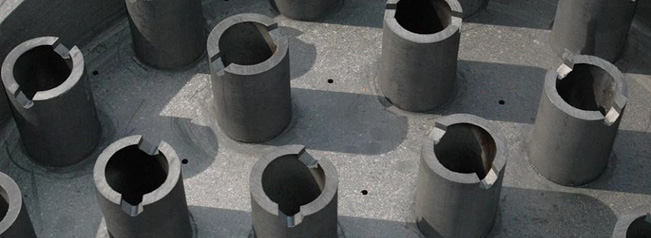
• Internal components: Graphite, ceramic, PTFE, and other fluoropolymer fillers, bubble caps, support rings and support grids, liquid distributors, gas distributors, mist eliminator beds, and other customized
components available upon request.
A type of tower structure. Impregnated with corrosion-resistant graphite materials, due to their excellent corrosion resistance, are not only used for manufacturing heat exchangers, absorbers and other equipment but also for making various types of reactors, towers and vessels. For example, graphite quencher towers, graphite reactors, and graphite storage.
Materials
• Impermeable graphite: HEXNOVAS M-2 G1, HEXNOVAS M-2 G2, or HEXNOVAS M-2 G3
• Internal structure: Impermeable graphite or carbon fiber, glass fiber reinforced composite materials
• Shell, pressure plates, and flanges: Carbon steel or stainless steel
• Tie rods, nuts, bolts, washers, springs: Stainless steel
• PTFE and/or graphite gaskets between column rings
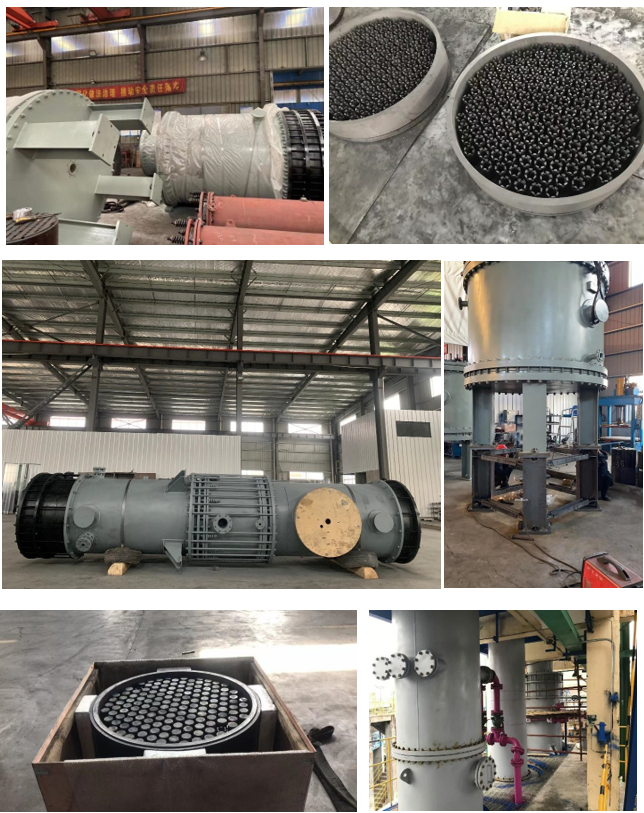
Details at a Glance:
Example Applications:
QUESTIONNAIRE FOR HEAT EXCHANGERS
|
Customer Name |
|
|||||
|
Equipment Model |
|
|||||
|
Equipment Location |
|
|||||
|
Heat Transfer Area |
|
|||||
|
Heat Transfer Process Data |
||||||
|
|
|
Service Side |
Process Side |
|||
|
Fluid Name/Composition |
|
|
|
|||
|
Total Flow |
kg/h |
|
|
|||
|
Gas Flow |
kg/h |
|
|
|
|
|
|
Liquid Flow |
kg/h |
|
|
|
|
|
|
Non-condensable Flow |
kg/h |
|
|
|
|
|
|
Temperature (Inlet/Outlet) |
°C |
|
|
|
|
|
|
Dew Point/Boiling Point |
°C |
|
|
|
|
|
|
Density |
kg/m³ |
|
|
|
|
|
|
Viscosity |
cP |
|
|
|
|
|
|
Gas Molecular Weight |
g/mol |
|
|
|
|
|
|
Non-condensable Molecular Weight |
g/mol |
|
|
|
|
|
|
Specific Heat |
cal/g/K |
|
|
|
|
|
|
Thermal Conductivity |
kcal/m/K/h |
|
|
|
|
|
|
Latent Heat |
kcal/kg |
|
|
|
|
|
|
Inlet Pressure (Absolute) |
MPa |
|
|
|||
|
Flow Velocity |
m/s |
|
|
|||
|
Pressure Drop |
bar |
|
|
|||
|
Fouling Factor |
kcal/h/m²/°C |
|
|
|||
|
Heat Exchange Rate |
kcal/h |
|
||||
|
Heat Transfer Coefficient |
kcal/h/m²/°C |
|
||||
|
Corrected Logarithmic Mean |
°C |
|
||||
|
Heat Transfer Area |
m² |
|
||||
|
Design Data |
||||||
|
Design Temperature |
°C |
|
|
|||
|
Design Pressure |
barg |
|
|
|||
|
Test Pressure |
barg |
|
|
|||
|
Number of Passes |
|
|
|
|||
|
Inlet Pipe Diameter |
mm |
|
|
|||
|
Outlet Pipe Diameter |
mm |
|
|
|||
|
Materials |
|
|
|
|||
|
Weight (Empty/Full of Water) |
kg |
|
||||
|
Installation Method (Horizontal or Vertical) |
|
|
||||
Note: The more complete the provided information, the more accurate the calculation results will be. If only partial information is provided, we will make reasonable estimates based on scientific and engineering practices, and the results may have some deviation from the actual values.
IMPREGNATED GRAPHITE
Impregnated Graphite
• A composite material made from 80% to 85% artificial graphite and 15% to 20% synthetic resin, with specific ratios depending on the chosen grade of artificial graphite and resin type.
• Synthetic resin-impregnated graphite offers excellent chemical corrosion resistance.
• It is almost unaffected by acids, solvents, chlorides, and other halogenated compounds (the appropriate artificial graphite grade and resin type should be selected based on specific material conditions). The key factors for successfully producing high-quality impregnated graphite include: uniform texture, consistent particle structure, perfect impregnation process, and consistent mechanical and thermal treatment processes.
• When these conditions are met, our products can meet even the most stringent requirements (including GMP standards).
Impregnation Process
• Our unique high-performance resin is used in a precise impregnation process, ensuring that the resin fully penetrates the porous texture of the artificial graphite. During gradual heating and pressurization, the resin undergoes polymerization and curing, resulting in a perfect impermeable state. Post-curing at medium temperatures alters the resin structure, further enhancing the corrosion resistance of the impregnated graphite against various media.
• In some extreme operating conditions, such as rapid flue gas cooling (where the process medium temperature can reach up to 1300°C), water cooling is used to ensure that the temperature of the impregnated graphite wall does not exceed its operating range (-60°C to +200°C). Despite these harsh conditions, impregnated graphite still performs well.
Using artificial graphite as the substrate, impregnated with various resins as the medium
It provides the best corrosion resistance to acids, solvents, chlorides, and other halogenated compounds.
The key factors for obtaining high-quality impregnated graphite are the base graphite material, impregnating resin, and impregnation process.
Even at high temperatures, it still maintains good mechanical properties.
Extremely low permeability, good mechanical properties, and excellent corrosion resistance.
High-quality materials are the foundation of high-quality equipment.
Material Properties
|
Property |
Unit |
B Grade |
A Grade |
X Grade (Isostatic) |
|||
|
Fine Particle Graphite |
Ultrafine Particle Graphite |
Extremely Fine Particle Graphite |
|||||
|
Pre-impregn ation HEXNOVAS |
Post-impregn ation HEXNOVAS |
Pre-impregn ation HEXNOVAS |
Post-impregn ation HEXNOVAS |
Pre-impregn ation HEXNOVAS |
Post-impregn ation HEXNOVAS |
||
|
Maximum Particle Size |
mm |
3 |
3 |
0.8 |
0.8 |
0.2 |
0.2 |
|
Bulk Density |
g/cm3 |
1.54~1.65 |
1.85~1.90 |
1.62~1.75 |
1.89~1.92 |
1.70~1.80 |
1.90~1.98 |
|
Compres sive Strength |
MPa |
19.2~24.6 |
>60 |
25.6~38.4 |
>78 |
65 |
>90 |
|
Tensile Strength |
MPa |
3.80~6.30 |
>14 |
7.76~9.66 |
>16 |
15 |
>21 |
|
Flexural Strength |
MPa |
9.24~12.2 |
>25 |
15.3~19.7 |
>32 |
33 |
>45 |
|
Thermal Conductivity |
w/(m. K) |
>120 |
>110 |
>130 |
>120 |
>140 |
>130 |
|
Coefficient of Thermal Expansion |
10-6/K |
—— |
7~8 |
—— |
4~6 |
—— |
2~4 |
|
Permissible Temperature |
oc |
400 |
180 |
400 |
200 |
400 |
200 |
|
Permeability Coefficient |
cm2/s |
—— |
10-6 |
—— |
10-6 |
—— |
10-6 |
|
Ash Content |
% |
<0.5 |
<0.5 |
<0.5 |
<0.5 |
<0.5 |
—— |
Excellent Thermal Conductivity
Thermal Conductivity
• The thermal conductivity of graphite ranges from 120 to 150W/m·K, with impermeable graphite outperforming most materials used to manufacture corrosion-resistant process equipment.
[w/m.K]
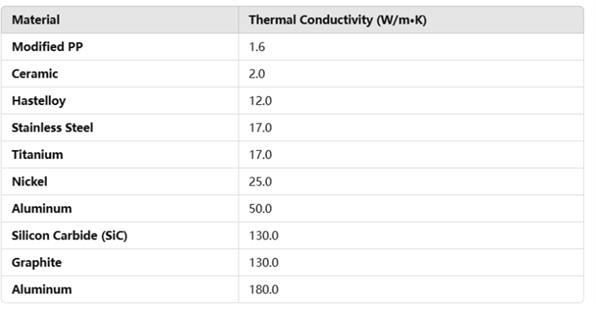
Comparison of Thermal Conductivity of Various Corrosion-Resistant Materials Commonly Used in the Chemical Processing Industry
Low Adhesion
Good cleaning ability, ensuring excellent performance in various applications.
Adhesion Performance
• Compared to most structural materials used in corrosive applications, graphite has very low adhesion. This means it has a very low tendency to contaminate and excellent cleaning capabilities. This performance makes impregnated graphite the perfect material for manufacturing enamel reactor reflux condensers.
Heat Exchanger Series
• HEXNOVAS Company has developed various chemical equipment in chemical forms for different working conditions:
• | Block-hole type graphite heat exchangers
| Tube bundle type graphite heat exchangers
| Graphite mass transfer tower equipment
• Different designs for different processing conditions, with the right selection maximizing benefits.
• A complete product range ensures optimal performance under all operational conditions.
Additional Information
• For detailed equipment information, please refer to the introduction.
• Special equipment information is available in the related documents.
• For further information, please contact us!
Operating Pressure:From -0.1 MPa to +1.0MPa (depending on specific design).
Operating Temperature: From -60°C to +200°C (depending on specific design).
CORROSION RESISTANCE OF IMPREGNATED GRAPHITE
Basic Information
• The corrosion resistance of impregnated graphite varies depending on the choice of impregnation resin (modified phenolic resin, furan resin, PTFE, and highly cross-linked resin) and the grade of the HEXNOVAS base graphite material (M-2 G1, M-2 G2, M-2 G3) selected.
• Corrosion resistance also depends on multiple factors, including the operating conditions (such as process medium, concentration, temperature) and the equipment used (such as graphite quality, wall temperature, equipment design).
• The temperatures shown are the maximum allowable graphite wall temperatures. The process temperature in each case may be
significantly higher than the values provided in the chart (for example, in flue gas quenching, the process medium temperature can reach up to 1300°C).
• The data provided in the following chart reflects our current expertise and experience in applications. Due to the complexity of specific
operating conditions, these data do not guarantee 100% accuracy. They should not be used as a legal basis in all situations.
• Based on specific and individual usage data, we are committed to continually collecting practical usage information regarding heat transfer/corrosion resistance.
• If you have any questions, we strongly recommend conducting corrosion resistance tests. Please contact us for free sample testing.
Provides the best corrosion resistance to acids, solvents, chlorides, and other halogenated compounds.
The allowable wall temperature range is from -60°C to +200°C, with permissible process temperatures up to 1,300°C.
Corrosion Resistance Data Table
• Corrosion resistance of modified phenolic resin impregnated graphite material
Modified phenolic resin impregnated graphite is the most commonly used and offers corrosion resistance to most common acids (such as hydrochloric acid, sulfuric acid, hydrofluoric acid) and solvents.
However, its resistance to oxidizing media (such as nitric acid) and alkalis (such as amines, potassium carbonate, and caustic soda) is limited.
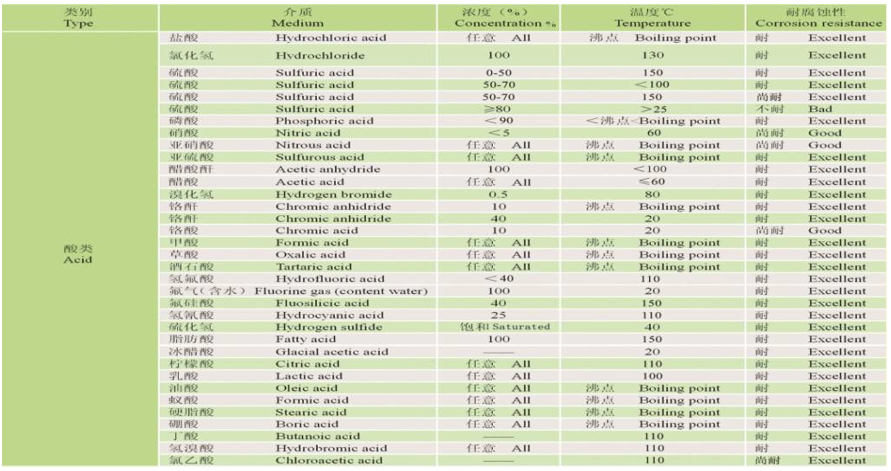
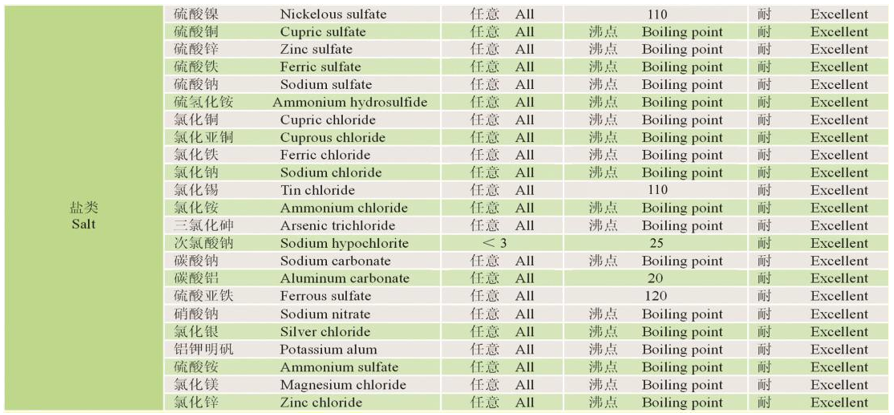
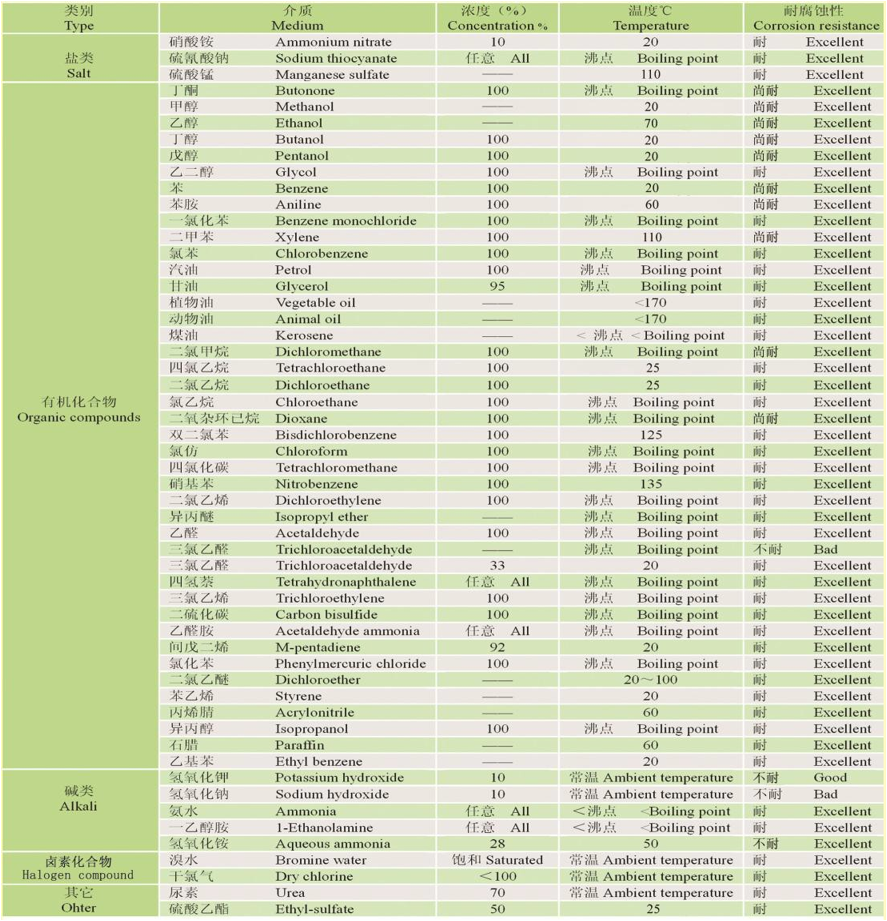
Modified phenolic resin impregnated graphite, except for strong oxidizing media (such as nitric acid, chromic acid, chlorosulfonic acid, etc.), is resistant to corrosion from most inorganic acids, organic acids, salts, organic compounds, solvents, and other media.
Through modification, the alkali resistance is slightly improved, but its resistance to alkalis remains limited.
• Corrosion resistance of furan resin impregnated graphite material
Furan resin impregnated graphite has excellent chemical stability and offers limited resistance to strong oxidizing media (such as nitric acid, chromic acid, chlorosulfonic acid, etc.). It is resistant to the corrosion of most inorganic acids, alkalis, organic acids, salts, organic compounds, solvents, and other media. It can be used in processes involving alternating acidic and alkaline conditions.
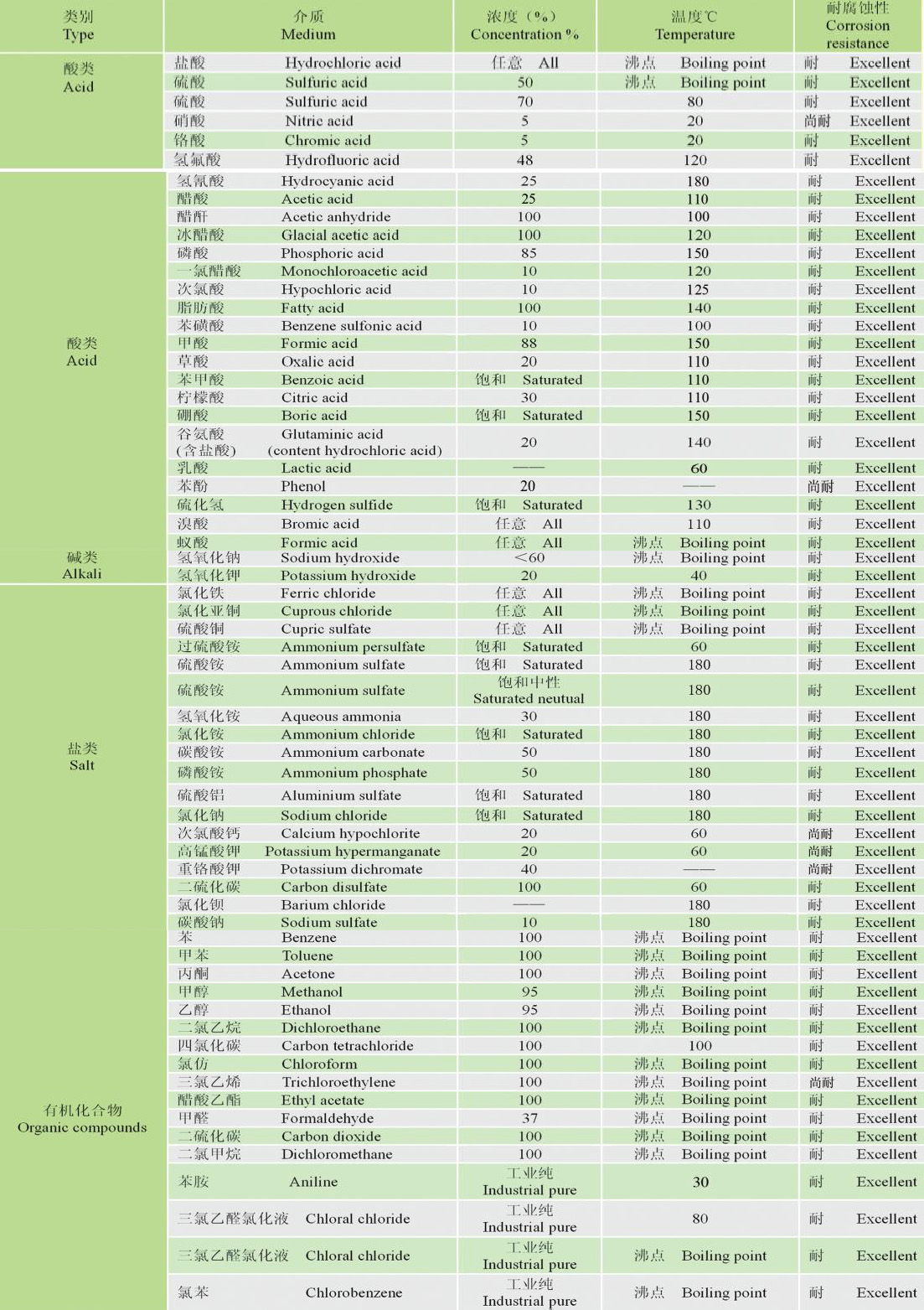
• Corrosion Resistance of PTFE Resin Impregnated Graphite Material PTFE (polytetrafluoroethylene) has the best chemical stability among known plastics, earning it the title "king of plastics." Even at high temperatures, PTFE impregnated graphite can resist various concentrated acids, dilute acids, and concentrated alkalis, as well as exhibit excellent corrosion resistance to strong oxidizing media. It is inert to most organic solvents and is not affected by water immersion or swelling. After impregnation, its surface is wax-like with very high low adhesion properties.The thermal conductivity of PTFE impregnated graphite is slightly lower compared to other synthetic resin impregnated graphites, and its permeability resistance is also slightly reduced, but its temperature resistance is higher.
It has limited resistance to strong oxidizing media (such as nitric acid, chromic acid, chlorosulfonic acid, etc.), but is resistant to the corrosion of most inorganic acids, alkalis, organic acids, salts, organic compounds, solvents, and other media.
Under strongly alkaline media conditions, it is the first recommended choice.
It can be used in processes involving alternating acidic and alkaline conditions.
Special performance impregnated graphite is used for specific operating conditions.
Under strongly oxidizing media conditions, it is the first recommended choice.
It can be applied in almost all process conditions.