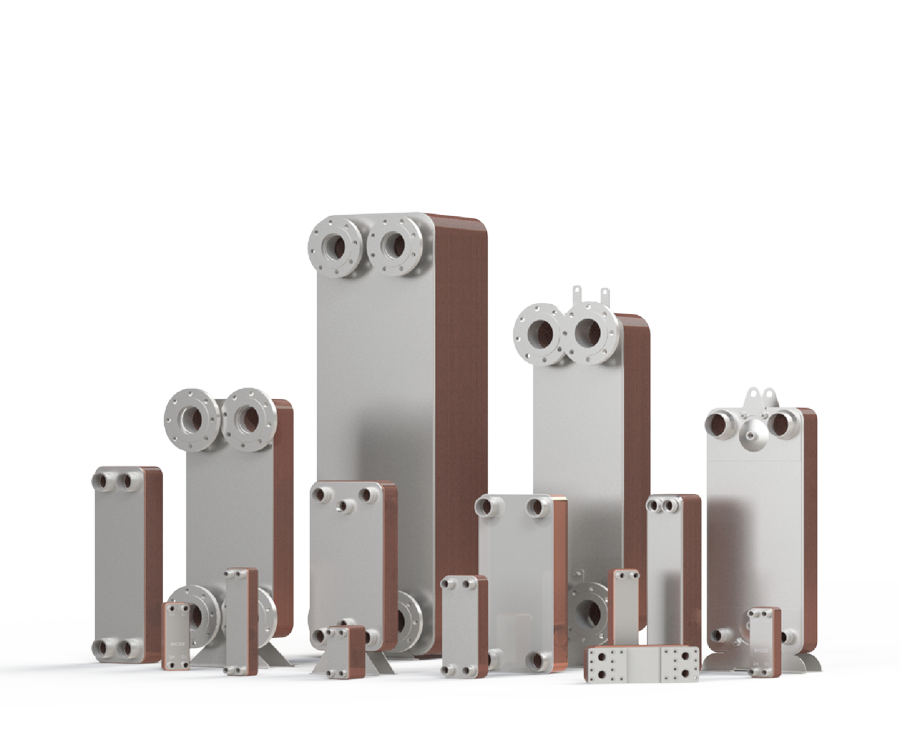
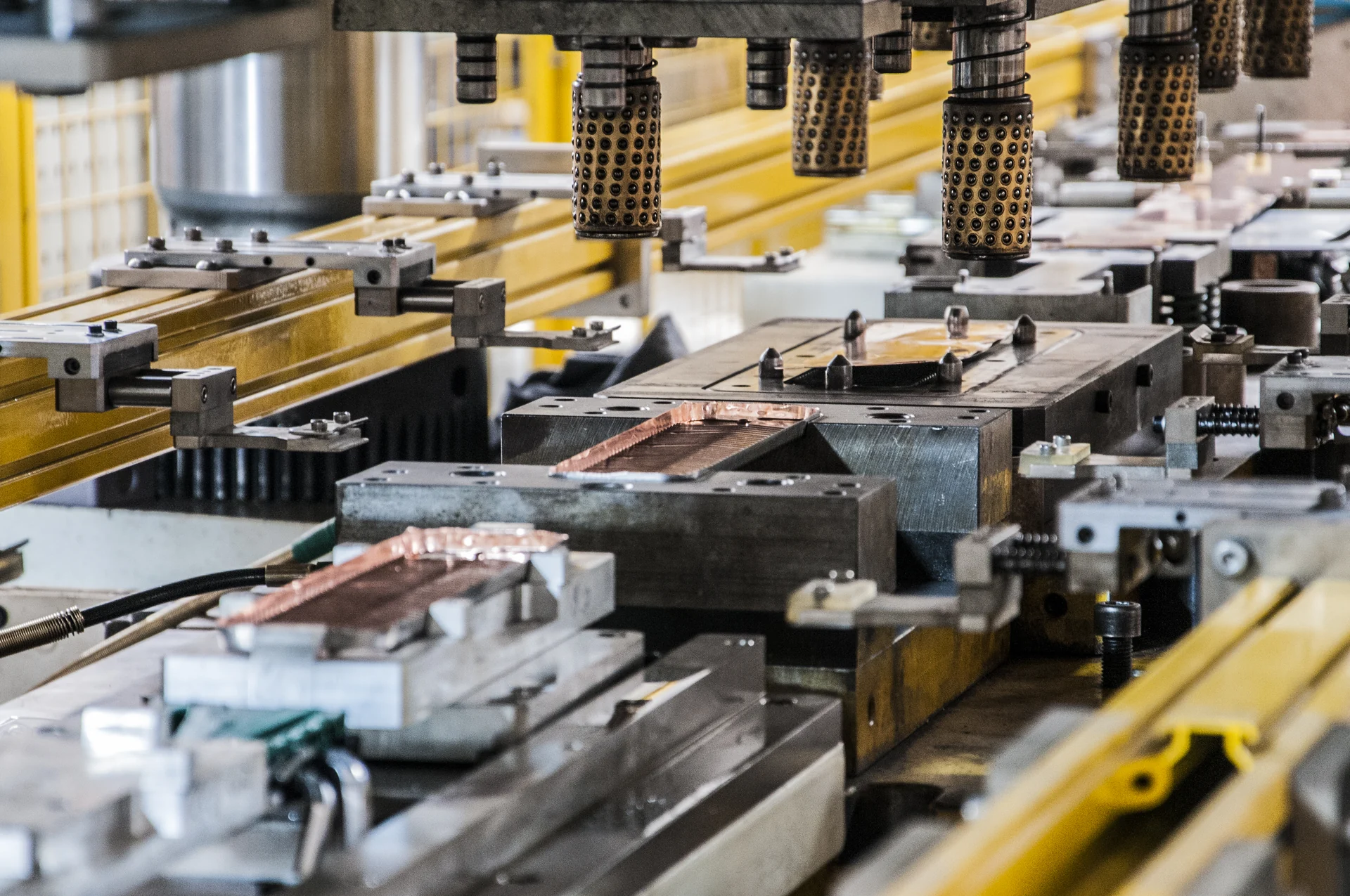
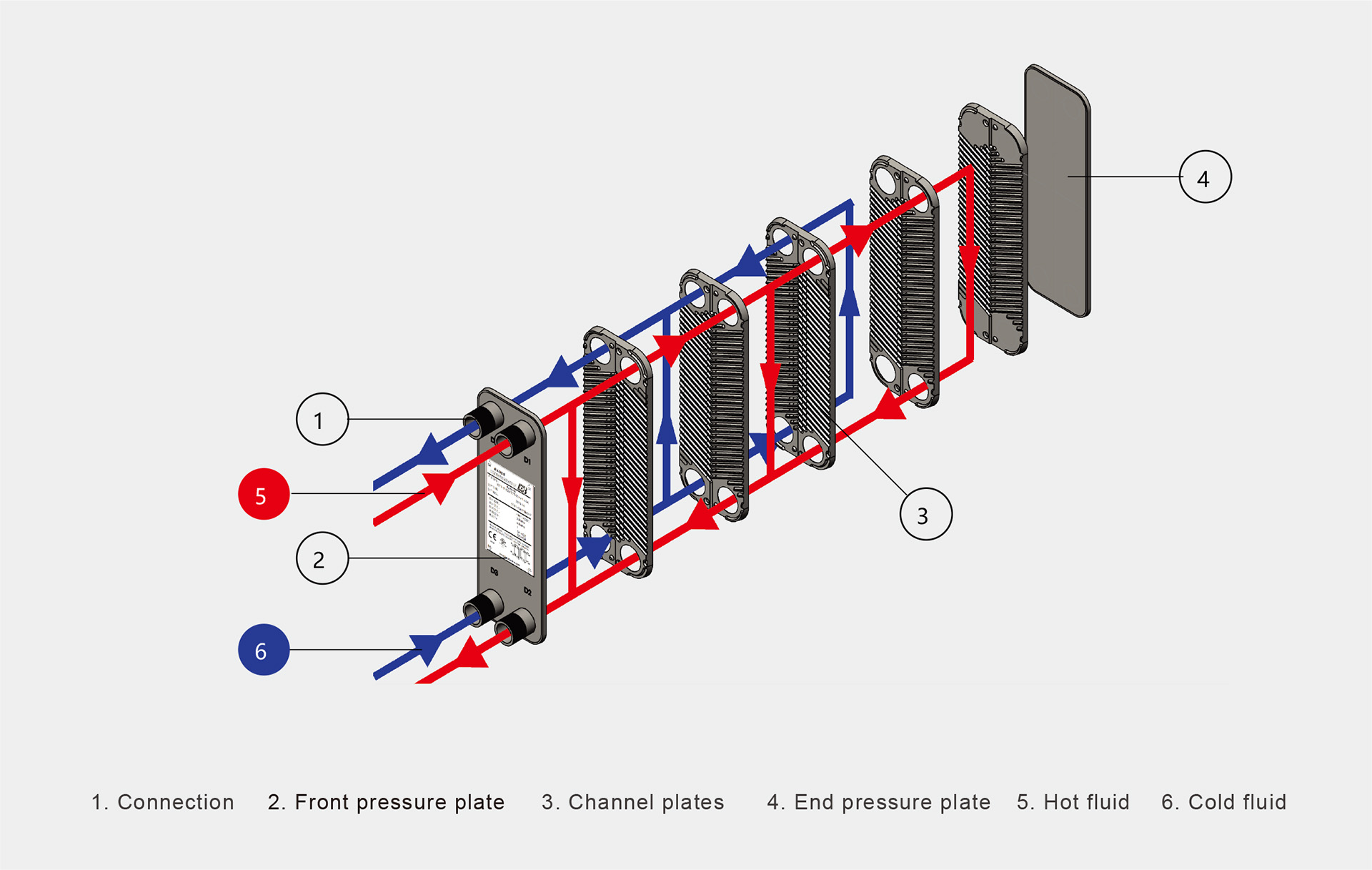
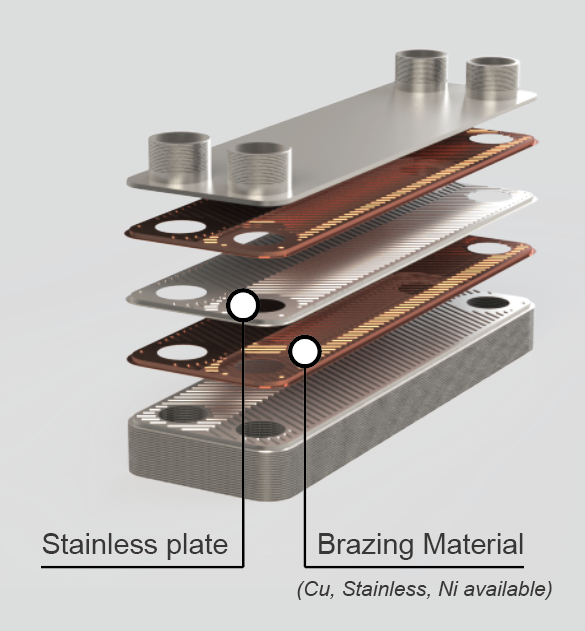
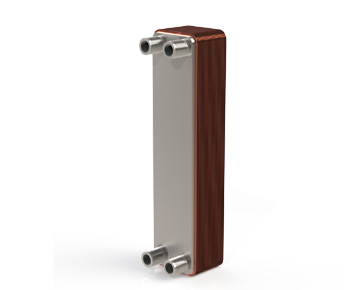
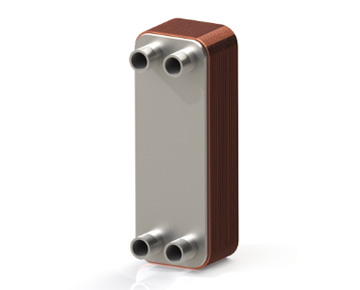
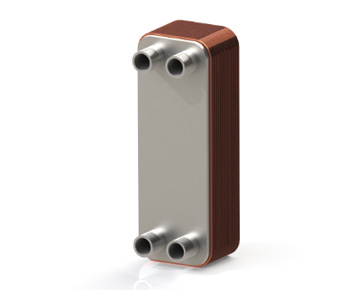
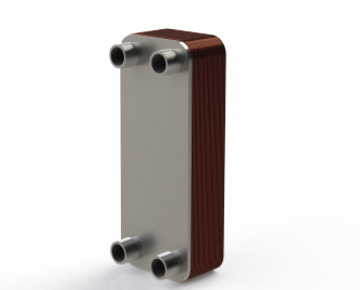
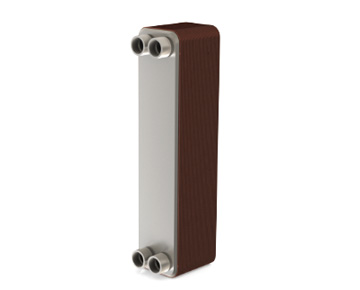
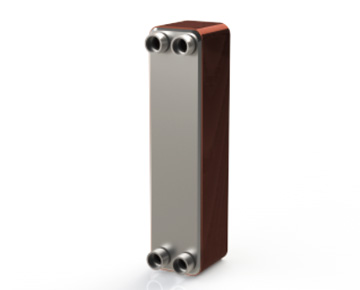
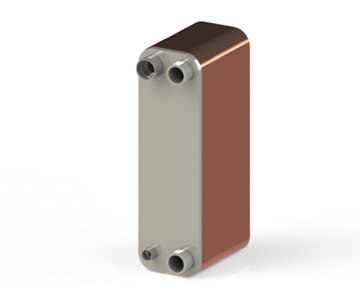
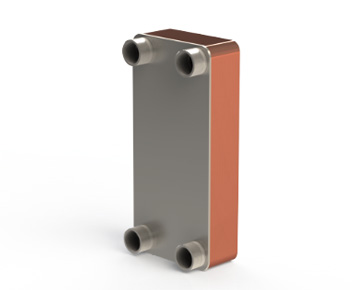
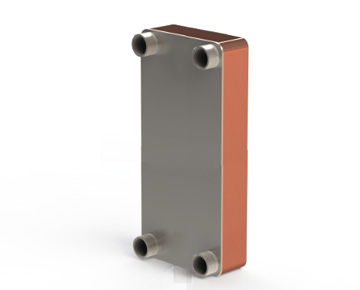
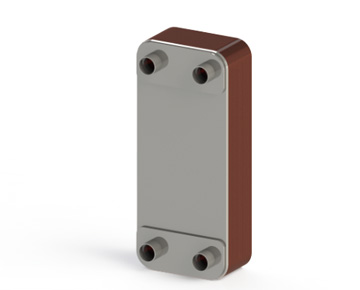
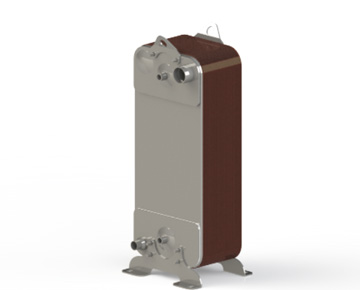
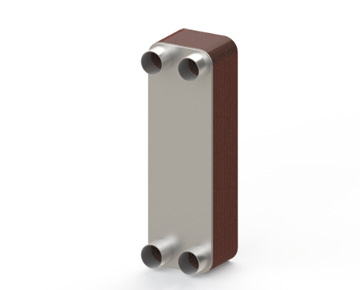
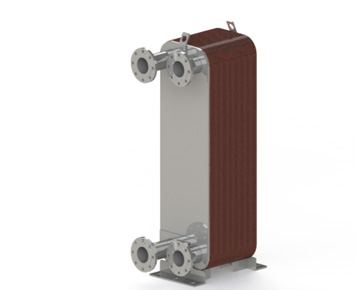
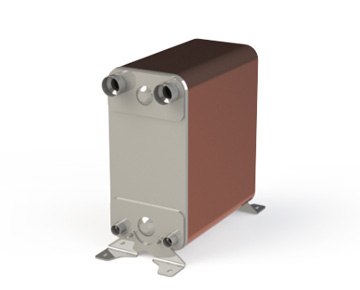
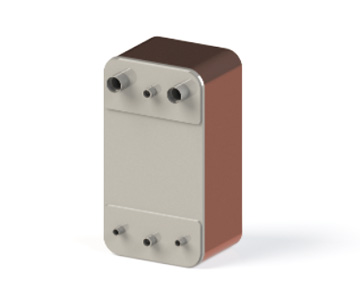
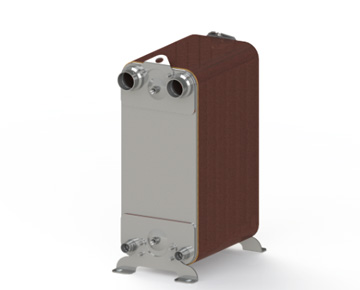
Pressed stainless steel plates are permanently joined by brazing. Alternating channels carry the two media in counter-current flow, while the corrugation creates turbulence and a large effective heat-transfer surface inside a compact block.
Plate materials
SS304 / SS316L
Brazing options
Copper / nickel
Series pressure range
Up to 45 bar on selected models
Temperature range
-190°C to 200°C, configuration-dependent
Construction
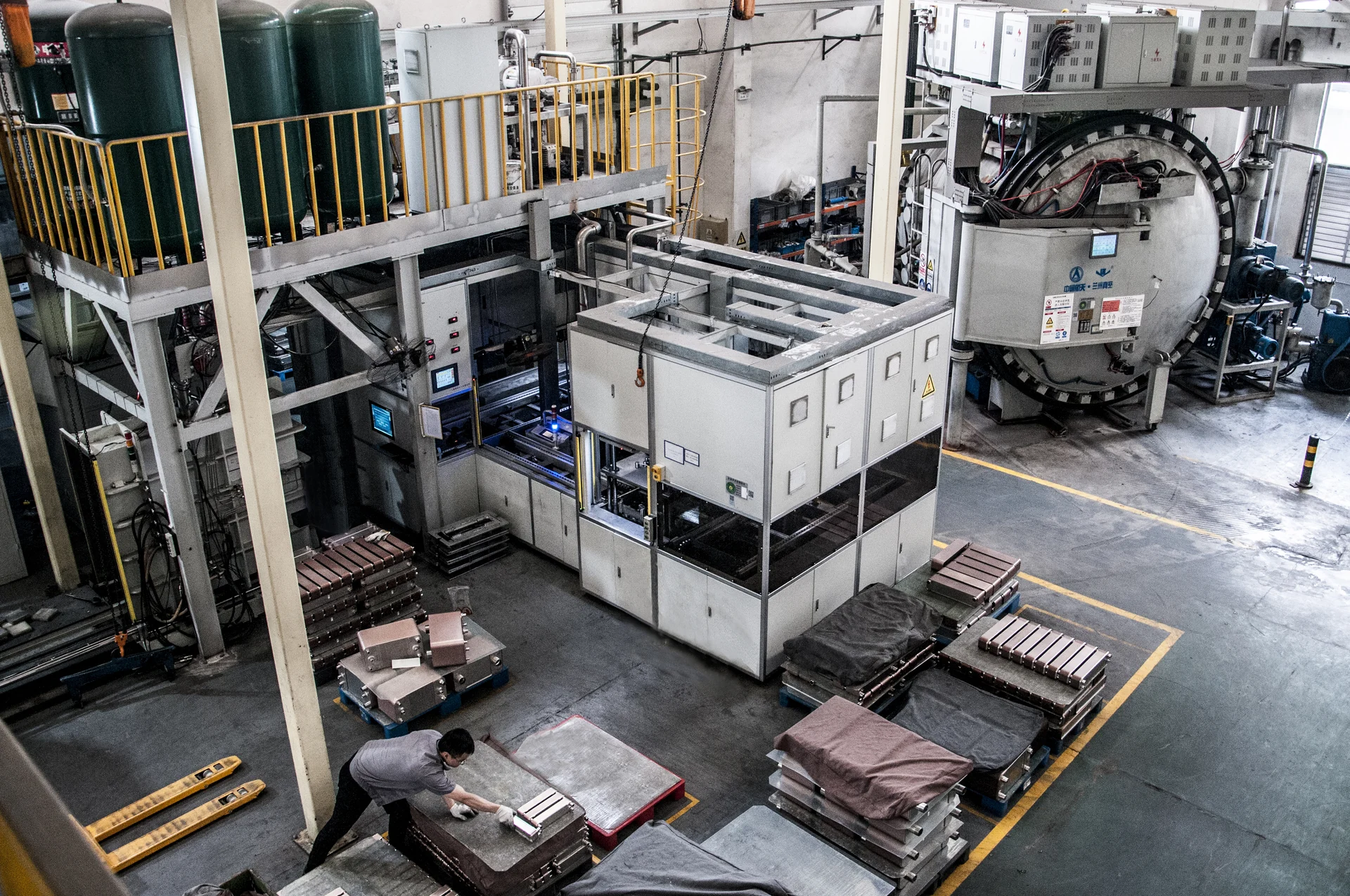
Brazed, gasket-free and non-openable
Cleaning
Compatible chemical circulation / CIP
Engineering explained
See what is happening inside the exchanger.
Product imagery is paired with technical context so buyers and engineers can understand construction, flow path and configuration—not just the exterior.
01
Internal construction and flow paths
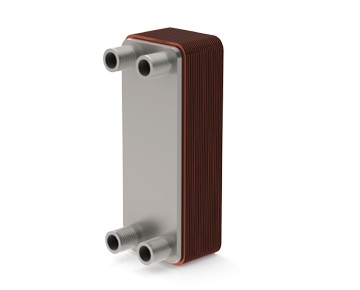
Hot and cold media travel through alternating corrugated plate channels. The pressure plates contain the brazed plate pack while the four ports distribute both circuits.
02
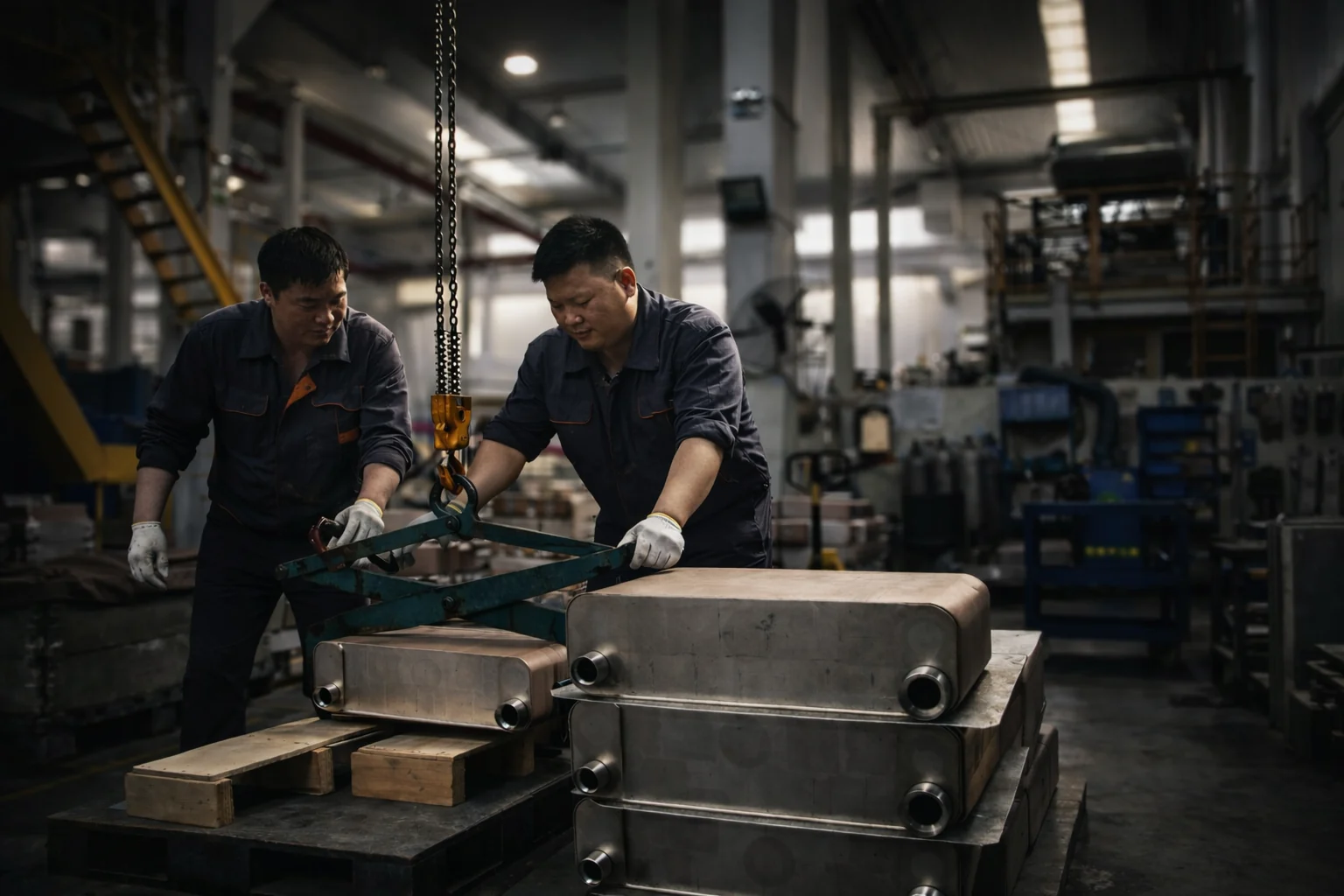
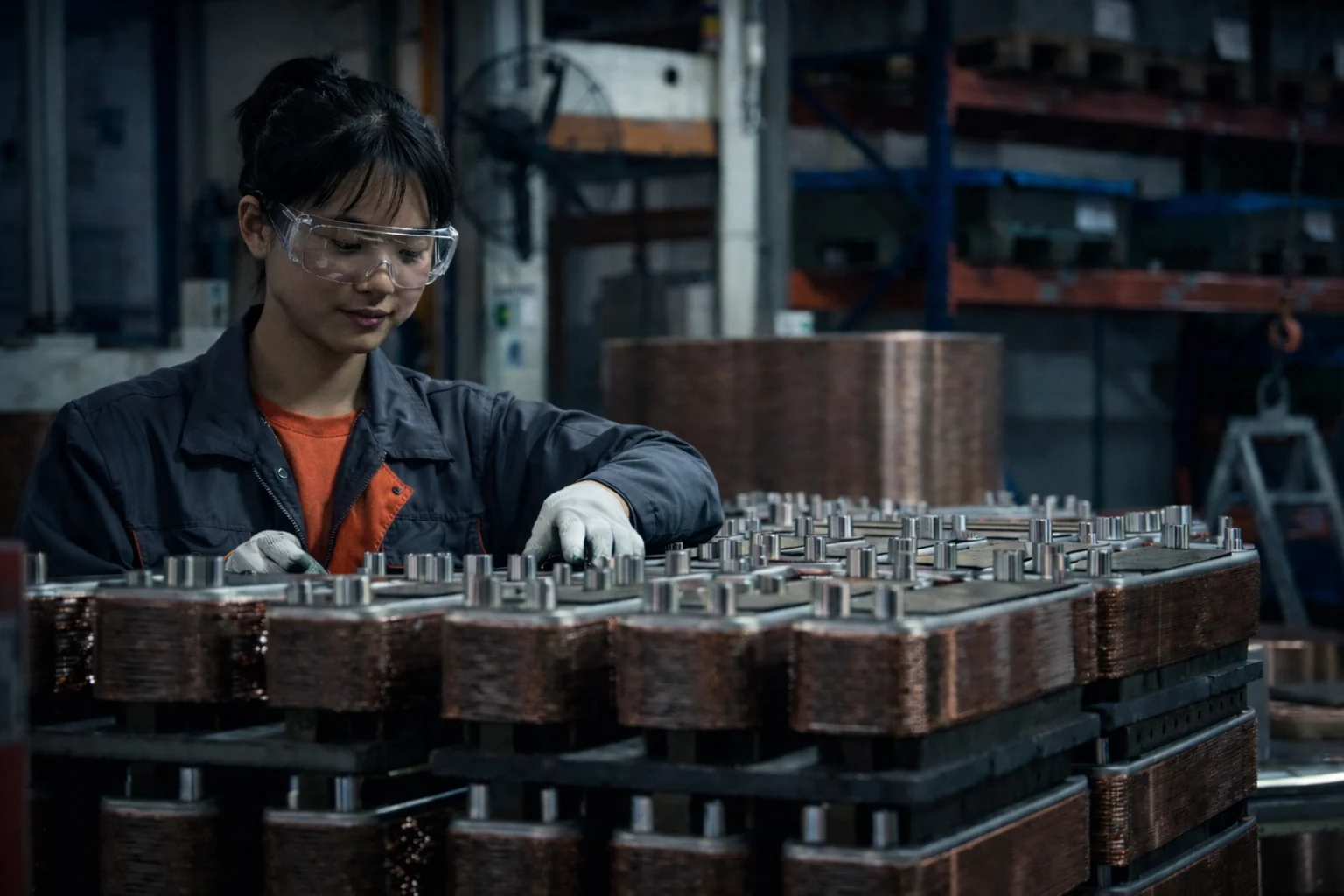
Stainless plates, permanently brazed
The thin corrugated stainless plates provide the heat-transfer surface; brazing material joins the contact points and seals the alternating channels without plate gaskets.
Working principle · Interactive 3D
Follow the flow through the plates.
360° interactive view: Drag the model to inspect it from every angle.
Inspect the construction, then trace each medium from its inlet through the alternating channels to its outlet.
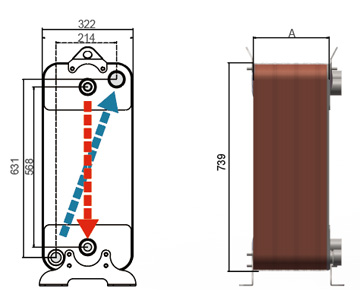
Illustrative single-pass configuration. Connection positions and plate arrangement are confirmed for each project.
Models & technical data
Compare models and published specifications.
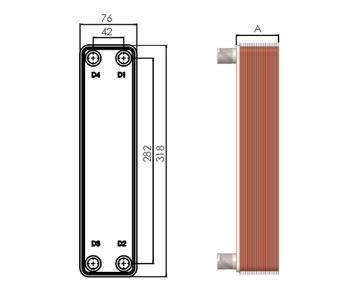
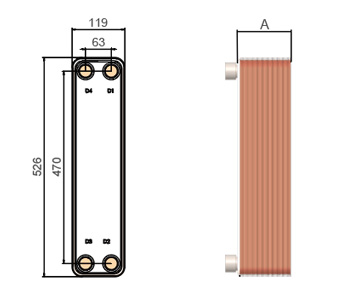
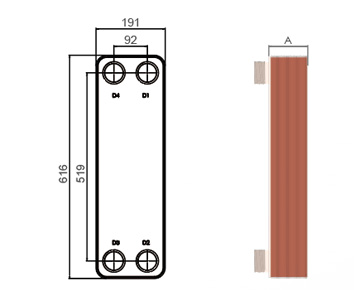
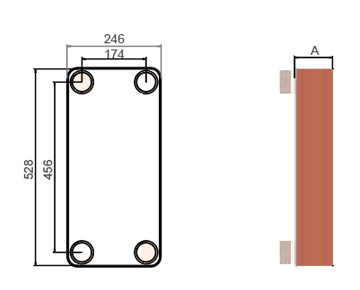
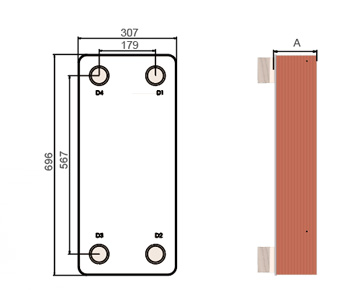
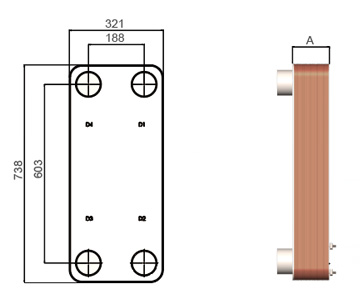
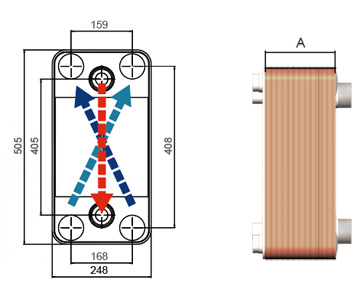
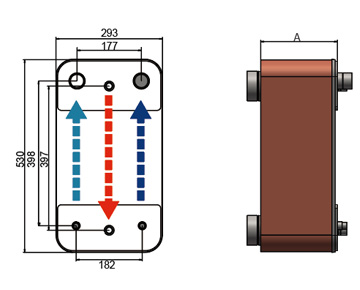
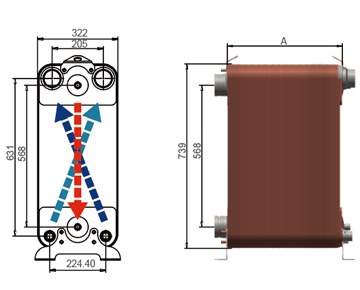
Compare circuit arrangement and overall dimensions at a glance, then open a product size for its product view, dimension drawing and technical summary.
Dimension units
Quick size finder
Find the closest model by overall size.
Enter either width or height in millimetres. Enter both for a more precise match.
Published series data from HEXNOVAS product documentation. N = number of plates. Click any model or View to open its product and dimension drawings. Values are model-family limits, not guaranteed operating points; allowable pressure, temperature, flow and material compatibility must be verified for the selected configuration and duty.
Dimensions are for reference only. Final dimensions are subject to the approved order drawing. HEXNOVAS reserves the right of final interpretation.
Model details
BL14
HEXNOVAS Brazed Plate Heat Exchangers
Product configurationDimension drawing
Circuit
Single
Width (mm)
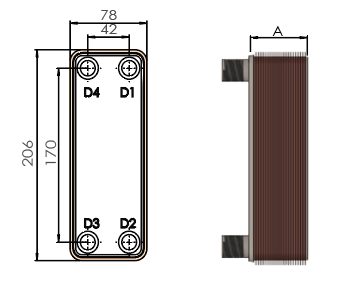
78 mm
Height (mm)
206 mm
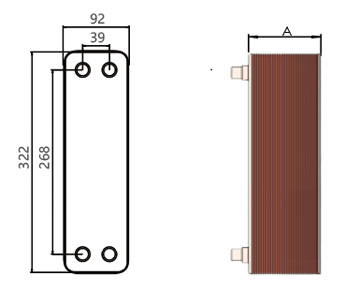
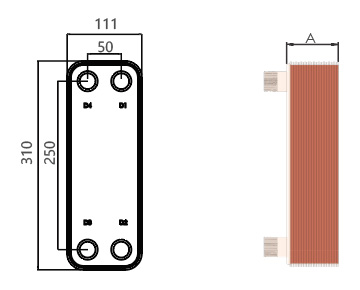
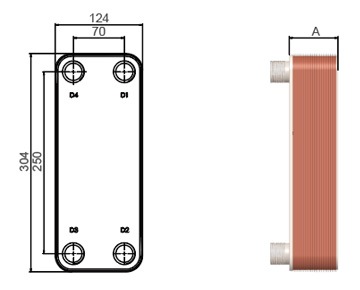
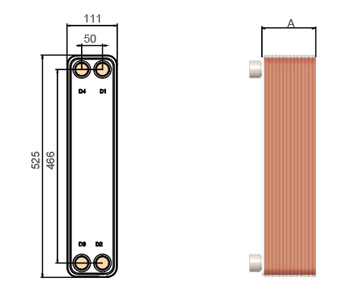
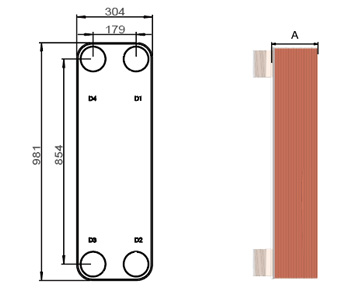
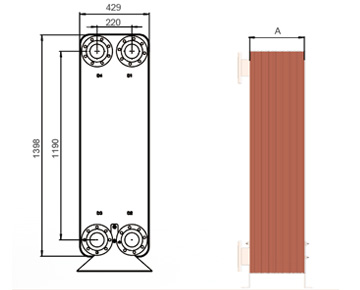
Thickness A (mm)
8.6 + 2.3 × N
Max. pressure (bar)
30 / 45
Max. flow (m³/h)
3.6
Volume / channel (L)
0.027
Port (mm)
20
Plate pattern
D
Plate material
SS304 / SS316L
Brazing material
Copper / nickel
Temperature range
-190°C to 200°C, configuration-dependent
Connections
Threaded, soldered or flanged
Dimensions are for reference only. Final dimensions are subject to the approved order drawing. HEXNOVAS reserves the right of final interpretation.
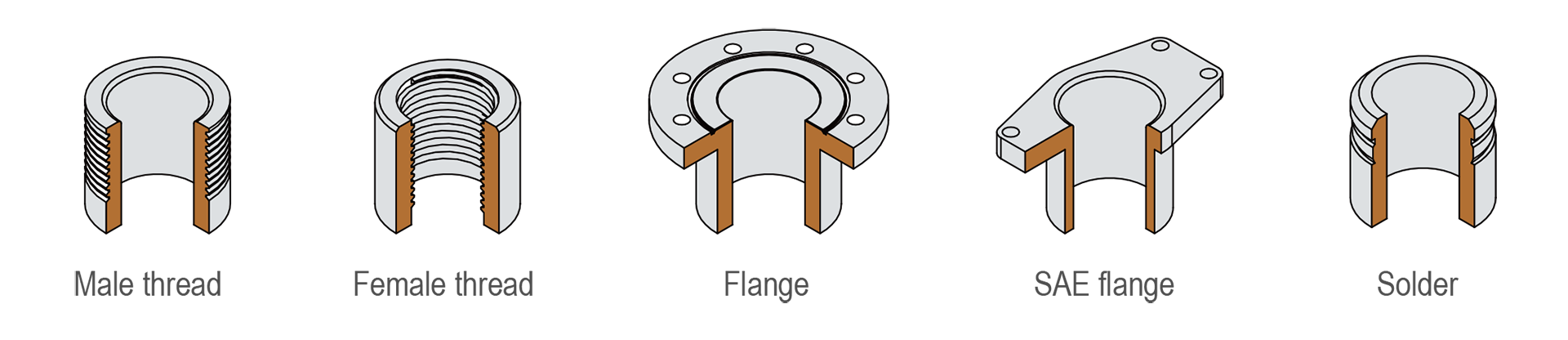
Connection type and size are selected with the model, fluid, piping standard and service pressure.
Male thread
Female thread
Flange
Solder connection
SAE flange on selected duties
Representative connection geometries. Final availability is confirmed during product selection.
Installation options
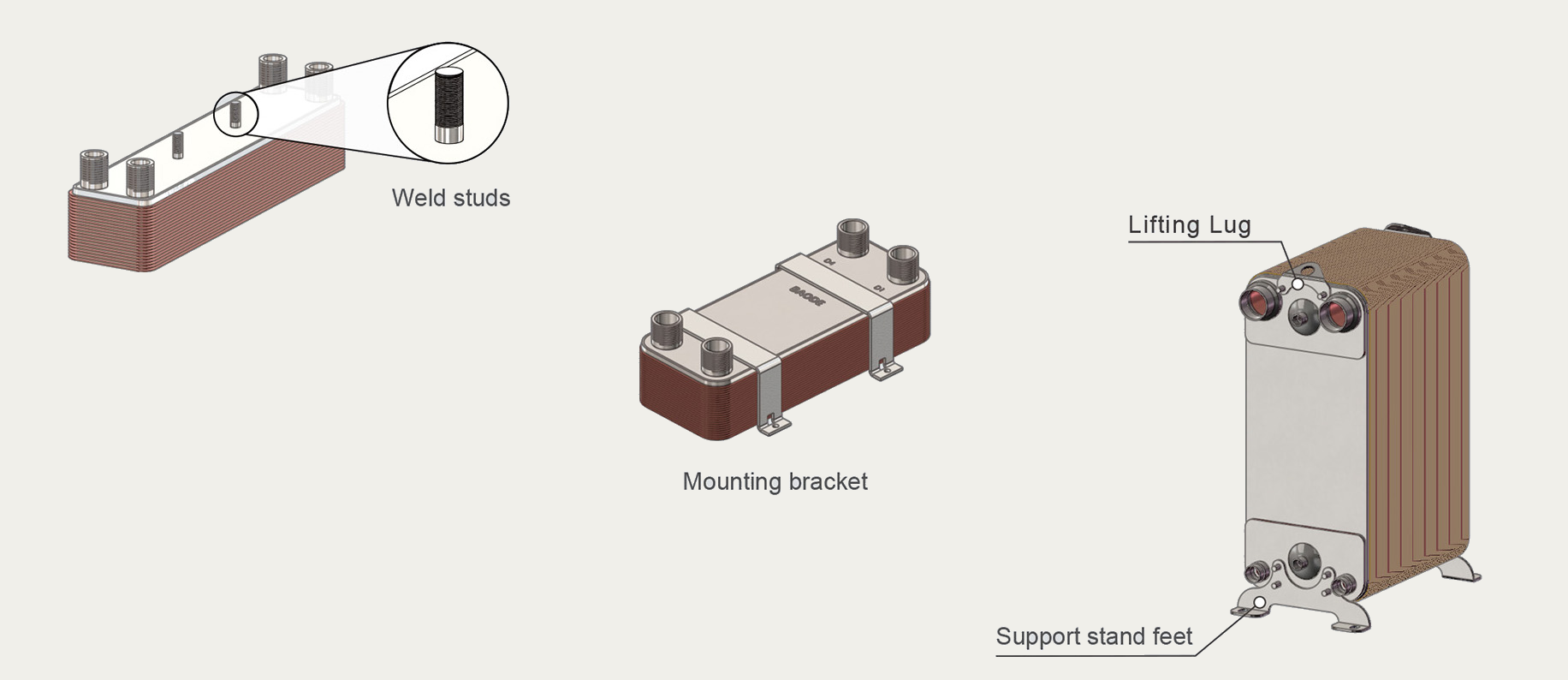
Mounting and handling accessories
Installation accessories are selected separately from the fluid connections. They support secure mounting, lifting and integration without changing the heat-transfer circuit.
Weld studs
Mounting brackets
Lifting lugs
Support stand feet
Project-specific mounting arrangement
Representative mounting and handling options. Final arrangement depends on product size and installation.
Why this technology
Designed around performance, integrity and serviceability.
Very high heat transfer area in a compact footprint
Gasket-free construction with low routine maintenance
Optimized plate patterns for different pressure-drop targets
Options for refrigerants, water, glycol and oils
Product configuration
Structure and material options.
Available configurations
Liquid-to-liquid heater or cooler
Refrigerant evaporator or condenser
Single- and dual-circuit arrangements
Oil-cooler and high-pressure variants
Material options
SS304 or SS316L heat-transfer plates
Copper or nickel brazing material
SS304 connections with threaded, soldered or flanged options
Provide refrigerant or fluid, phase-change duty where applicable, capacity, temperatures, flow rates, design pressure, allowable pressure drop and required connection type. Final model and plate count are confirmed by thermal calculation.
Frequently asked questions
Key questions before product selection.
What is the difference between copper-brazed and nickel-brazed plate heat exchangers?
Copper-brazed units suit many water, glycol, refrigerant and oil duties. Nickel brazing is considered where copper is chemically unsuitable. Final selection depends on fluid compatibility, temperature, pressure and cleaning method.
Can a brazed plate heat exchanger be used with R744 CO2?
Only a model with a verified pressure-temperature envelope for the specific R744 circuit should be used. Transcritical gas-cooler duties can require much higher design pressure than conventional refrigeration systems.
When should an all-stainless compact heat exchanger be used?
An all-stainless or fusion-bonded unit may be considered when copper or nickel brazing is incompatible with the process fluid, hygiene requirement or cleaning chemistry.
Can a brazed plate heat exchanger be mechanically cleaned?
No. The plate pack is permanently joined and cannot be opened. Compatible chemical circulation or clean-in-place procedures are used when the fouling mechanism and materials allow.
Product documentation
Catalogue and technical downloads.
Use the published catalogue for product-range reference. Final dimensions, ratings and materials are confirmed for the selected model and operating duty.