
Project Background
The customer’s original process used a conventional chiller to cool a water tank, then circulated chilled water from the tank to two jacketed storage vessels containing ISO and Polyol formulation media. Although the chiller itself could produce cold water, the actual process cooling performance was poor.
Original System Problem
The core issue was not chiller capacity, but system heat transfer inefficiency. Cold water was first stored and mixed inside a tank, creating temperature stratification and poor effective heat exchange. The chilled water inside the buffer tank did not sufficiently transfer energy to the process side before being circulated to the jacketed tanks.
- Cold water mixing in tank instead of direct high-efficiency exchange
- Slow thermal response
- Temperature loss before reaching product tanks
- Poor cooling consistency between two tanks
- Large system footprint with unnecessary intermediate water storage
Engineering Analysis
After thermal analysis, the problem was identified as a classic “indirect buffer inefficiency.” The water tank acted as a thermal mixing vessel rather than an effective heat transfer device. Instead of maximizing temperature difference directly across process media, the system diluted cooling performance.
HEXNOVAS redesigned the cooling architecture by removing the water tank entirely and replacing it with dedicated heat exchangers that transfer chiller cooling capacity directly to the jacket loop.
Selected Solution: Full Welded Plate & Block Heat Exchanger
Because the customer’s media had potential corrosive effects on elastomer gaskets, a conventional gasketed plate heat exchanger was not ideal. Long-term gasket degradation would increase maintenance frequency and contamination risk.
HEXNOVAS therefore selected: Fully Welded Plate & Block Heat Exchanger (Plate and Block Type) with:
- No gaskets in contact with corrosive media
- 0.6 mm stainless steel plate thickness
- Longer operational life
- Higher chemical compatibility
- Compact footprint
- Simplified maintenance
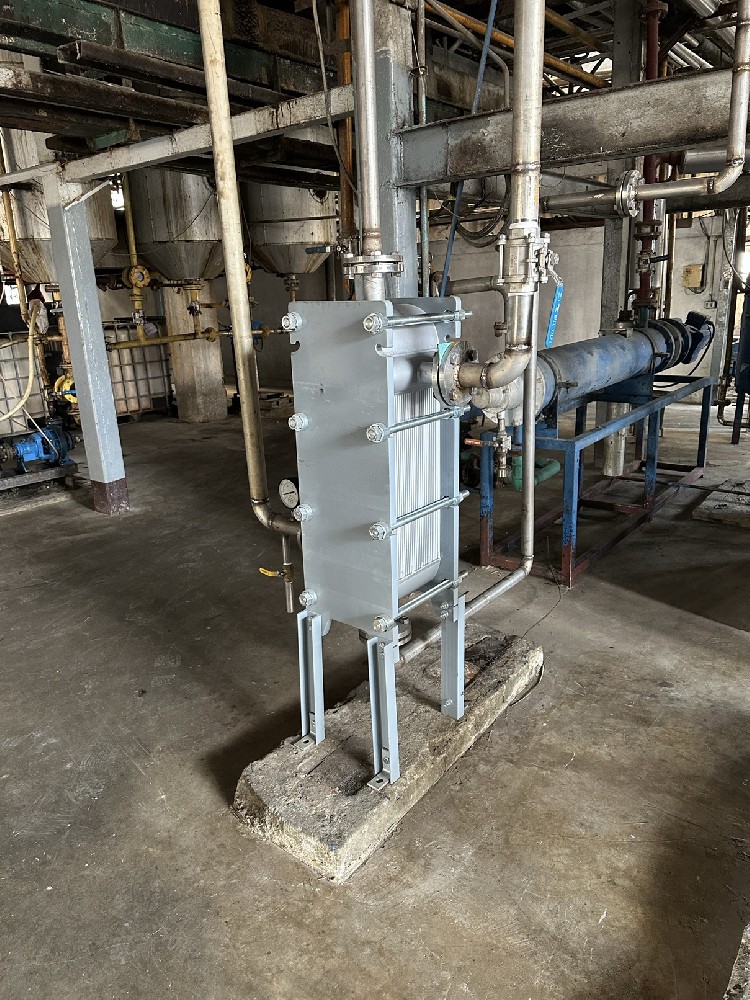
Custom full welded Plate & Block heat exchangers designed for direct chilled water to process cooling duty.
Thermal Design Data
| Parameter | ISO Side | Polyol Side |
|---|---|---|
| Flow Rate | 8.0 m³/h | 8.0 m³/h |
| Inlet Temperature | 50°C | 50°C |
| Outlet Temperature | 30°C | 30°C |
| Cooling Water In / Out | 7°C → 12°C | |
| Heat Duty | 82.55 kW | 119.3 kW |
| LMTD | 29.9 K | |
Why Plate & Block Instead of Gasketed Plate Heat Exchanger
| Factor | Gasketed Plate Heat Exchanger | Full Welded Plate & Block |
|---|---|---|
| Gasket Chemical Risk | Potential degradation | No gasket exposure |
| Maintenance | Periodic gasket replacement | Lower maintenance |
| Service Life | Medium | Longer |
| Compactness | High | High |
| Media Compatibility | Depends on gasket | Better for aggressive media |
System Retrofit Advantage
After Retrofit
- Removed unnecessary chilled water tank
- Improved direct heat transfer efficiency
- Reduced thermal lag
- More stable jacket tank cooling
- Smaller system footprint
- Lower long-term maintenance cost
- Better suitability for ISO / Polyol process cooling
Manufacturing Features
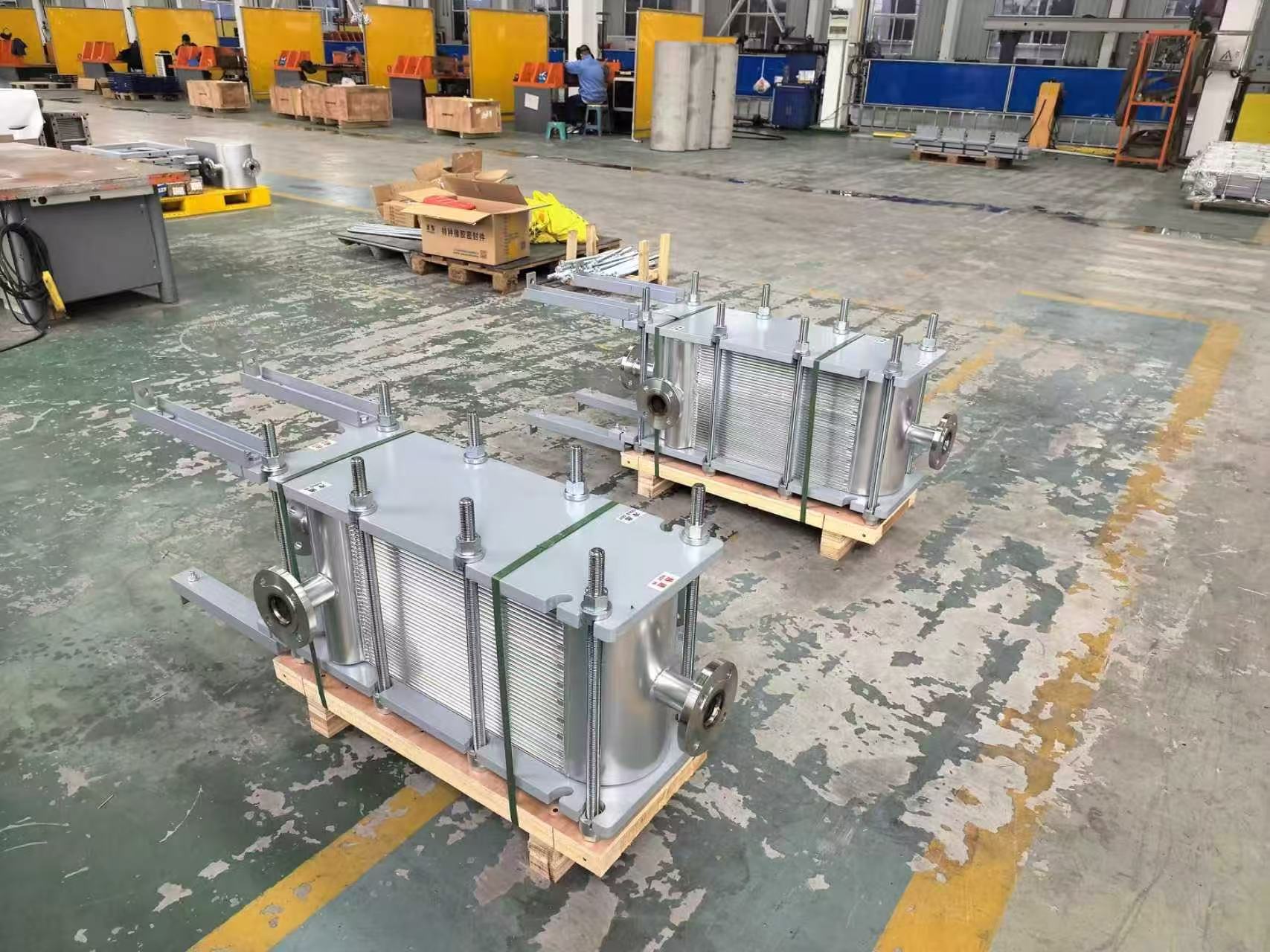
These units were designed as industrial-duty fully welded Plate & Block heat exchangers, with robust external frames and simplified installation for Saudi industrial conditions.
Why This Project Matters
This project demonstrates that poor cooling performance is not always caused by insufficient refrigeration power. In many industrial systems, system architecture itself is the real bottleneck.
By replacing “cold storage + mixing” with “direct process heat exchange,” HEXNOVAS transformed an underperforming cooling loop into a controlled thermal transfer solution.
Typical Applications for This Solution
- Polyol cooling
- ISO cooling
- Chemical storage jacket cooling
- Batch reactor temperature control
- Corrosive media indirect cooling
- Industrial chiller optimization retrofit
FAQ
Why did the original water tank system cool poorly?
The chilled water tank mainly acted as a mixing vessel rather than an efficient heat exchanger, reducing effective thermal transfer to the process tanks.
Why remove the tank instead of adding more cooling power?
The bottleneck was heat transfer architecture, not cooling generation. Direct exchange improved performance more effectively than increasing chiller size alone.
Why use a fully welded Plate & Block heat exchanger?
Because the process media could attack gaskets over time. Full welded construction eliminates gasket corrosion concerns and improves long-term reliability.
Is 0.6 mm plate thickness sufficient?
For this application, 0.6 mm welded stainless steel plate provided an optimized balance of heat transfer efficiency, strength, and durability.
Need to Upgrade an Inefficient Industrial Cooling System?
HEXNOVAS designs full welded Plate & Block heat exchangers for corrosive media cooling, process retrofit, and direct chiller optimization where tanks and indirect loops reduce real cooling performance.
Contact HEXNOVAS


