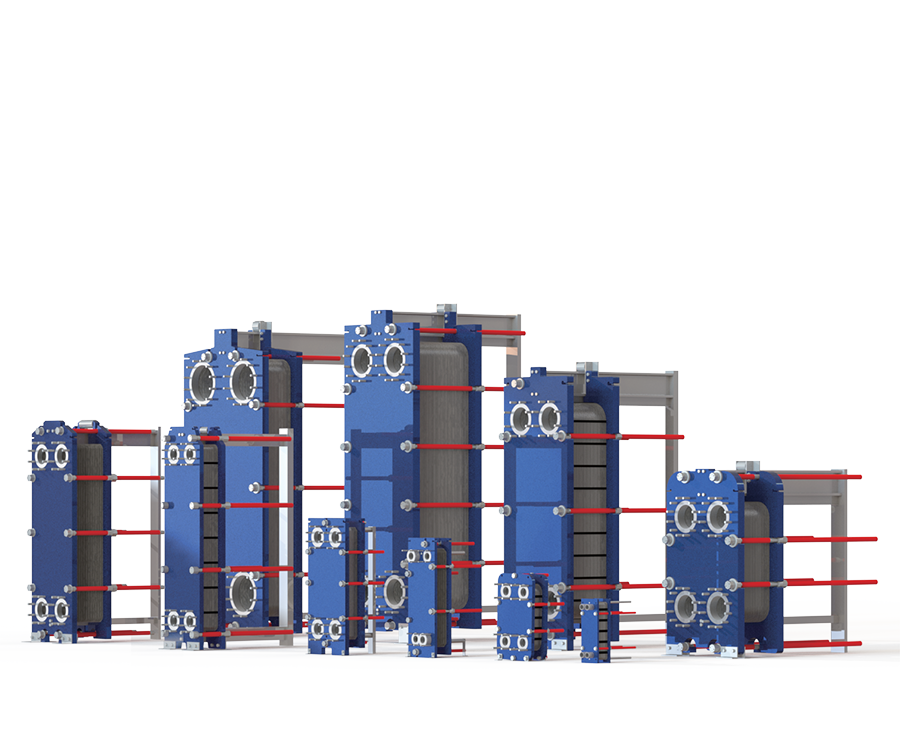
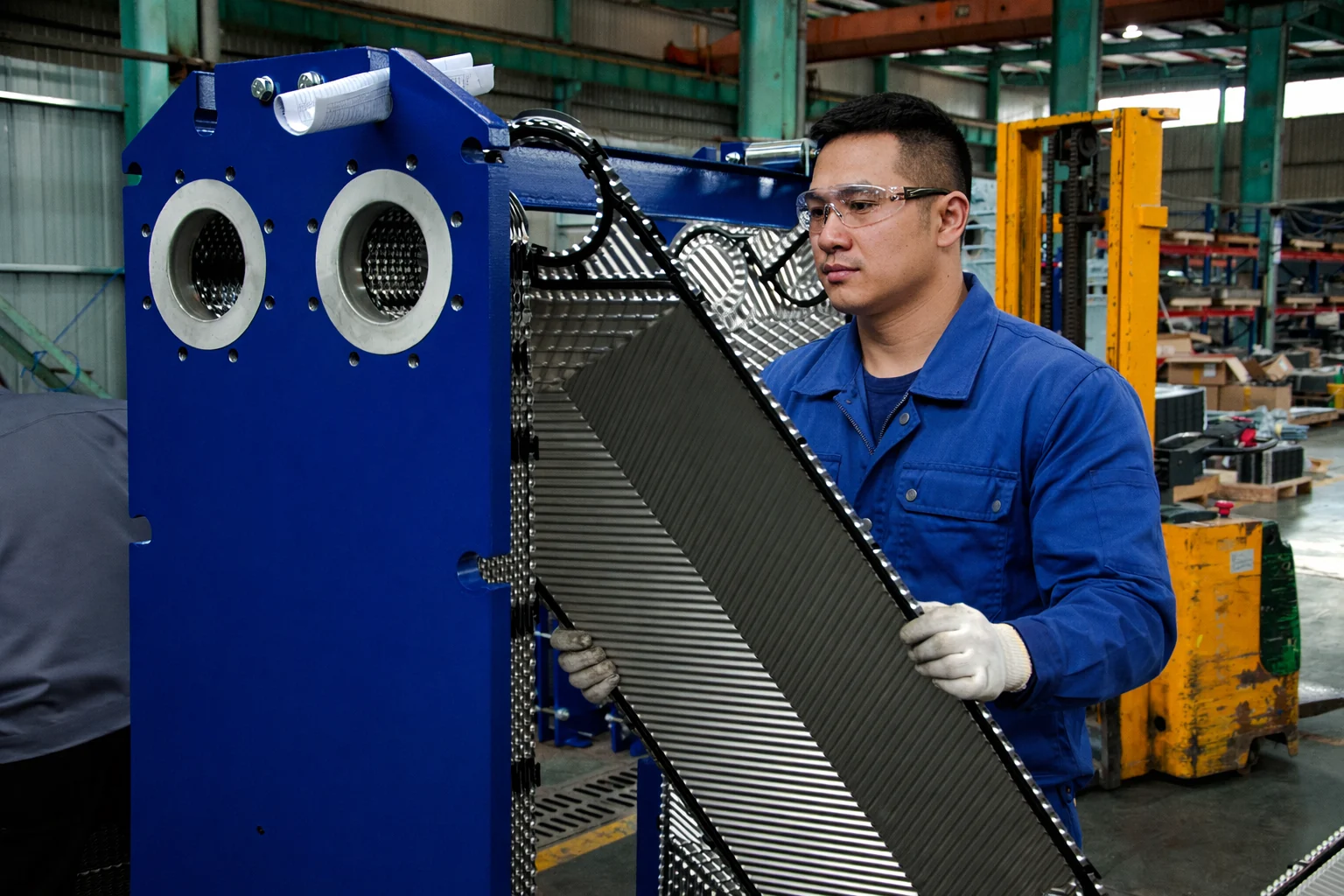
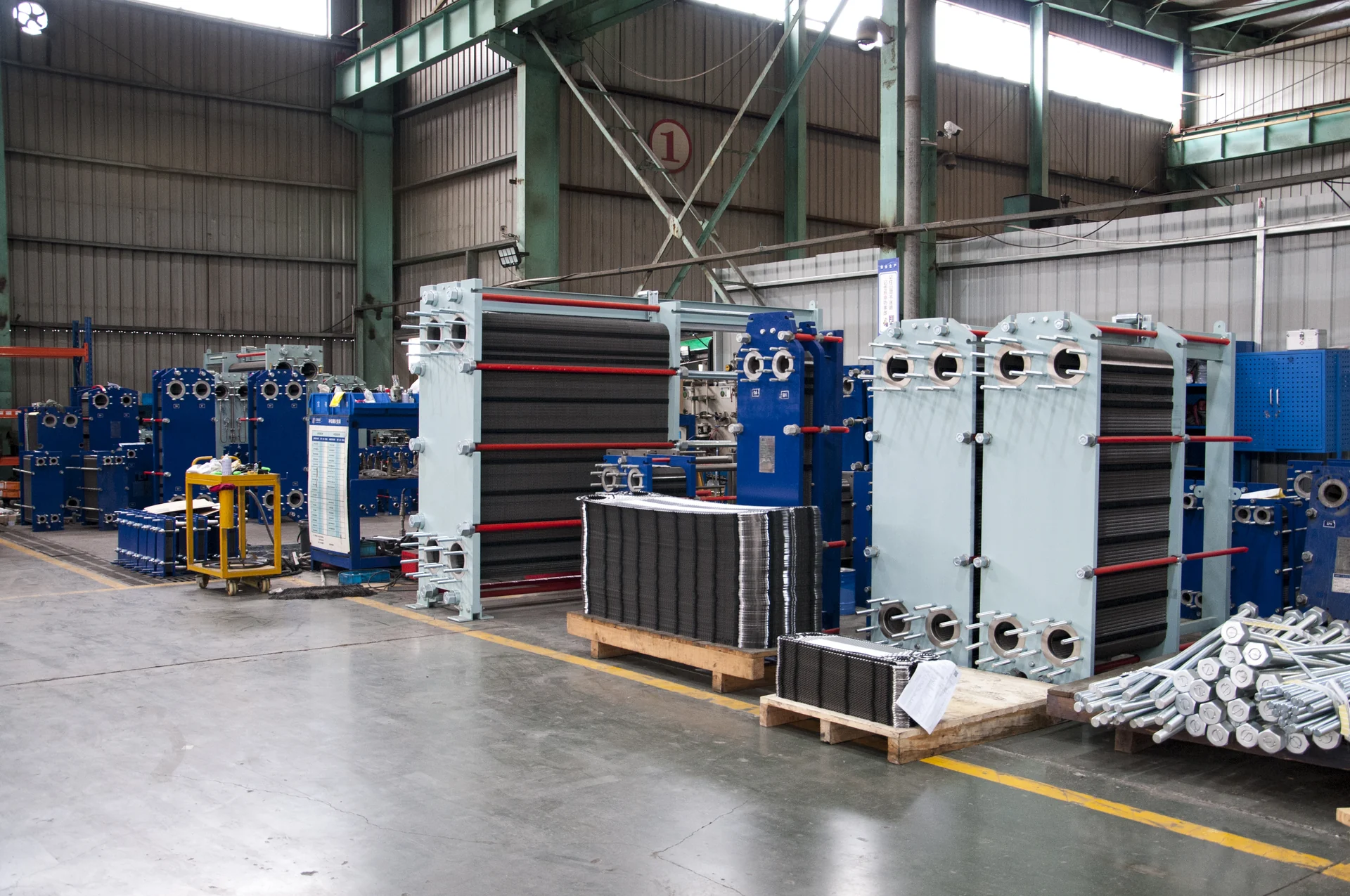
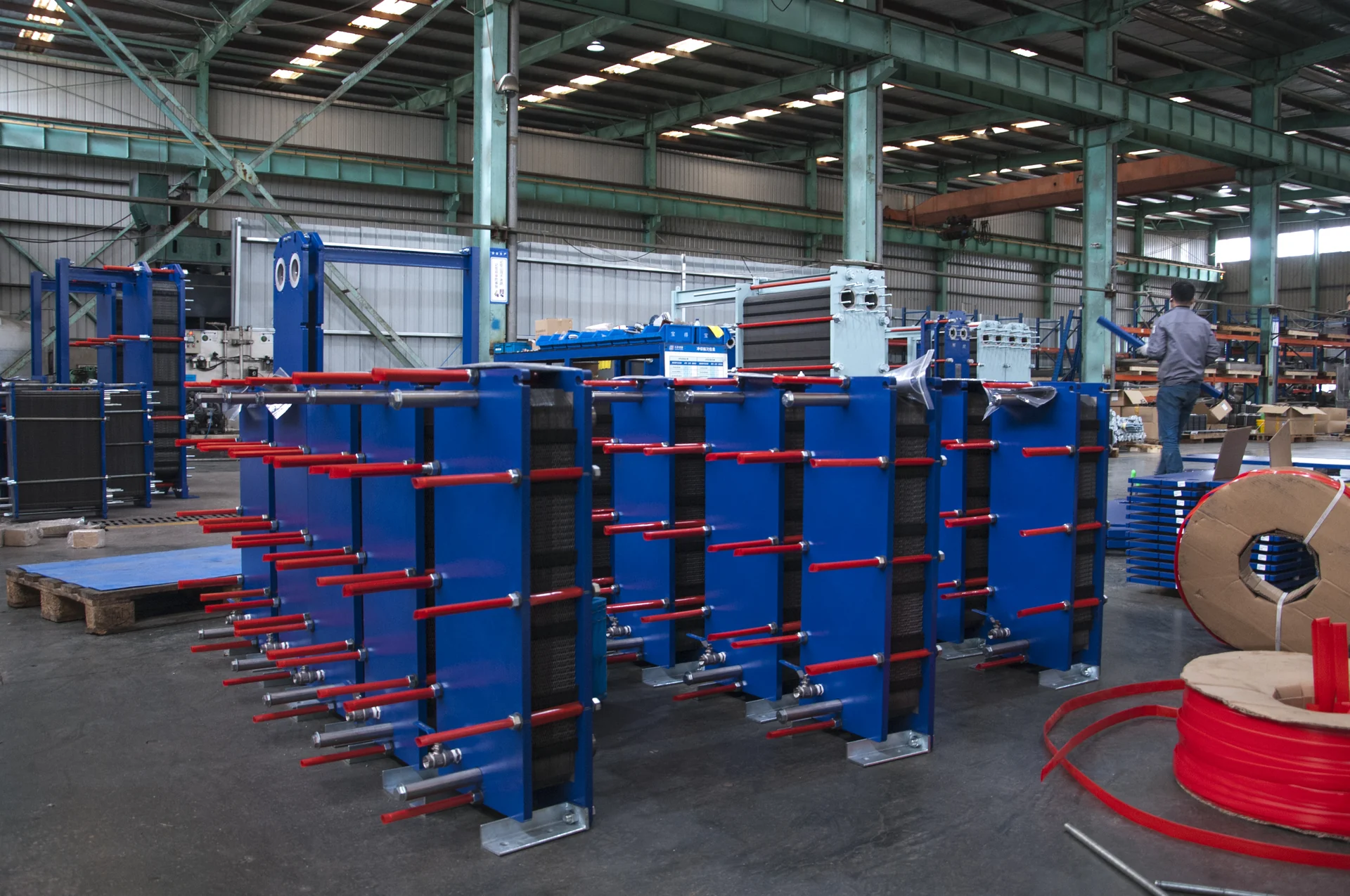
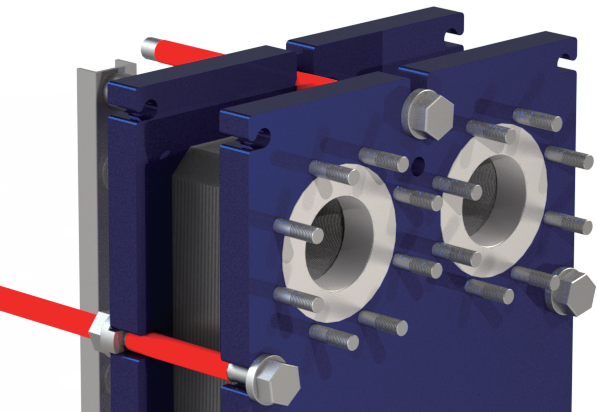
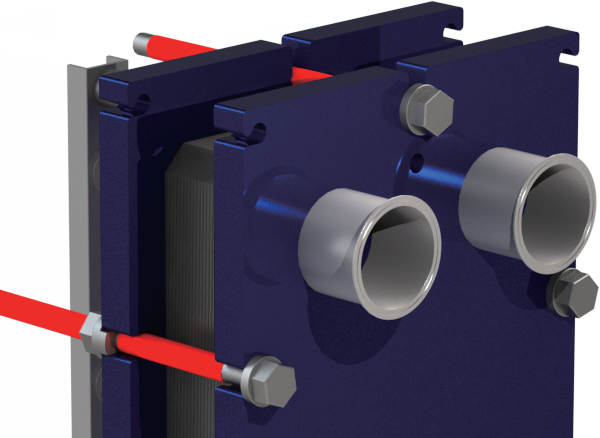
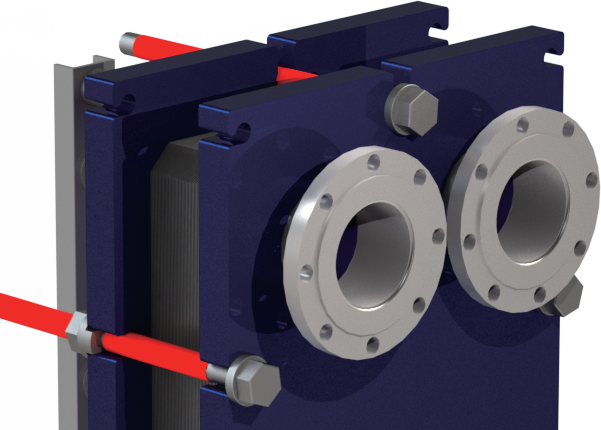
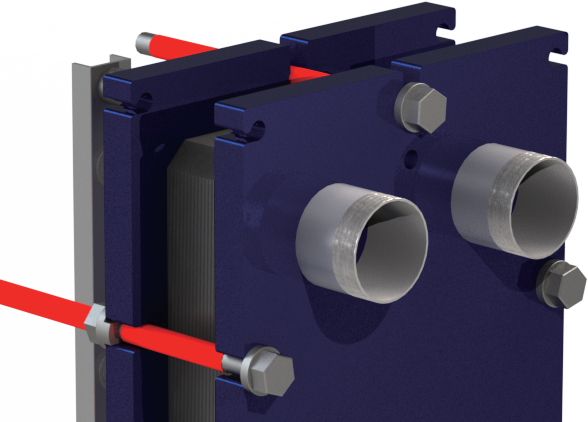
Corrugated heat-transfer plates form alternating hot and cold channels. Gaskets seal each channel and direct the two fluids, normally in counter-current flow, while heat passes through the thin plate wall.
Construction
Openable gasketed plate pack in a bolted frame
Flow arrangement
Normally counter-current
Capacity adjustment
Plates may be added or removed within frame limits
Cleaning
Mechanical opening or chemical CIP
Engineering explained
See what is happening inside the exchanger.
Product imagery is paired with technical context so buyers and engineers can understand construction, flow path and configuration—not just the exterior.
01
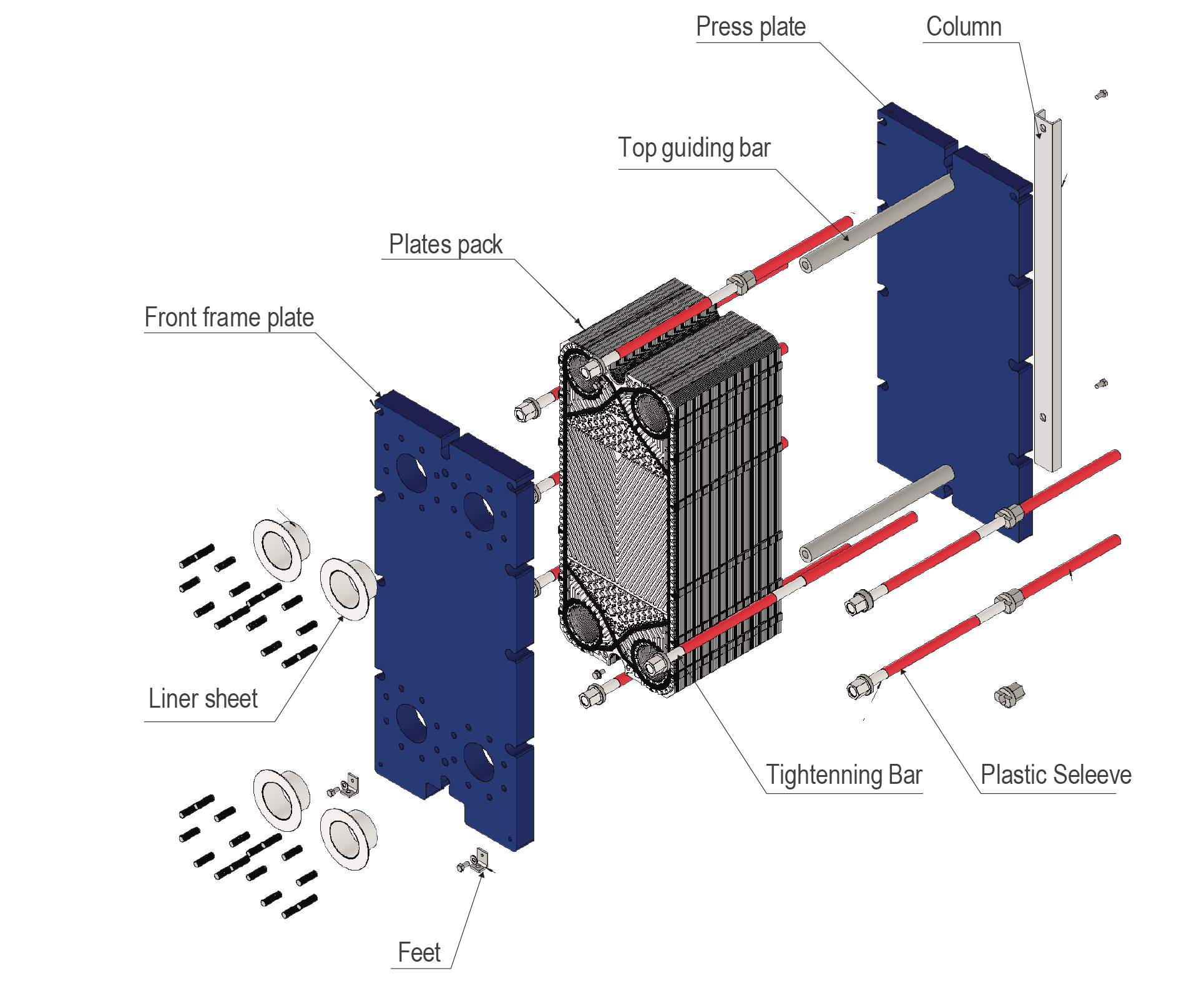
Openable frame and plate-pack construction
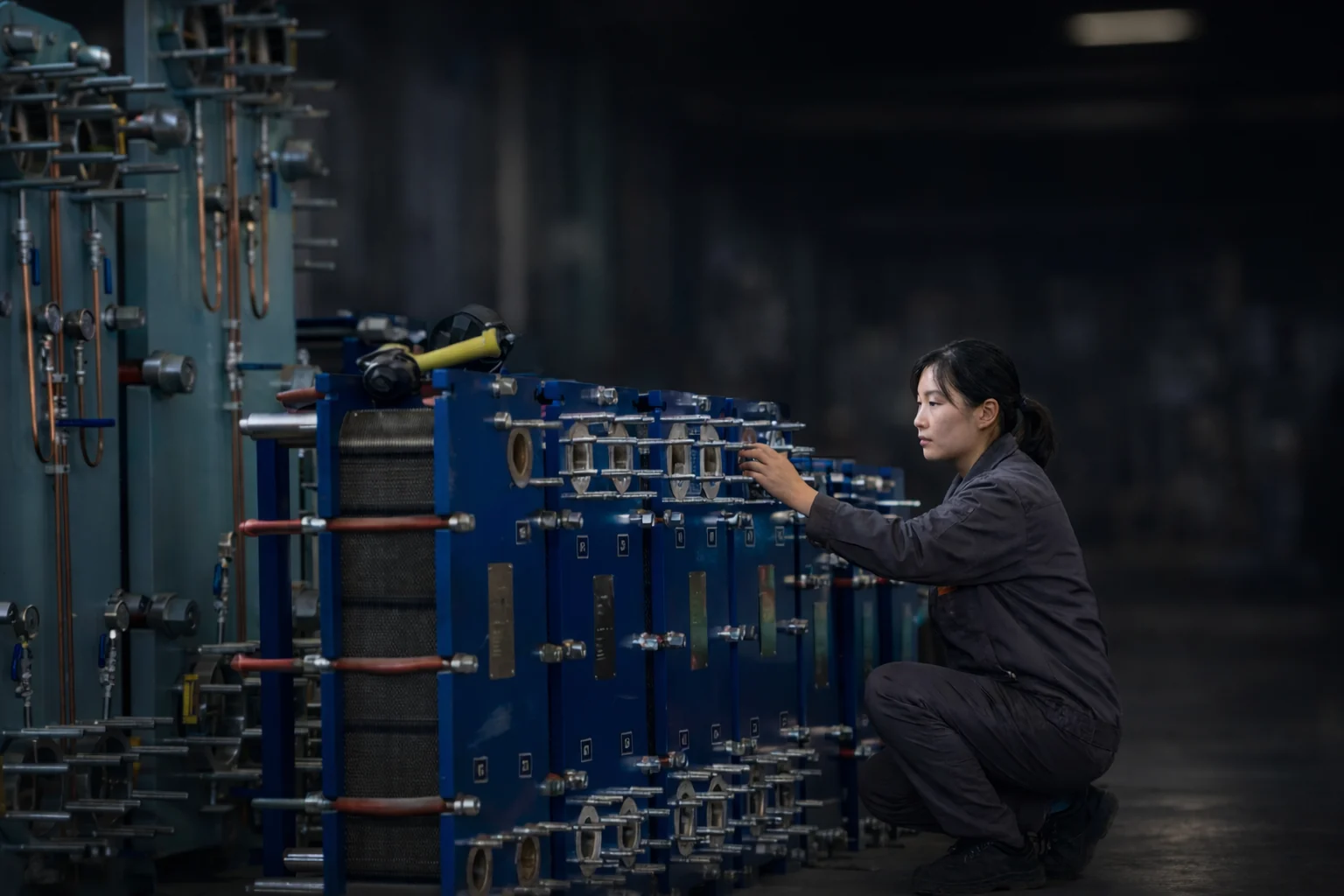
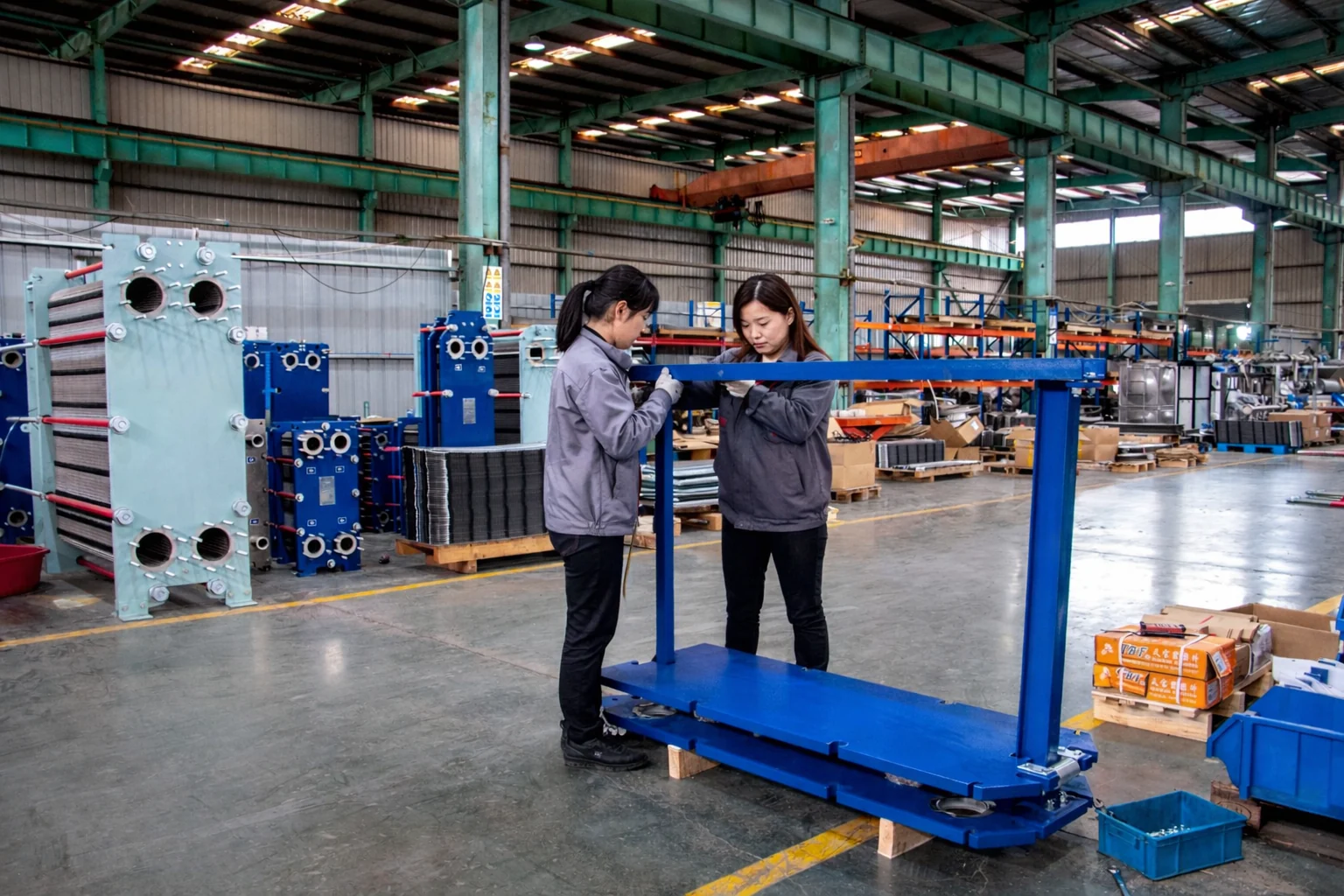
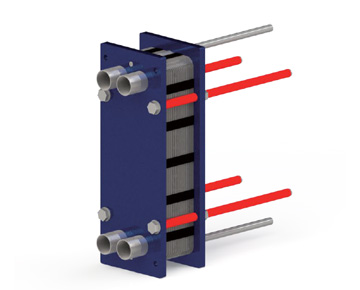
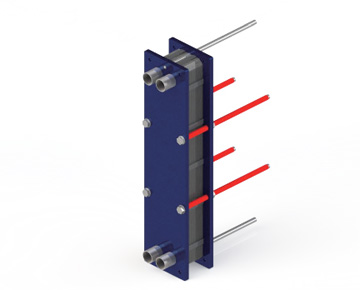
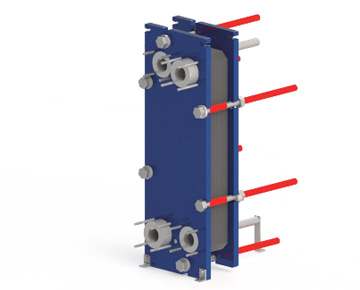
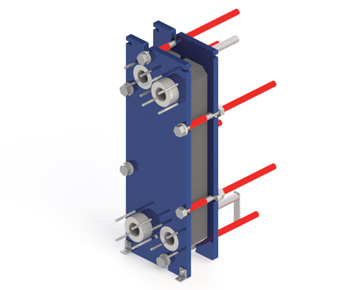
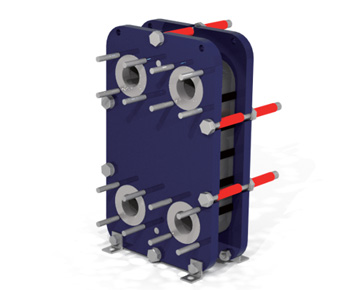
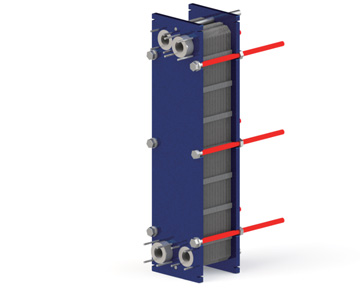
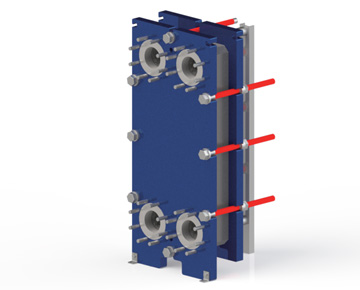
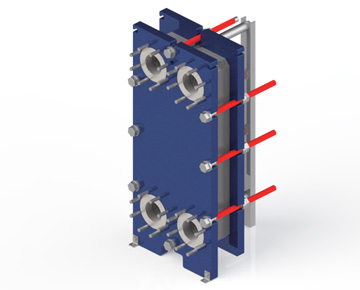
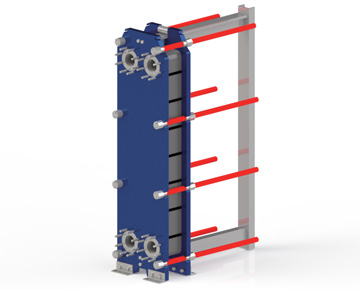
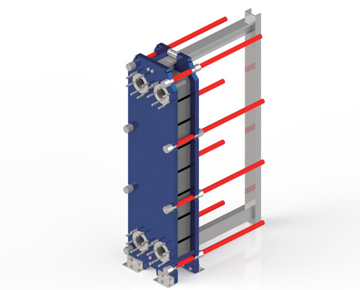
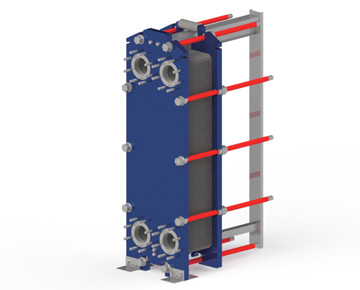
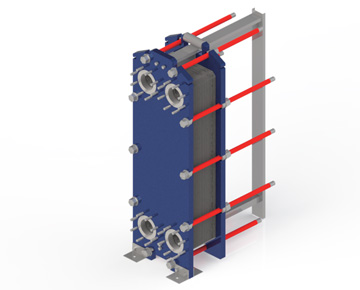
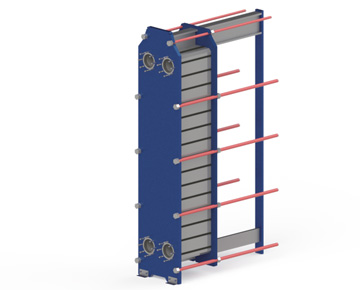
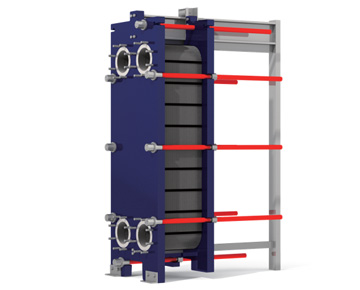
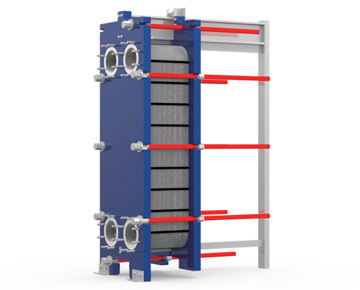
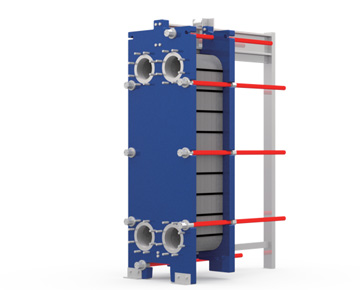
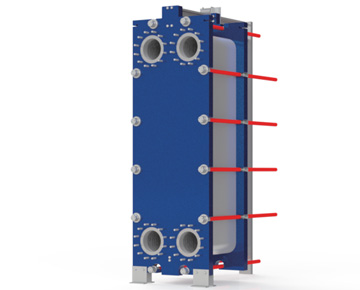
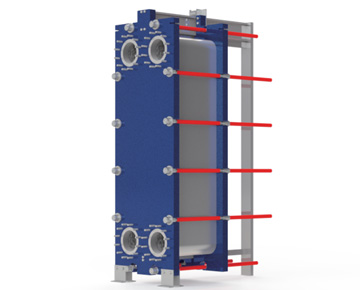
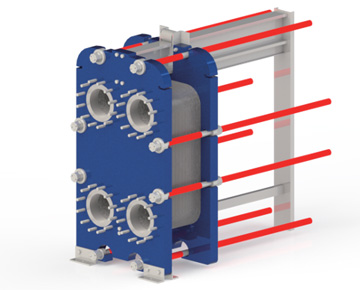
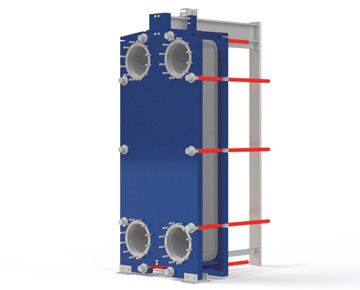
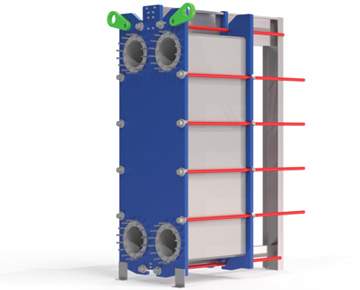
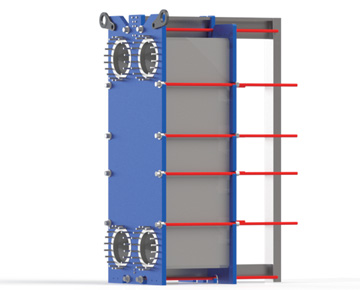
The front frame plate, movable pressure plate, corrugated plate pack, guide bar, support column and tightening bars form a serviceable exchanger that can be opened for inspection or capacity adjustment.
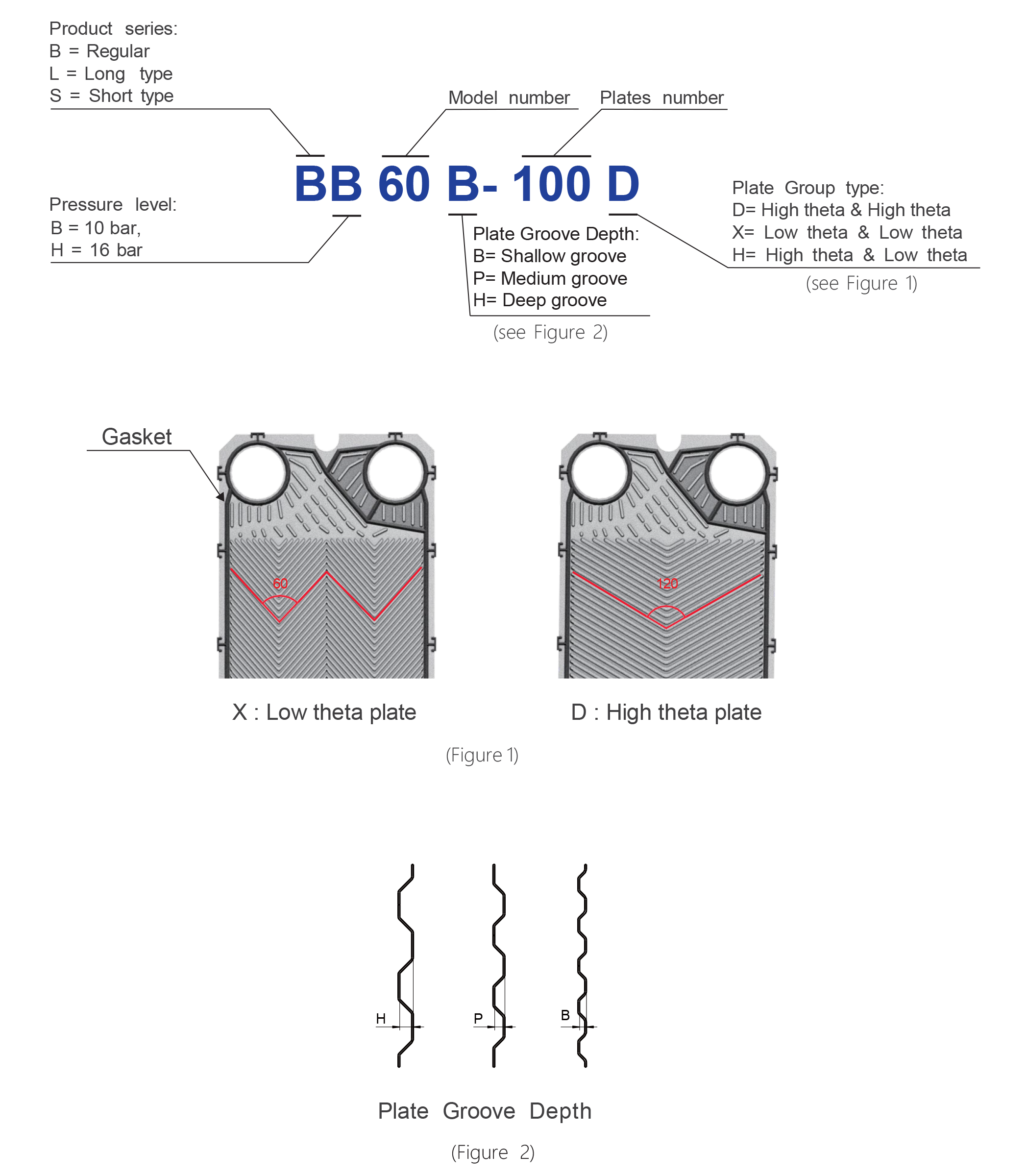
BH60B-100D
BProduct series
B = RegularL = LongS = Short
HPressure level
B = 10 barH = 16 bar
60Model number
Plate platform designation
B-Plate groove depth
B = ShallowP = MediumH = Deep
100Plate count
Number of plates
DPlate group type
D = High/HighX = Low/LowH = High/Low
02
How to read the Standard GPHE model name
The model name identifies the product series, pressure class, model number, groove depth, plate count and plate-group combination.
03
Plate pattern and groove-depth options
Separate diagrams explain the low-theta and high-theta plate patterns together with the available shallow, medium and deep groove profiles.
Working principle · Interactive 3D
Follow the flow through the plates.
360° interactive view: Drag the model to inspect it from every angle.
Inspect the construction, then trace each medium from its inlet through the alternating channels to its outlet.
Illustrative single-pass configuration. Connection positions and plate arrangement are confirmed for each project.
HEXNOVAS GPHE series
Three standard plate families, organized by flow geometry and duty.
The series structure groups the current HEXNOVAS model range by plate proportion and construction. It gives engineers a faster starting point while final plate pattern, channel depth and plate count remain duty-specific.
The core HEXNOVAS GPHE family for utilities, HVAC, marine and general process duties. Balanced plate proportions combine a broad operating window with practical inspection, cleaning and capacity expansion.
Long, narrow plates provide more thermal length per pass. They are the starting point for close temperature approaches, heat recovery and duties where a longer flow path improves thermal effectiveness.
03
Preferred for steam condensation
S SERIES
Short-wide steam plates
SB60 · SB200Installed-reference review: TS6 and TS20 classes
The preferred HEXNOVAS geometry for steam condensation. Its short, wide flow path provides a large inlet area for high-volume vapour, keeps pressure drop low and supports rapid condensate removal. It also suits other high-flow duties where hydraulic capacity governs selection.
How to read the model code
Series identifies geometry; suffixes refine the configuration.
B / H frame
10-bar and 16-bar frame-pressure classes
B plate
Standard channel depth for broad industrial duty
H plate
Deeper channel for lower pressure drop or fouling tolerance
P plate
Intermediate channel option where available
Model families are HEXNOVAS designations. Familiar installed-equipment dimensions can be used as a cross-reference starting point, but model equivalence is confirmed only after thermal, hydraulic, material and mechanical review.
Models & technical data
Compare models and published specifications.
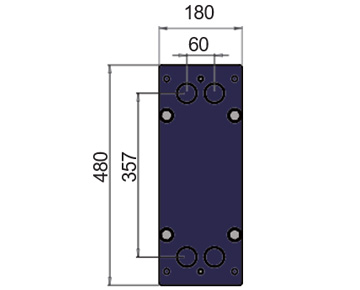
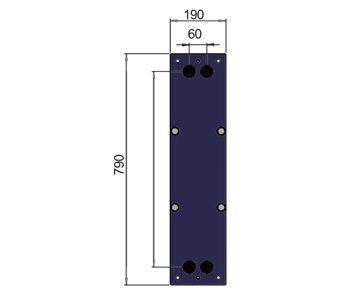
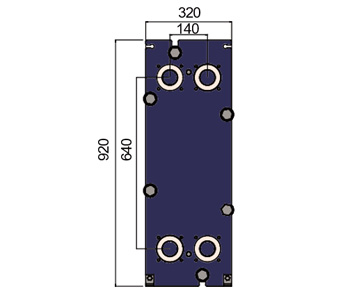
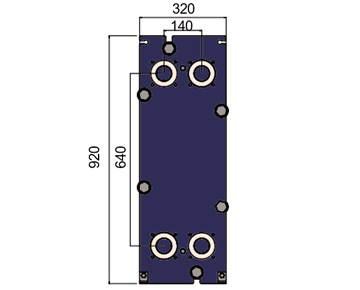
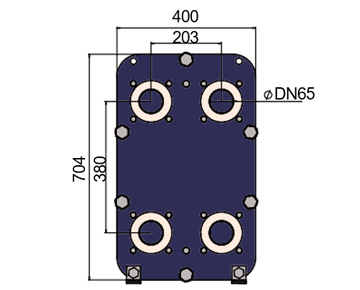
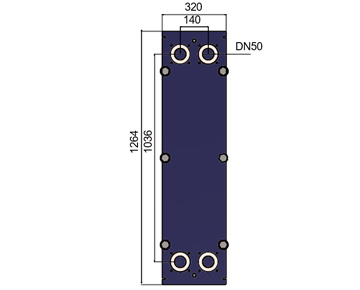
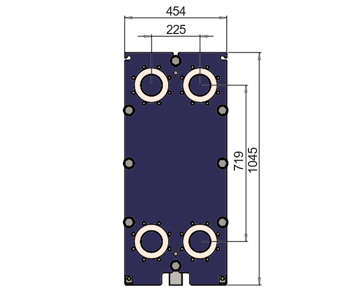
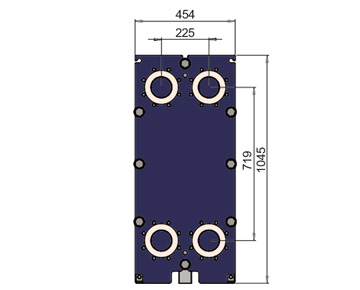
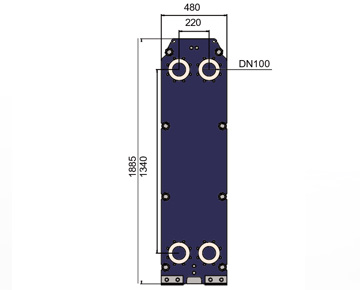
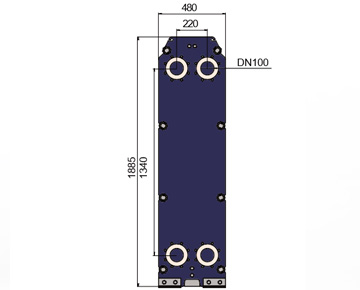
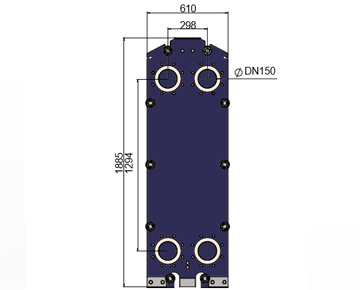
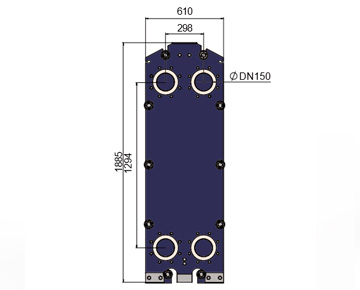
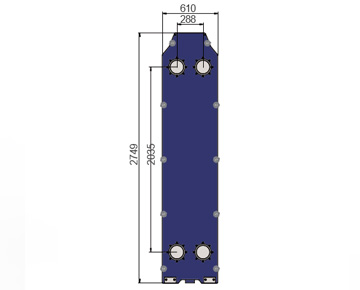
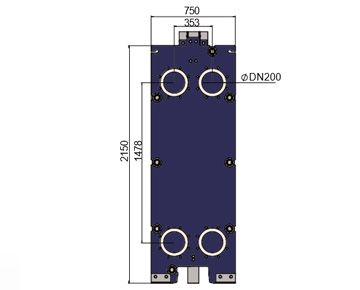
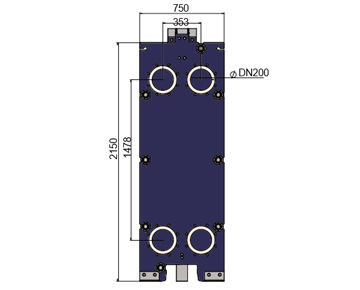
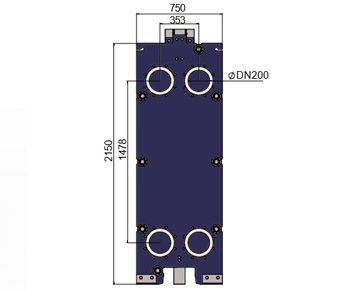
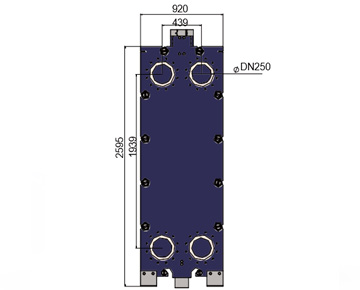
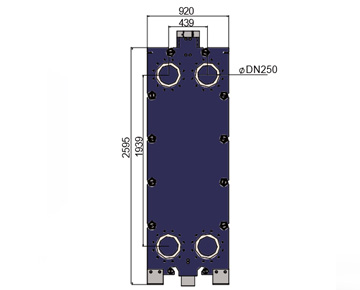
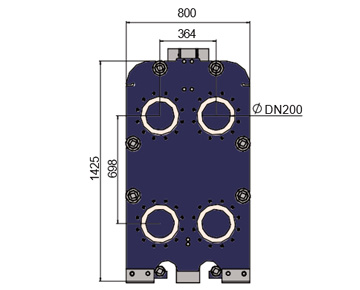
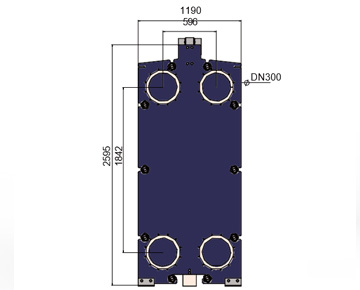
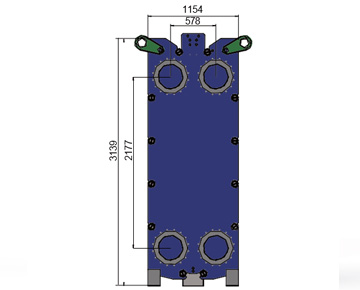
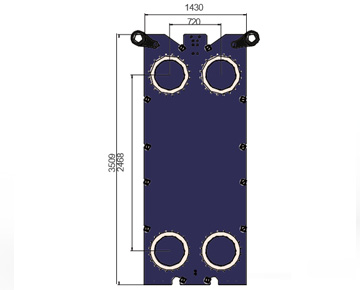
Compare circuit arrangement and overall dimensions at a glance, then open a product size for its product view, dimension drawing and technical summary.
Dimension units
Quick size finder
Find the closest model by overall size.
Enter either width or height in millimetres. Enter both for a more precise match.
Published HEXNOVAS Standard GPHE platform data. B and H frame-pressure suffixes identify 10-bar and 16-bar versions. Final plate count, plate pattern, frame length, material, gasket and connection arrangement are confirmed from the thermal duty.
Dimensions are for reference only. Final dimensions are subject to the approved order drawing. HEXNOVAS reserves the right of final interpretation.
Provide fluid composition and concentration, flow rates, inlet and outlet temperatures, operating and design pressures, allowable pressure drop, connection sizes, cleaning method and maintenance clearance. Confirm plate and gasket compatibility with both the process and cleaning fluids at the design conditions; material names alone do not establish suitability.
Frequently asked questions
Key questions before product selection.
What is the difference between a gasketed plate heat exchanger and a plate-and-frame heat exchanger?
They normally describe the same openable construction: corrugated plates with gaskets are clamped in a bolted frame. The plate pattern, channel gap, gasket material and frame pressure class are selected for the duty.
When should titanium plates be used in a gasketed plate heat exchanger?
Titanium is commonly considered for seawater and chloride-bearing fluids after reviewing concentration, temperature, contaminants and operating conditions. Material suitability must be confirmed for the complete fluid chemistry.
Can the capacity of a gasketed plate heat exchanger be changed?
Often yes. Plates may be added or removed within the frame, connection and hydraulic limits. Any change requires a new thermal and pressure-drop check.
Which data is required to select a gasketed plate heat exchanger?
Provide both fluids, compositions, flow rates, inlet and outlet temperatures, operating and design pressures, allowable pressure drop, fouling tendency, plate material and gasket compatibility.
Product documentation
Catalogue and technical downloads.
Use the published catalogue for product-range reference. Final dimensions, ratings and materials are confirmed for the selected model and operating duty.