CASE STUDY
A shell-and-tube heat exchanger was supplied for a cooling application.
According to the initial customer specification, the service medium was described as:
Fresh water
Based on this information, stainless steel material (SS316L) was selected for the tube bundle to balance corrosion resistance and cost efficiency.
No chloride content data, salinity level, or detailed water analysis report was provided at the quotation stage.
Based on the declared condition (fresh water), the following assumptions were made:
Low chloride concentration
Neutral pH
Non-aggressive environment
Moderate operating temperature
Under such conditions, SS316L is generally considered acceptable and widely used in HVAC and industrial cooling systems.
Within a relatively short operational period, internal leakage was reported.
Inspection revealed:
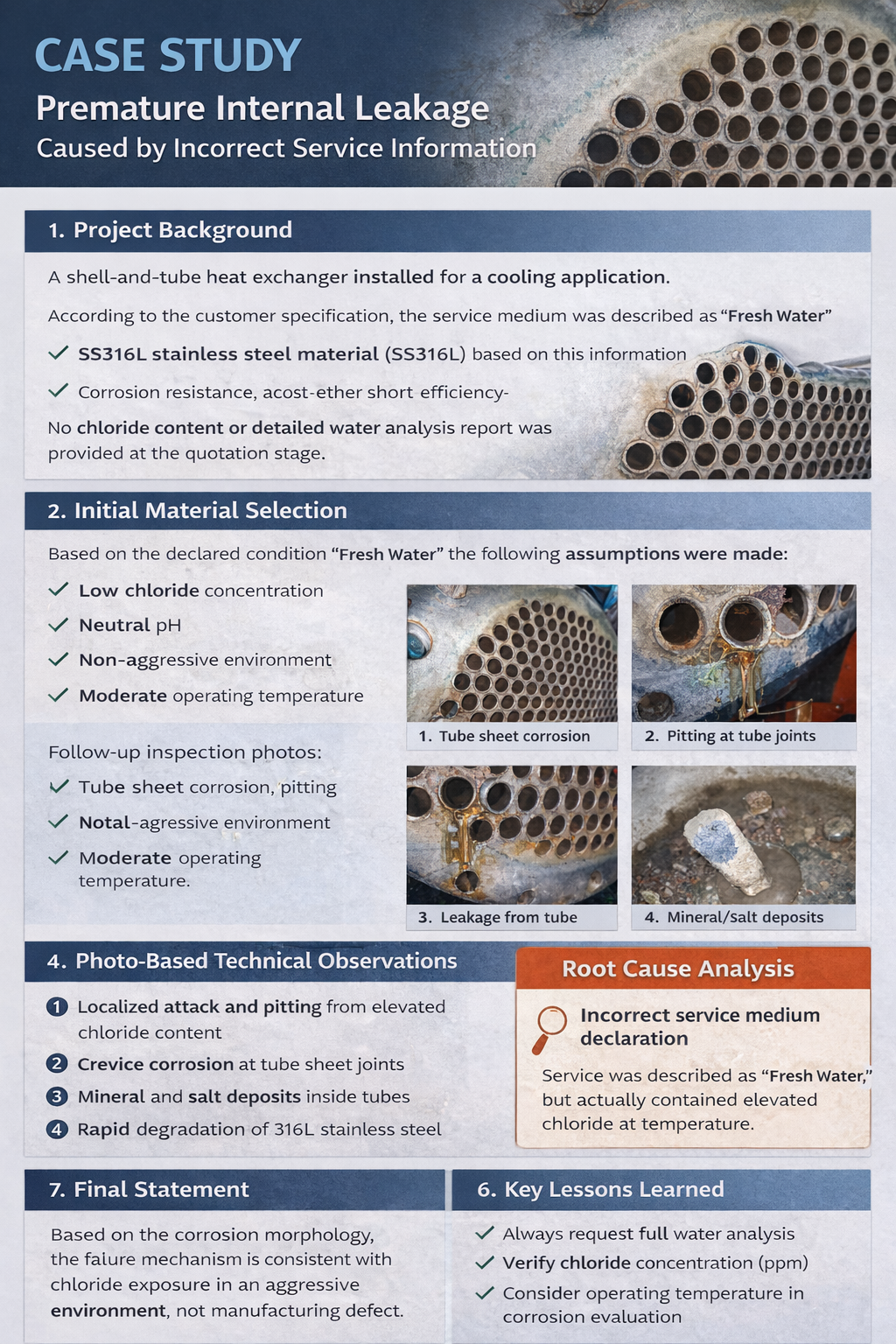
Tube sheet area corrosion
Localized pitting around tube-to-tube sheet joints
Brownish corrosion deposits
Evidence of internal cross-contamination
Significant mineral deposition inside the tubes
(See attached inspection photos.)
One image clearly shows leakage emerging through a tube opening, indicating internal tube failure.
Related informations: