Scaling is one of the most common problems affecting swimming pool heat exchangers. Mineral deposits, particularly calcium carbonate, gradually accumulate on heat transfer surfaces, reducing efficiency, increasing pressure drop, and potentially leading to premature failure.
Understanding the causes and implementing proper preventive measures can significantly extend the service life of both shell-and-tube and plate heat exchangers used in pool heating systems.
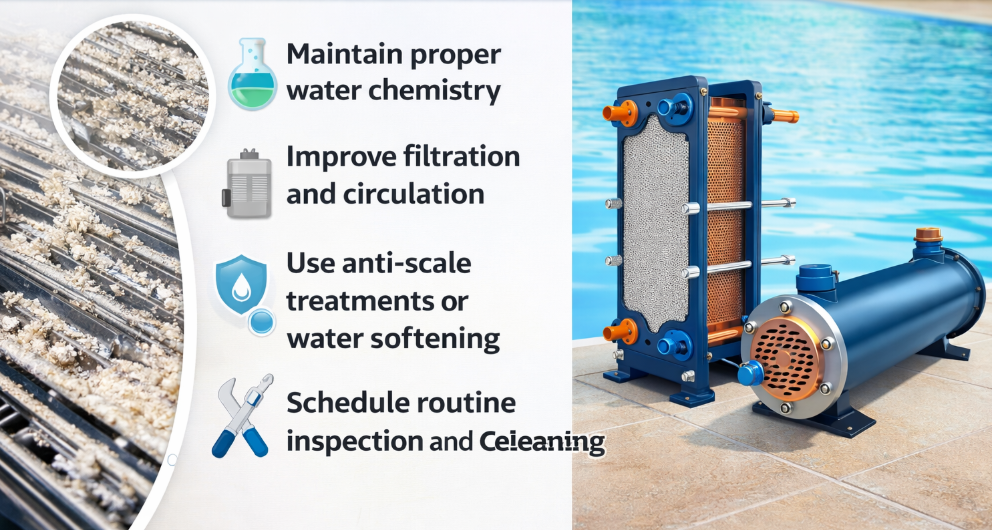
Scaling primarily occurs due to:
High calcium hardness
Elevated pH levels
High total alkalinity
Warm water temperatures
Poor circulation or stagnant flow
When pool water becomes chemically imbalanced, dissolved minerals precipitate and attach to metal surfaces inside the heat exchanger. Over time, this forms an insulating layer that reduces heat transfer performance.
The most effective way to prevent scaling is maintaining balanced pool water chemistry.
Recommended ranges:
pH: 7.2 – 7.6
Total Alkalinity: 80 – 120 ppm
Calcium Hardness: 200 – 400 ppm
Regular water testing (daily or weekly depending on pool size) is essential. Automated dosing systems can help maintain stable chemical balance and reduce fluctuations.
Good filtration prevents debris and suspended solids from entering the heat exchanger.
Install high-quality pool filters
Clean filters regularly
Maintain proper circulation rate
Avoid stagnant flow zones
Shell-and-tube heat exchangers generally tolerate debris better due to wider channels, while plate heat exchangers require cleaner water because of narrow passages.
In hard-water regions, additional treatment may be necessary.
Options include:
Anti-scale chemical additives
Water softening systems
Pre-filtration treatment units
These solutions help reduce calcium concentration and prevent mineral precipitation inside the exchanger.
Even with proper chemistry, some scaling may still occur over time.
Maintenance recommendations:
Annual inspection
Chemical flushing when needed
Mechanical cleaning for shell-and-tube units
Controlled CIP cleaning for plate heat exchangers
Early removal of deposits prevents severe efficiency loss and avoids costly repairs.
Shell-and-tube heat exchangers are generally more resistant to scaling due to:
Larger flow channels
Lower velocity sensitivity
Easier mechanical cleaning
Plate heat exchangers offer higher thermal efficiency but require stricter water quality control and regular chemical cleaning.
Proper system design and maintenance strategy should be selected based on pool type, water quality, and operating conditions.
Typically once per year. However, in hard-water or heavily used pools, inspection every 6 months is recommended.
Yes. Even a thin layer of scale significantly reduces heat transfer efficiency and increases energy consumption.
Severe scaling can lead to overheating, corrosion under deposits, and tube or plate failure if not addressed in time.
Titanium is highly resistant to corrosion but not immune to scaling. Proper water chemistry is still required.