In gasketed plate heat exchangers (GPHE), the gasket fastening design plays a critical role in sealing reliability, maintenance efficiency, and long-term operational safety. Different manufacturers have developed various attachment systems to balance ease of maintenance, durability, and performance under different operating conditions.
The most common gasket fixing systems include CLIP-ON, SNAP-IN, SONDER LOCK, and GLUE (adhesive type). Each design offers unique advantages and is widely used by leading brands such as Alfa Laval, Sondex, APV, Tranter, and GEA Group.
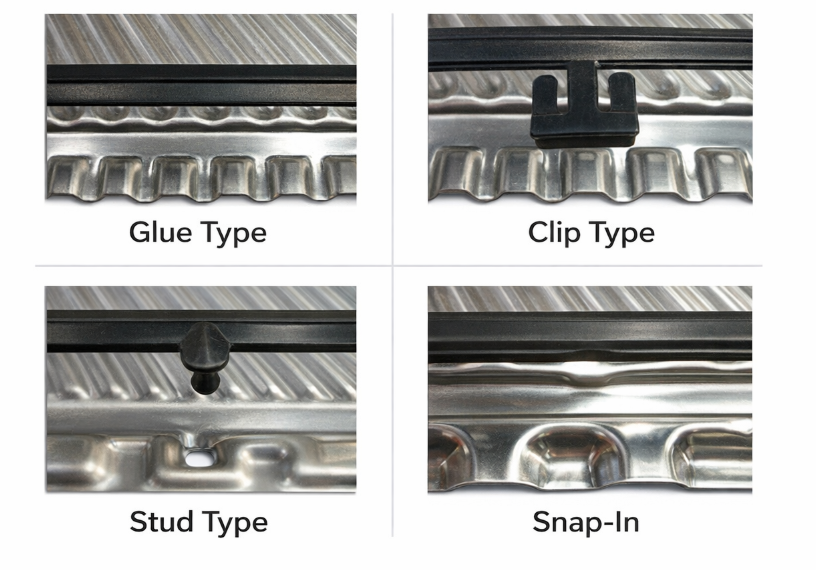
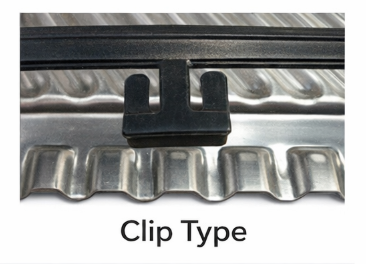
The gasket is attached to the plate through molded clips that lock around the plate edge, allowing mechanical fastening without adhesive.
Fast installation and replacement
No adhesive or curing time required
Cleaner maintenance process
Reduced downtime during servicing
HVAC systems
District cooling and heating
Food and beverage processing
Alfa Laval (modern plate designs)
GEAGroup
Certain Tranter models
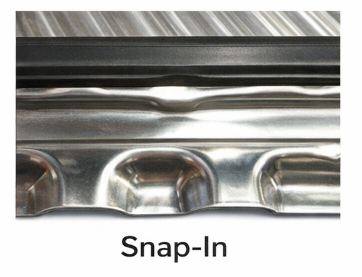
The gasket is pressed into specially designed grooves in the plate and secured through elastic deformation and geometry matching.
Very quick installation
Stable positioning
High sealing consistency
Lower risk of gasket misalignment
Requires precise gasket profile
Plate groove geometry must be accurate
General industrial heat exchange
Utility services
Process cooling systems
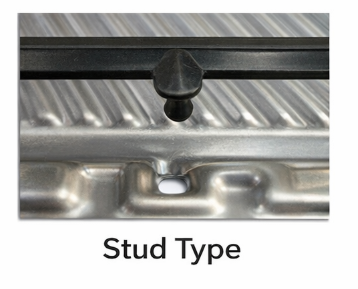
The gasket is secured using mechanical locking points or reinforced fixing structures, designed for enhanced retention under demanding conditions.
Excellent resistance to vibration
Reliable under high pressure
Reduced risk of gasket displacement
Marine cooling systems
Heavy industrial operations
High-load process environments
Traditionally associated with older Sondex designs
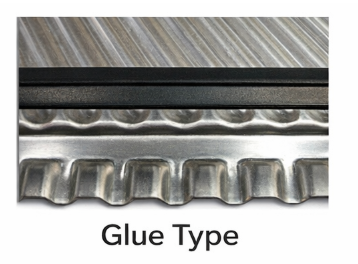
The gasket is bonded directly to the plate surface using adhesive.
Lower initial gasket cost
Simple gasket design
Reliable sealing when properly installed
Longer maintenance time
Requires cleaning and re-gluing during replacement
Increased labor cost during servicing
Legacy equipment
Cost-sensitive projects
Systems with low maintenance frequency
Older APV systems
Older Tranter models
| Gasket Type | Maintenance Speed | Fixing Strength | Cost Level | Typical Use |
|---|---|---|---|---|
| CLIP-ON | Very Fast | Good | Medium | Modern industrial & HVAC |
| SNAP-IN | Fast | Good | Medium | General industrial applications |
| SONDER LOCK | Medium | Excellent | Medium–High | Marine & vibration environments |
| GLUE | Slow | Good | Low | Legacy or low-maintenance systems |
Modern gasketed plate heat exchanger designs are increasingly moving toward clip-on and snap-in gasket systems, as they significantly reduce maintenance downtime and improve overall serviceability. For industries where uptime and maintenance efficiency are critical, adhesive-free systems have become the preferred solution.
Selecting the appropriate gasket fixing system depends on operating pressure, vibration level, maintenance frequency, and lifecycle cost expectations. Understanding the differences between CLIP-ON, SNAP-IN, SONDER LOCK, and GLUE gasket systems helps engineers and operators optimize reliability and reduce operational downtime.
CLIP-ON gaskets use molded clips that mechanically attach to the plate edge, while SNAP-IN gaskets are pressed into dedicated gasket grooves and held by elastic deformation. Both are adhesive-free systems designed for fast maintenance, but SNAP-IN designs generally require more precise gasket geometry.
CLIP-ON and SNAP-IN gaskets are the fastest to replace because no adhesive removal or curing is required. These systems significantly reduce downtime compared to glued gaskets.
SONDER LOCK is a mechanical locking gasket system designed for enhanced retention under vibration and higher pressure conditions. The gasket is secured by locking points or reinforced fixing structures, making it suitable for demanding industrial or marine applications.
Yes. Although adhesive-free systems are becoming more common, glued gaskets are still widely used in older equipment or cost-sensitive projects. They provide reliable sealing but require more labor during maintenance.
Most modern designs from manufacturers such as Alfa Laval and GEA Group increasingly use clip-on or snap-in systems because they improve serviceability and reduce maintenance time.
SONDER LOCK or other reinforced mechanical locking systems are preferred for vibration-prone applications, including marine cooling systems, due to their strong gasket retention.
Yes. While each manufacturer has proprietary designs, typical tendencies include:
Alfa Laval — mainly clip-on systems in modern models
Sondex — snap-in and mechanical locking variants
APV — both snap-in and glued types depending on model
Tranter — mixed designs including glued and clip systems
GEA Group — predominantly modern adhesive-free designs
The gasket fixing method does not directly affect heat transfer efficiency, but it influences sealing reliability, maintenance time, and operational uptime — all of which impact overall lifecycle performance.
Generally no. Gasket fixing systems are specific to plate geometry and manufacturer design. Replacement gaskets must match the original fixing method and plate profile.
For most industrial applications, clip-on or snap-in gasket systems offer the lowest lifecycle cost because they reduce maintenance labor and downtime.
You can identify the gasket type by inspecting the plate:
Visible clips → CLIP-ON
Pressed groove fit → SNAP-IN
Mechanical locking points → SONDER LOCK
Adhesive residue on plate → GLUE type
Yes. Many aftermarket suppliers provide compatible gaskets for brands such as Alfa Laval, Sondex, APV, Tranter, and GEA Group, provided the plate model and gasket type are correctly matched.
Read More: