Food & Pharmaceutical
Pillow Plate Jackets for Wine Tanks
Pillow plate jackets are widely used in wine tanks for efficient cooling and heating. This solution ensures stable fermentation temperature, uniform heat transfer, and hygienic tank design for winery applications.
Original HEXNOVAS article
Pillow Plate Jackets for Wine Tanks
Pillow Plate Jackets for Wine Tanks
Efficient cooling and heating jackets for fermentation tanks, storage vessels, and winery process equipment where temperature stability, hygienic construction, and compact installation matter.
Application Overview
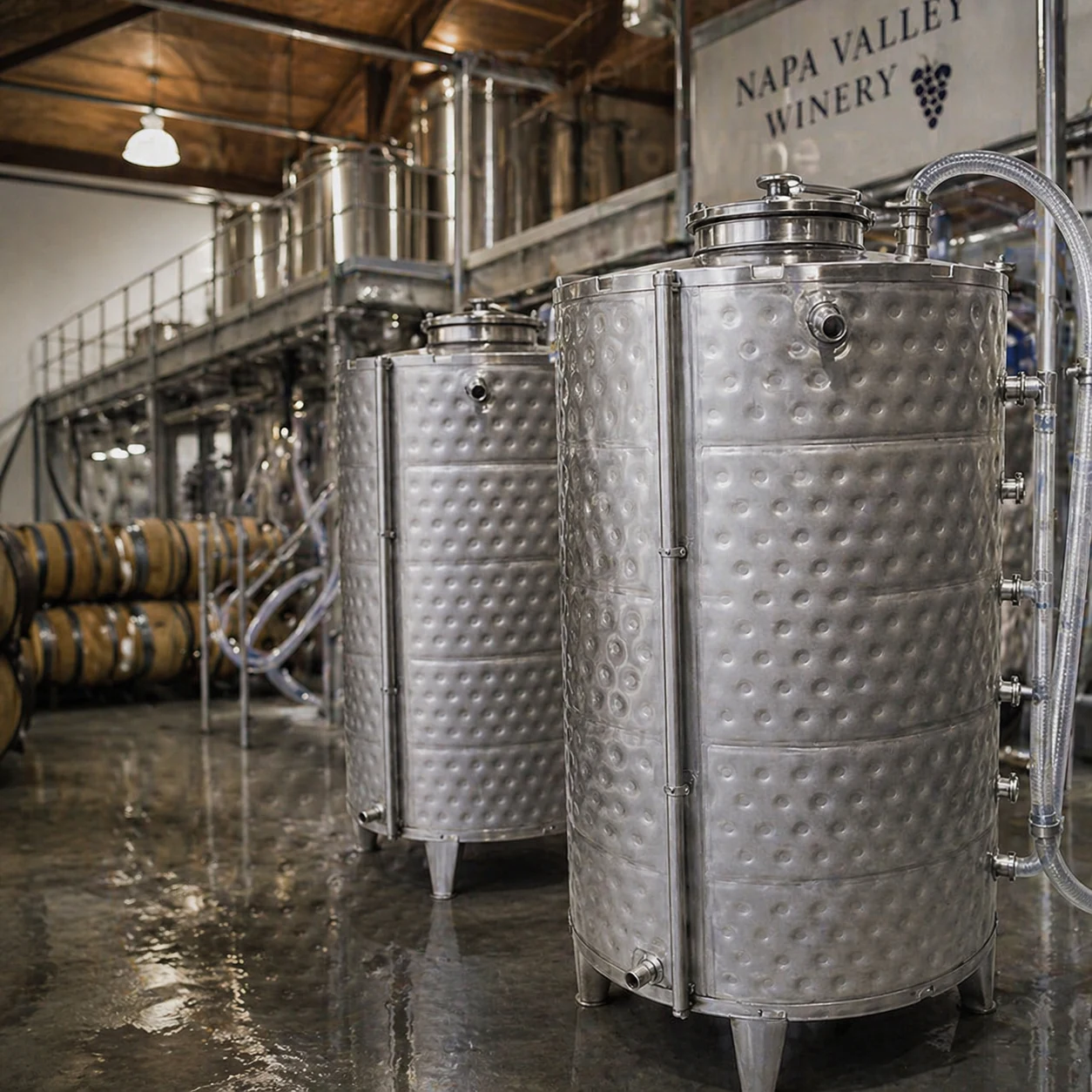
In wine production, temperature control is not an accessory function. It directly affects fermentation speed, aroma development, microbial stability, product consistency, and storage quality. Pillow plate jackets provide a clean and efficient way to cool or heat wine tanks without occupying internal tank volume.
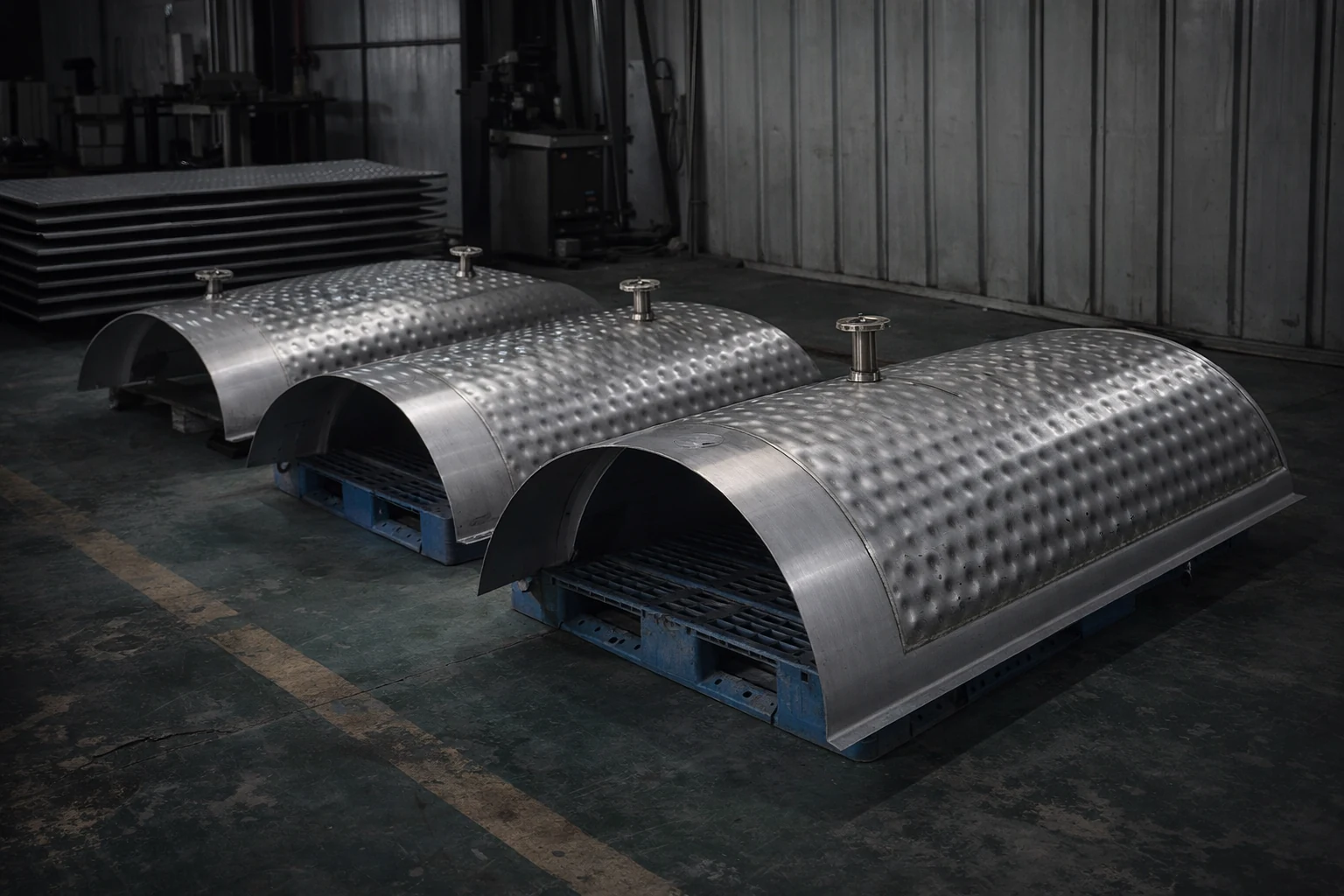
The jacket is welded to the outside of the tank or fabricated as a removable tank shell section. Cooling or heating media flow inside the pillow plate channel, while heat is transferred through the stainless steel wall into the wine. This design is especially suitable for fermentation tanks, bright wine tanks, storage vessels, and temperature-controlled process tanks.
Working Principle
A pillow plate jacket is made from two stainless steel sheets welded together by laser welding, resistance welding, or spot welding. After welding, the inner space is hydraulically expanded to form a dimpled flow channel. The result is a strong, compact heat transfer surface with a natural turbulence effect.
During operation, chilled water, glycol solution, or hot water enters the jacket through the inlet nozzle and spreads through the internal pillow channel. The dimpled structure guides the fluid across the heat transfer area, improves turbulence, and increases contact between the medium and the stainless steel surface.
Heat is then exchanged through the tank wall. For fermentation cooling, heat generated by yeast activity is removed from the wine and carried away by the cooling medium. For storage or process heating, warm water can be circulated through the same jacket to maintain the required tank temperature.
Why Pillow Plate Jackets Are Used in Wineries
Wine tanks require a heat transfer solution that is efficient, hygienic, compact, and easy to clean around. Compared with internal coils or bulky external heat exchangers, pillow plate jackets become part of the tank body and leave the internal product zone unobstructed.
Typical Wine Industry Applications
Fermentation Tanks
Fermentation releases heat continuously. If the heat is not removed in time, the wine temperature can rise beyond the desired process window. Pillow plate jackets allow glycol or chilled water to circulate around the tank, keeping fermentation stable and controlled.
Storage and Maturation Tanks
For storage tanks, temperature stability is essential for preserving taste, aroma, and product quality. Pillow plate jackets help maintain a consistent tank temperature without introducing internal components into the wine zone.
Cold Stabilization
In cold stabilization processes, the wine may need to be cooled to a lower temperature for tartrate control. A properly designed pillow plate jacket can provide efficient external cooling while keeping the tank design simple.
Process Heating
In some winery operations, tanks may require gentle heating. Hot water can be circulated through the pillow plate jacket to raise or maintain the product temperature without direct contact between the heating medium and the wine.
Design Considerations
A pillow plate jacket should not be treated as a simple sheet metal cover. The final design depends on tank diameter, tank height, wine volume, required cooling duty, media flow rate, inlet and outlet temperature, working pressure, material grade, and welding requirements.
Advantages for Tank Manufacturers and Winery Projects
HEXNOVAS Supply Scope
HEXNOVAS supports pillow plate jacket projects from concept design to fabrication coordination. Based on the tank size and operating conditions, we can help define jacket coverage, plate thickness, welding pattern, nozzle location, and pressure testing requirements.
Our focus is not only to supply a metal jacket, but to provide a practical heat transfer solution that fits the tank, the process, and the installation environment.
FAQ
Yes. The same jacket can circulate chilled water, glycol solution, or hot water, depending on the required process temperature.
For wine tanks, the jacket is normally installed on the outside of the tank wall, keeping the product side clean and unobstructed.
304 stainless steel is widely used, while 316L stainless steel may be selected when higher corrosion resistance or stricter hygiene requirements are needed.
Yes. Pillow plate jackets can be fabricated according to the tank diameter, height, connection layout, and required cooling or heating area.
Custom Pillow Plate Jackets for Wine Tanks
Send us your tank diameter, height, working medium, temperature range, and required cooling or heating duty. HEXNOVAS can support the jacket layout and technical proposal for winery tank applications.
| Requirement | How Pillow Plate Jackets Help |
| Fermentation temperature control | Removes fermentation heat and helps maintain the target temperature range. |
| Uniform cooling | Large external heat transfer area reduces local hot spots or cold spots. |
| Hygienic tank design | No internal coil is required, keeping the tank interior cleaner and easier to wash. |
| Compact installation | The jacket follows the tank surface and does not require additional floor space. |
| Process flexibility | The same jacket can be used for cooling, heating, or temperature maintenance. |
| Design Item | Common Engineering Focus |
| Material | 304 / 316L stainless steel depending on hygiene, cleaning, and corrosion requirements. |
| Jacket coverage | Partial or full tank coverage based on cooling duty and process zone. |
| Medium | Chilled water, glycol solution, or hot water. |
| Connection layout | Inlet and outlet position should support full channel distribution and drainage. |
| Welding and expansion | Welding pattern and inflation pressure determine channel shape and mechanical strength. |